

A, B, and C paper sizes in centimeters
Home » Uncategorized » A, B, and C paper sizes in centimeters
The rectangular A, B, and C series of paper sizes are part of the international ISO 216 standard, which serves as the primary paper sizing system in nearly all countries around the world. Exceptions include North America, some countries in South America, and Asia.
Dimensions in cm
Each of the three series of sizes starts with index 0 and ends with index 10, which is the smallest size. They are usually measured in millimeters, but here we use centimeters for convenience:
How to Remember Them
The easiest way to quickly get a handle on the measurements is to remember one of these three:
- Each subsequent number is half the previous one. For example A5 is half of A4, A6 is half the size of A5, and so on. In other words , the higher the index number, the smaller the size.
- Each sheet holds exactly two sheets of the following size, with no excess margins. An A4 sheet holds two A5 sheets placed side by side.
- Alternatively, each sheet folded in half is the same size as the next size up in the index. An A4 sheet folded in half is the same size as an A5 sheet.
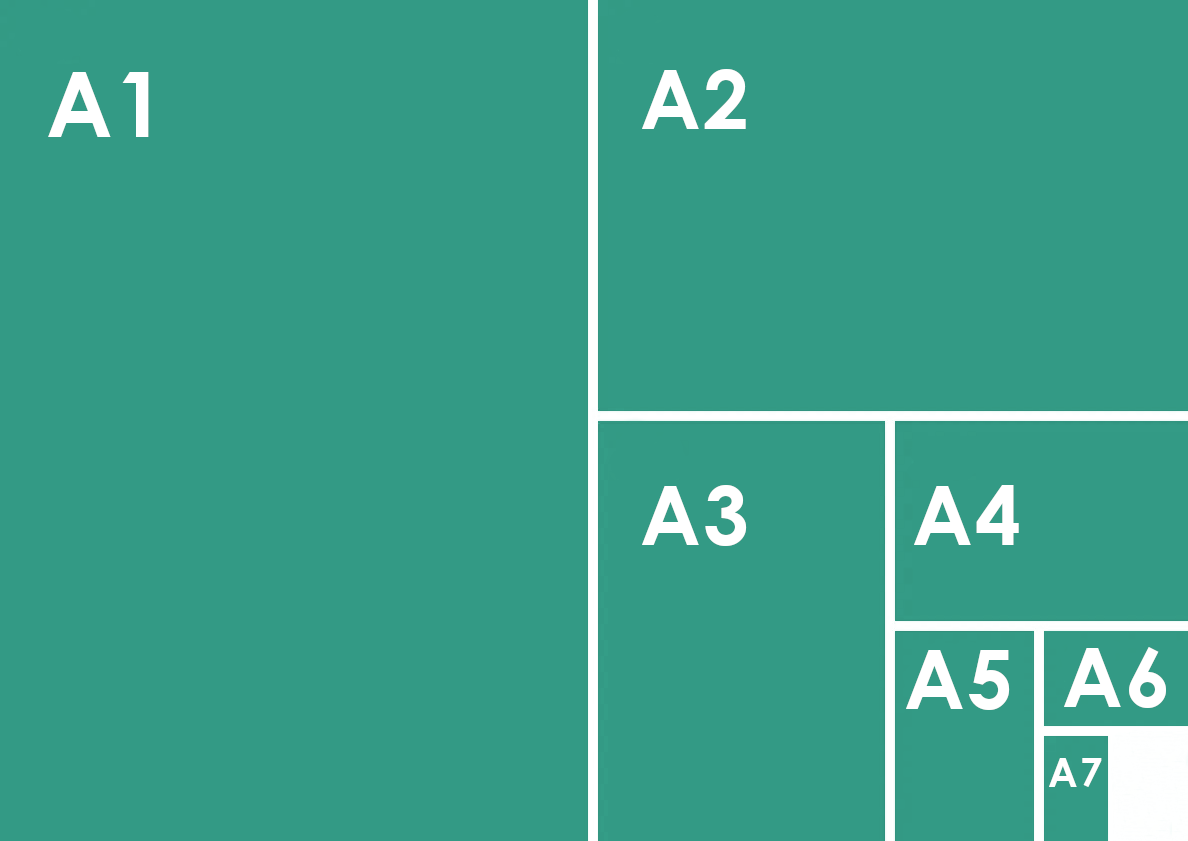
Formats as we know them
The various A, B, and C sizes have become standard for different types of paper. For example, A4 is the most familiar to us in our daily lives, as it is the most widely used: printer paper is this size printer paper —as well as documents, magazines, large notebooks , menus, and so on.
Other common sizes are:
- A0 and A1 for posters
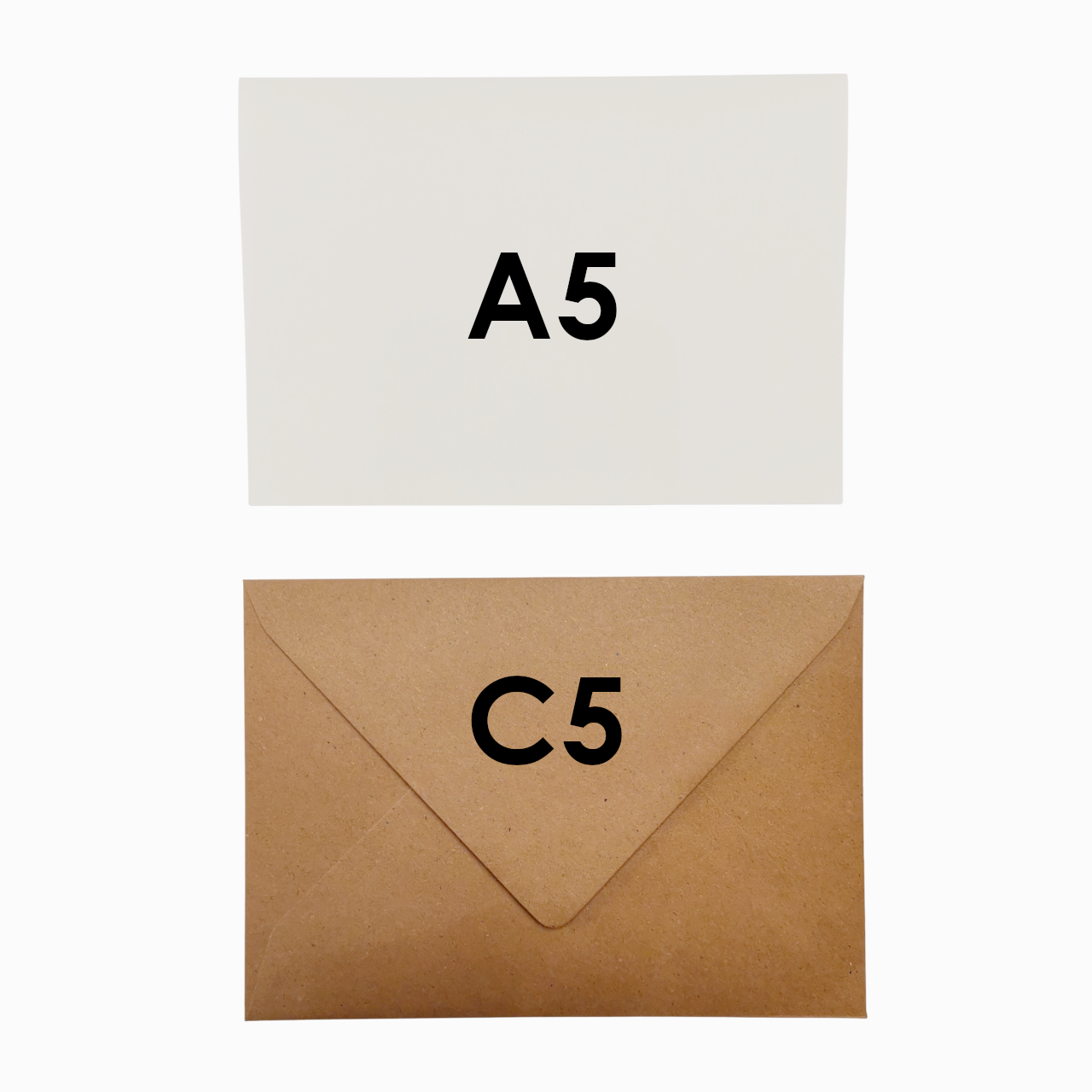
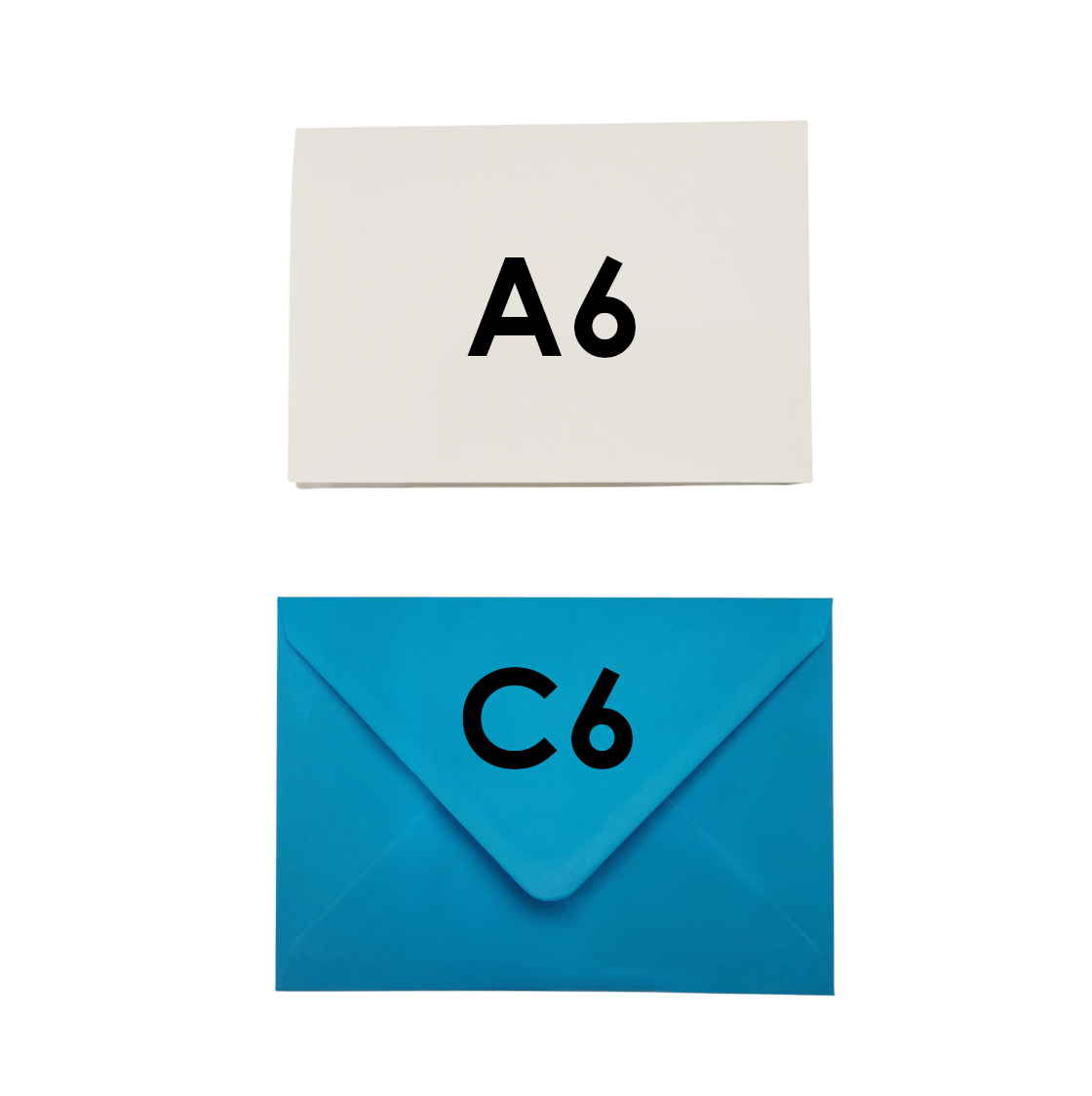
- C5 and C6 for envelopes
- A6 for postcards,
- We are used to thinking of B4 as the so-called ” No. 4 drawing pad.”
Interesting Facts About Their Origins
The A-series sizes were the first to appear. The dimensions of A0 are calculated so that the area of the sheet equals 1m². And indeed, when we multiply them, they yield a value that is as close as possible:
Verification: 841 x 1189 mm = 0.999949m²
The purpose of this specific width-to-length ratio—and, more broadly, the introduction of this measurement system—is to facilitate the calculation of the required amount of paper, its density, the necessary ink, ink, etc., needed for the production and printing of various products. This ultimately simplifies the pricing of the service. For this reason, A-series formats became the preferred choice and were later adopted as the official unit of measurement.
When arranged together, theA, B, and C formats follow a geometric progression, with their sides maintaining the same ratio:
- C sizes are directly related to A sizes and are used for envelopes. They are designed to hold A sizes with the corresponding number. For example, C5 envelopes are designed to pair with A5.
- B-series sizes fill the need for an intermediate range of sizes, providing a wider variety of scales—that is, more closely spaced sizes. For example, B5 falls between A4 and A5. They are used for posters, brochures, and passports, and are particularly popular in the publishing industry.
The elongated DL format
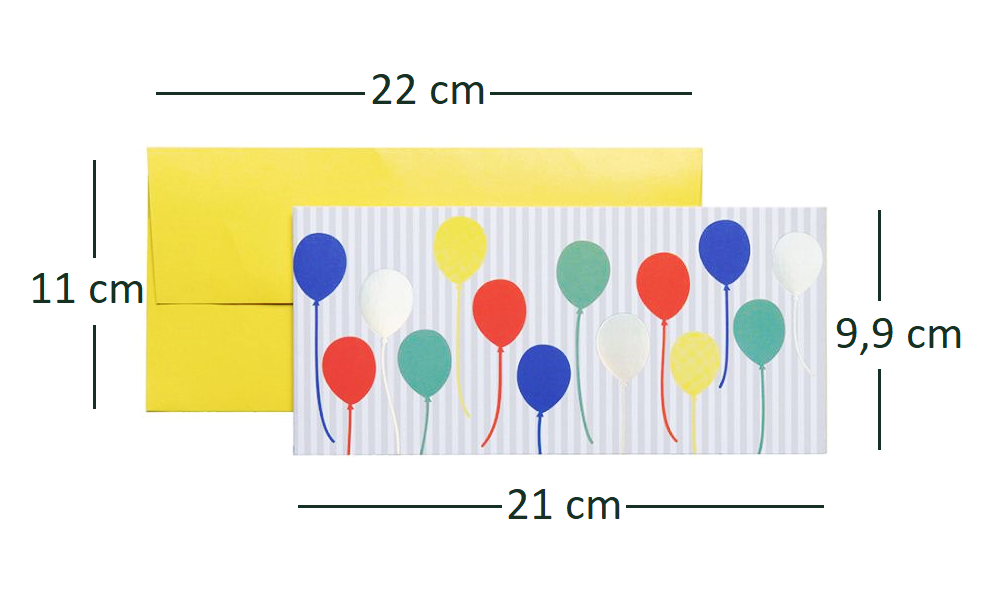
You’ll also find envelopes in a long format envelopes and cards in the DL format, which corresponds to an A4 sheet folded in thirds along its long side. DL is typically used for envelopes, cards, invitations, brochures, and other promotional materials.
Author: Martina Petrova


