

Techniques for Painting with Oil Pastels
Home » Uncategorized » Techniques for Painting with Oil Pastels
Before we look at the different ways to draw with oil pastels, we need to choose the right type of paper. Although they adhere to all kinds of surfaces, pastels work best on slightly textured cardstock. This can be cold-pressed cellulose or cotton paper, or specialized papers that feel similar to suede or fine sandpaper. Good, porous papers can compensate for some of the shortcomings of lower-priced pastels and, conversely, accommodate the blending and layering of higher-quality ones.
Mixing, pouring, rubbing
Depending on the pressure applied, oil pastels can produce everything from a very rich color to a subtle hint of color that reveals the texture of the paper. The colors can be left as is, smudged and blended, or layered. The direction of the brushstrokes in the layering emphasizes the three-dimensionality of the painting.
The simplest One way to apply oil pigment is with your finger. To keep your hands cleaner , you can use a paper pencil, a tissue, or asilicone brush.
In addition to creating accents, white is also used to lighten colors and create pastel shades.


Tracing with a colored pencil
The colors applied with pastel can be reinforced with a colored pencil, which will simultaneously blend and smooth out the pastel while adding detail and contrast. This approach makes it easier to fill in the color and apply the first layer of paint after sketching.
Like the Impressionists
Coloring can also be achieved using Impressionist techniques—dots (Pointillism), lines, or random hatching—which create an optical illusion of a solid, color-filled surface. This creates visual textures and can also save on paint and time when finishing the painting.


Sgraffito
Sgraffito (from the Italian sgraffito, meaning “scratched”) is a technique in which two different colors are applied in thick layers, after which the top layer is removed—or scratched away—with a stick, spatula, or other pointed tool, revealing the underlying color.
Sgraffito can be the primary technique used to create an image, or it can be used to emphasize the painted elements by adding details and texture , such as when painting fur and hair. Sgraffito is an effective option for backgrounds and repeating motifs.
Impasto
With softer, high-quality oil pastels , you can achieve textured effects that resemble oil paintings. To do this, cut off a small piece of the pastel, mix it with a small palette knife, and apply it to the paper by pressing down to create an impasto effect. A clever trick for softening the consistency is to add a drop of baby oil or flaxseed oil or an emulsion, such as body lotion.


Liquefaction
By adding more oil or a solvent such as white spirit, the pastels can be “melted” so they can be applied with a brush or cotton swab. There are also water-soluble oil pastels that require only water.
Usually, the paint is applied directly to the paper or canvas, and once it has dried, the colors can be reapplied to restore the textured brushstrokes.
This is also a convenient technique for applying the main color elements before the actual painting begins. Cotton papers are best suited for this purpose, as they will absorb the oil or solvent without warping and will not smudge on the surface. Corrections to the painting can also be made by diluting the already applied paint and blotting it with a paper towel.

Pastel on canvas
It is entirely possible to work with oil pastels on the rough surface of primed canvases or mounted panels. Some recommend additionally applying a transparent gesso to create a more pronounced texture that will hold the pigments. In this case, better results are achieved with softer varieties of pastels. Some brands offer large jumbo pastels, which are ideal for this purpose. However, they differ from oil paint sticks, which have a different composition and eventually harden on the canvas.
Mixed-media options
There are no rules in art. That’s why we can combine media that, at first glance, seem incompatible.
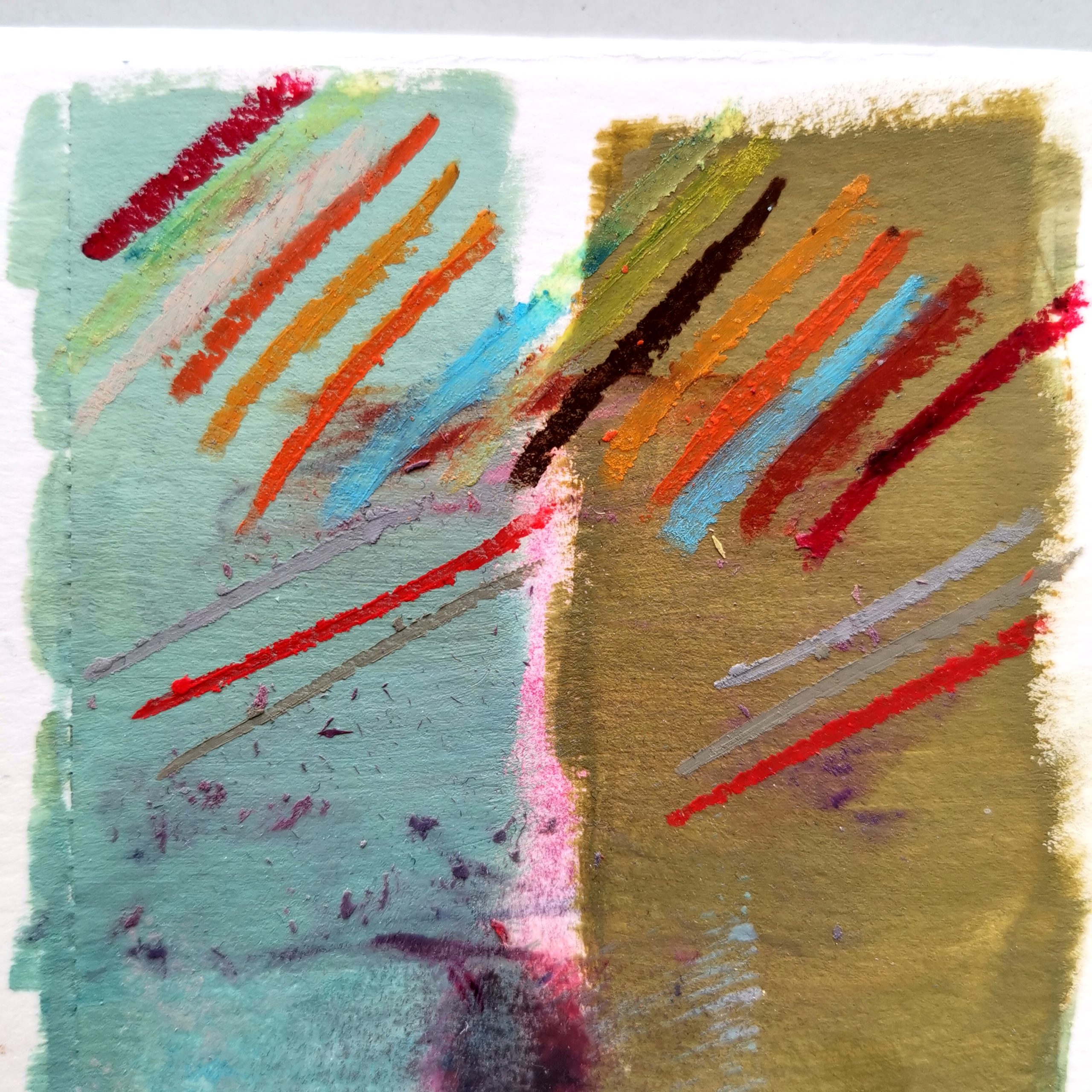
- For example, by applying a background of gouache or acrylic , you can create a unique tinted paper on which to draw with oil pastels. Conversely, gouache paintings can be accentuated with the vivid, textured strokes of pastels.
- By applying a thick layer of gouache (poster paint) or acrylic paint over a pastel background , you can create what is known as scratch art paper (in English, “scratch art paper”).
- And with diluted watercolor color on the traces of the pastel, resist techniques are achieved , as in painting eggs and pre-patterning them with paraffin.

Varnishing and Protection
All types of pastels are prone to smudging and soiling. To protect them, oil pastel drawings are usually mounted behind glass, but they can also be varnished. Liquid and aerosol varnishes are available, which form a transparent sealing coat that protects the painting from touch, dust, and water. The varnishes are formulated to alter the colors as little as possible.
Author: Martina Petrova


