

Dyeing Clothes and Fabrics Using the Tie-Dye Technique
Home » Uncategorized » Dyeing Clothes and Fabrics Using the Tie-Dye Technique
What is the tie-dye technique?
Tie-dye (transcribed from “tie-dye,” which can be translated as “tie-dye”) is the English name for a technique for dyeing clothing and other textile items by tying or crumpling them and then immersing or pouring dye over them.
Depending on how the fabric is gathered and tied, the result can be completely unpredictable and abstract or more symmetrical, with a neat pattern. With the countless ways the fabric can be folded, twisted, or rolled, as well as the locations and number of ties or fastenings, an endless variety of designs can be created , each one unique.
Although psychedelic colors are nowadays associated primarily with the experimental 1960s, many cultures actually discovered their own versions of this practice much earlier. Examples include the Japanese technique of shibori, the Nigerian adire, and the Indonesian batik, the latter of which also uses wax. It is believed that traditional African clothing was the inspiration for this fashion trend, which remains popular today.
How do you do it?
For best results , choose items made of natural fabrics or those with a low percentage of synthetic fibers. Brand-new clothes usually have a thin protective coating that keeps them from getting stained during shipping. This layer should be rinsed off with water beforehand so that it does not interfere with the dyeing process.
From there, the garment can be crumpled, twisted, or folded carefully and tied —most conveniently by securing it with rubber bands or a sturdy cord. There are a wide variety of methods for tying or folding the fabric very tightly or more loosely, which can be used on their own or in combination. The shape and direction of the resulting pattern can be planned, but it will always contain an element of surprise. This makes the tie-dye technique both rewarding and very exciting.
Painting and Texturing
Once the fabric has been dampened and wrung out, it is immersed in or doused with liquid dye and left to absorb the colors thoroughly for at least 3 hours. The longer it is left, the more saturated the colors will be. Then rinse it, and once it’s completely dry with the pattern set, iron it with a hot iron.
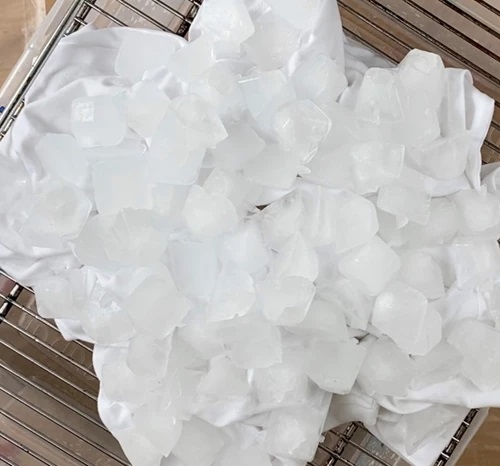
During the dyeing process, you can create additional textures in the dye using ice cubes and large salt crystals or detailed designs with transparent outline or wax (the aforementioned batik technique), which remain uncolored and stand out after rinsing.
Instead of dyeing the fabric, some people “bleach” the color out by applying bleach. The resulting stains can be left as is or dyed again.
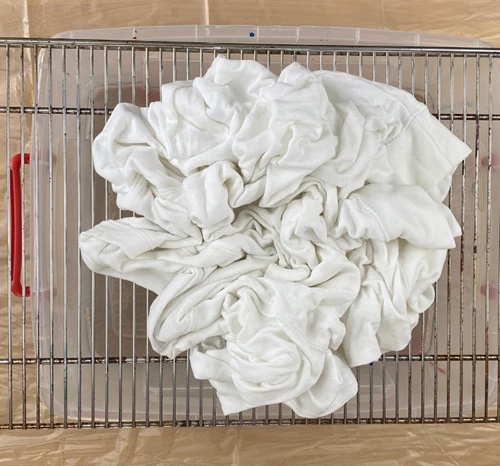
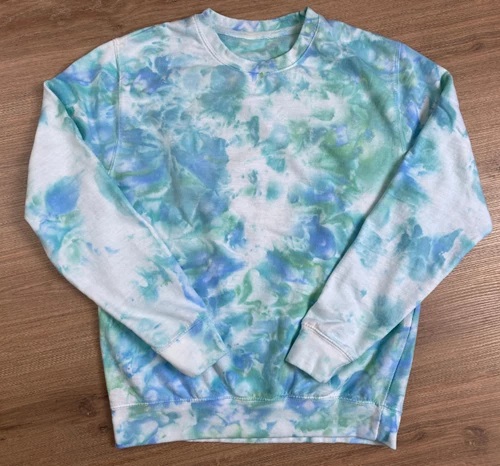
Here’s what happens when you use ice and paint to color:


Dyeing with Natural Dyes
Among plants and trees— their leaves, roots, and bark— flowers, as well as the remains of various fruits, vegetables, and spices —there are dozens of items at home that can be used to create vibrant hues and dye fabrics. This is usually done by soaking the fabric in boiling water and setting the color with alum, salt, or vinegar.
Among the most vivid natural dyes are:
- turmeric to produce yellow
- Red cabbage turns blue to purple depending on the degree of oxidation
- yellow onion skins, ranging from orange to brick red
- beets for a pinkish-red color
- nettles and spinach for greens.
Author: Martina Petrova


