

Painting with Ecoline Watercolor Markers
Home » Uncategorized » Painting with Ecoline Watercolor Markers
Why do we need watercolor markers?
Watercolor markers offer many of the advantages of traditional watercolors, but in a more convenient, clean, quick, and tidy form. It’s easy to take them with us (one, a few, or more), and all it takes is a twist of the cap to set our inspiration and ideas free onto the page.
They are particularly well-suited for colorful projects, design, cityscapes, illustrations, comics, manga, outdoor color sketches, and more. With them, we can achieve the freshness, spontaneity, and nearly all the effects characteristic of the classic watercolor technique.
What are the advantages of Ecoline brush markers?
Ecoline watercolor markers stand out for a number of qualities that make them the preferred choice for artists of all skill levels:
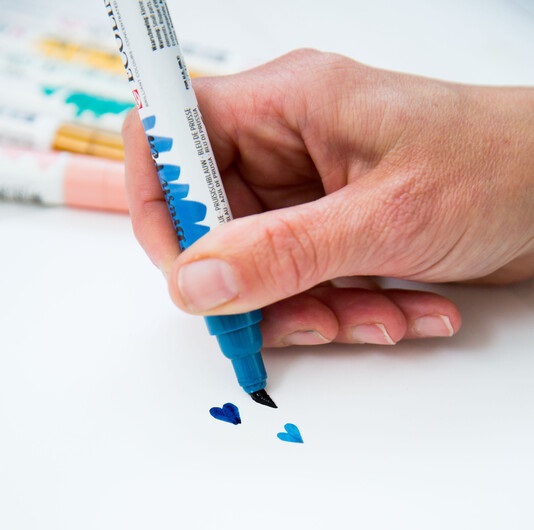
- A flexible, generously inked brush for a variety of effects: The felt-tip brush allows you to create dynamic lines. By varying the pressure, the line width ranges from very thin to thick and back again—ideal for calligraphy and sketching. On the other hand, the marker’s design allows you to confidently sketch using the full length of the brush tip at an angle of nearly 15° or to evenly fill larger areas. Thanks to its large ink reservoir and high-quality felt tip, the marker consistently produces a rich, vibrant line.
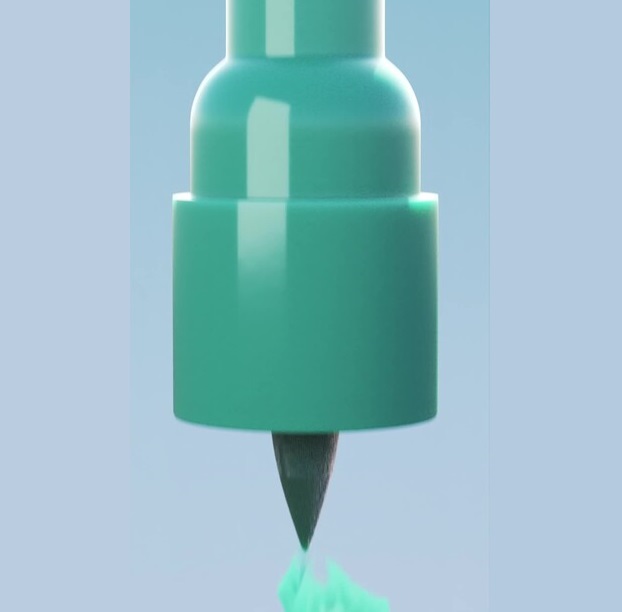
- Refillability and cost-effectiveness: A distinctive feature of Ecoline markers is that they are refillable, which places them in the so-called economical price range. Simply unscrew the colored ferrule on the brush and generously soak the pad located inside the marker body. For refills , use the ink bottles from the Ecoline series, making sure the numbers on the ink bottle and the marker match. The dropper integrated into the cap of the Ecoline ink bottle makes refilling the marker even easier. One ink bottle is enough for more than ten refills.
- Reusable pen: The felt-tip pen is shaped like a brush at both ends, so once one end wears out and becomes misshapen, you simply pull it out, flip it over, and you have a new, sharp tip ready to use.
- Wide, sturdy body: The body of markers is significantly thicker than is typical for a watercolor marker, and the larger volume provides more ink in the reservoir, as well as richer and more even color application on the paper. The barrel is made of sturdy, flexible, and dense plastic, which protects it from drops, being squeezed, and even being stepped on.
- Reliable cap: The cap comes off relatively easily and smoothly; it can be attached to the other end of the marker so it doesn’t get lost. Closing it requires little effort, and the distinct click assures us that the tip is protected and the ink won’t dry out. When in place, the cap fits extremely securely and is stable, especially when subjected to lateral pressure or twisting.
- High-quality ink: Like most watercolor markers, the ink is based on water-soluble pigments. Unlike the others, however, Ecoline inks do not stain the cellulose fibers of the paper itself, but instead adhere to the surface through an added binder (gum arabic). This allows us to re-blend, blend over, and remove colors that have already been applied—even those that have dried.
- Diverse color selection: The color range includes 60 different tones and shades, harmoniously distributed across the color wheel. Earthy shades and gray tones are particularly useful.
What kind of paper do they go well with?
The best and most comprehensive way to evaluate the quality of the markers is on specialized sketchbooks and Ecoline paper or other smooth (hot-pressed) watercolor paper. If we use them without bleeding or layering, we can use any thick, acid-free, smooth paper.
Techniques for Drawing with Ecoline Markers
Used on their own
The simplest way to use our water-based markers is to apply them directly to the paper and, if desired, blend them with a brush and water. For this purpose, it’s best to usesmoother (hot-pressed) watercolor paper, which is gentle on the brush and can withstand additional wetting without warping. It’s best to blend the color as soon as possible after application, as this becomes more difficult the longer you wait.
Just as with watercolors and pencils, we can remove paint by blotting or blend colors with a brush. While working on a painting, we can pick up color with a brush from the marker or in the sequence: marker ➜ palette ➜ brush. Interesting textures are created when we spread the marker across the pre-moistened surface of the paper using the wet-on-wet technique.
Marker with marker
If we add one more marker , we can create a blending effect directly on the paper by extending one color into the other, or by touching the tips of the two colors to create a gradient within the brush stroke itself. As you use them, the brushes self-clean, so there’s no risk of the colors bleeding, even if they’re light.
The Ecoline line also includes a transparent brush marker (blender) that makes it easier to blend shades and can be used to lighten colors and create pastel tones, or by blending the brush strokes together.
Ink marker
As part of the same family, watercolor markers and ink are a wonderful combination. This allows us to dip the tip of the marker partially into the ink or apply the wet-on-wet technique over color that has already been spread out. One way to build up details is by alternating between liquid paint and highlighting with a marker.
Having ink pads from the same series allows us to expand our range of expressive techniques by using a pen, a watercolor brush, or a spray bottle.
Other Techniques and Effects
The markers can be used to ink rubber and silicone stamps, as well as to color a stamp impression made with waterproof ink.
To create blending abstract patches of color, spread the paint on an acrylic sheet, then place a clean sheet of paper on top and press it down. For a slightly different effect, you can dampen the paper beforehand.
The various techniques for working with watercolors can also be applied here. For example, sprinkling coarse salt on the marker lines while they’re still wet will create an interesting texture. And with masking fluid , we can completely isolate parts of the sheet that we want to remain uncolored.
Bonus idea:
In addition to a sheet of paper, you’ll also need a string or twine. Color the thread with a marker, place it in the center of the sheet, and fold the sheet. Then pull the thread under the hand holding the sheet down, spreading the colors. This creates two mirror-image abstract spots.
How do we add white?
If we want to use white as an accent in our artwork, we’ll find that this is a problem. White gel pens, watercolor or white tempera paint, or even acrylic markers and ink pens may not be effective enough. The masking fluidwould reliably preserve the whiteness of the leaves, and on a surface that has already been painted marker pens work best.
Durability
Since Ecoline products are pigment-based, they produce intense and transparent colors that hardly change as they dry. However, pigments do not guarantee lightfastness. Therefore , it is recommended to use them for artwork that will not be exposed to daylight for extended periods. It is best to store paintings created with these paints in a folder or sketchbook, or to scan and digitize them.
Authors: Martina Petrova and Radoslav Hristov


