

Types of paintbrushes. Shape, bristles, and distinctive features.
Home » Uncategorized » Types of paintbrushes. Shape, bristles, and distinctive features.
The Most Common Brush Shapes
Every hair arrangement is reflected in the brush stroke, which is also influenced by the type of hair used. Glue is usually applied to the brushes to protect them during shipping—so their shape may be slightly different after the coating has been washed off.
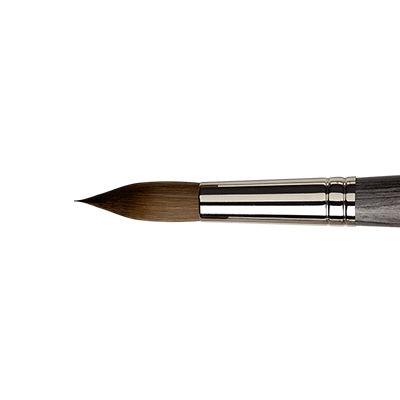
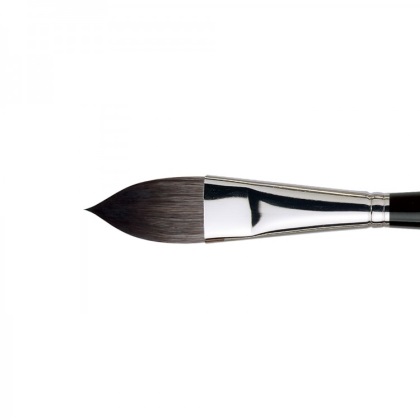
Pointed Round Brush
In pointed round brushes, the bristles at the center of the bundle are longer than those surrounding them. When the brush is dry and free of glue, it appears fuzzy, but its tip regains its shape as soon as it gets wet. Examples of this include watercolor background brushes, which can absorb a lot of liquid and color large areas with a single dip. All types of bristles can be arranged into a tapered, rounded shape, but in reality, only soft sable and squirrel hair (and their best imitations) can be shaped into a needle-sharp tip.
Blur brush
Essentially, the bristles on the rounded brushes are arranged in the same way as those on the pointed round brushes made of sable and squirrel hair. They often consist of several curved tufts that cross inward.
*Despite the difference between them, in art supply stores, flat and round brushes are usually used interchangeably, given their cross-sectional shape.
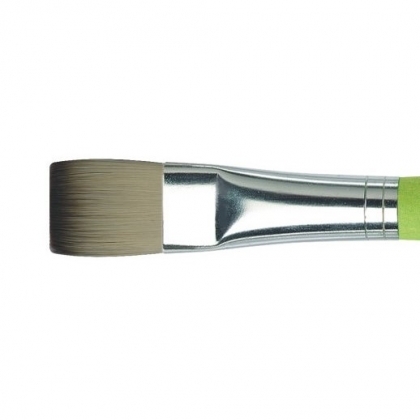
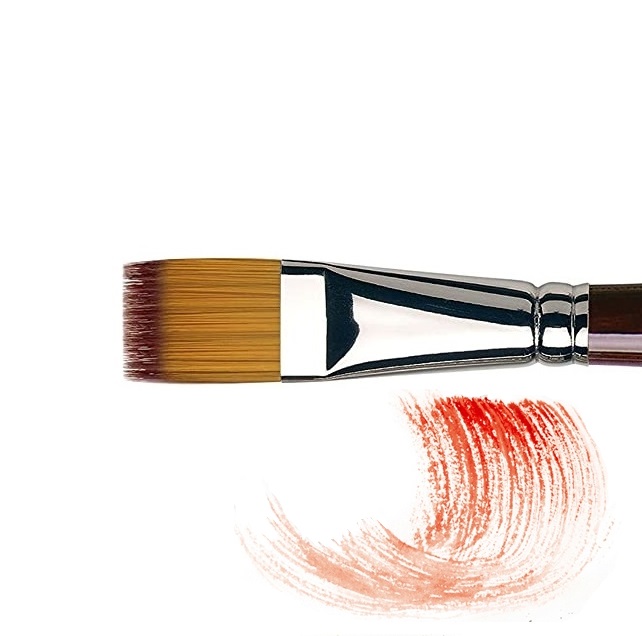
Flat brush
Flat brushes are made with a flattened and trimmed bundle of bristles, at least as long as the width of the ferrule. By changing your grip, you can use them to create wide or narrower lines. When pressure is applied, they spread wider than the ferrule.
Closed-tip flat brush
Two curved tufts of hair are securely fastened in the ferrule so that they point toward each other or toward the center. This type retains its shape better than a regular flat brush. In addition, the width of the ferrule gives a more realistic idea of how much the brush spreads when pressure is applied and what its stroke looks like.
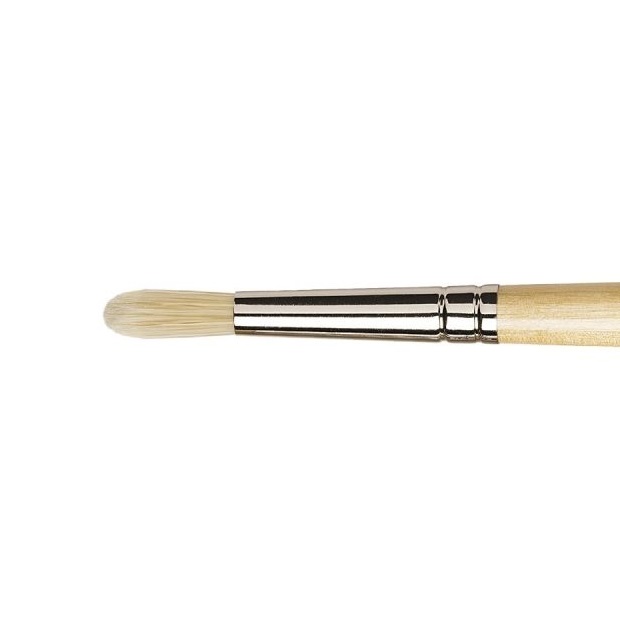
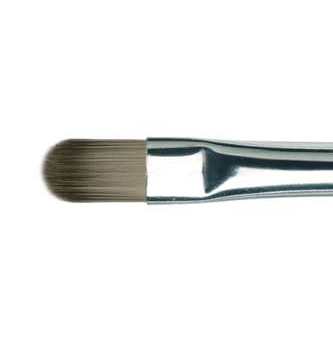
Hazelnut-shaped filbert
This type combines the advantages of flat and round brushes— the bristles are aligned parallel to the ferrule but end in a rounded tip. The brush may look sharp before the adhesive is washed off.
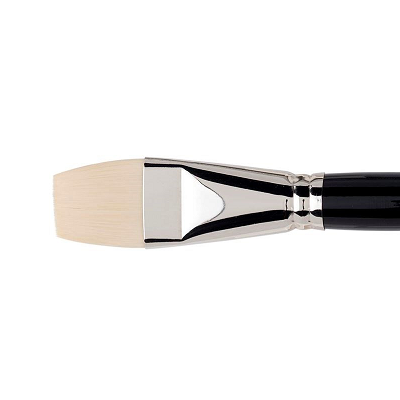
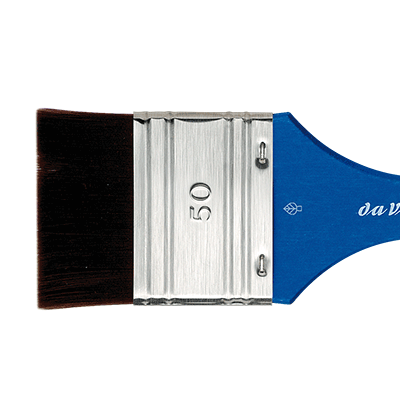
Wide flat brush (spalter/mottler brush)
A very wide, flat brush, similar to a painter’s brush, with a spatula-like application, which is used to cover large areas and is therefore convenient for priming. It is made from various types of bristles, with the softer varieties and those made from high-quality bristles also used for varnishing.
Tank brush
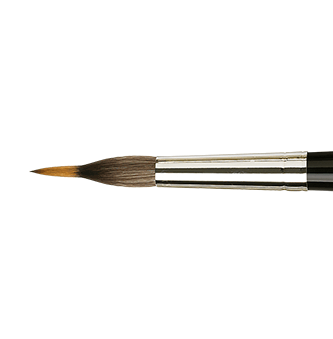
This type of brush consist of a thin, sharp tuft of bristles surrounded by shorter bristles that act as a reservoir from which the tip is “fed.”
A brush like this can be made from just one type of hair, but the best combination is red sable in the center and water-bearing squirrel hair on the outside. The purpose of the brush is to allow for extended painting before it needs to be re-dipped in paint.
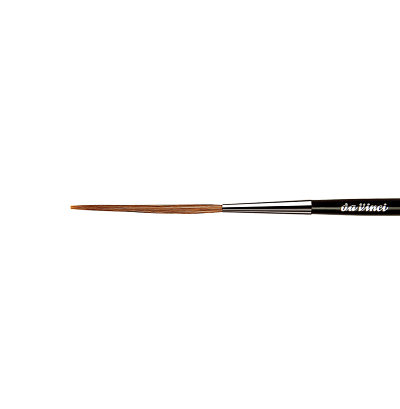
Pinstriping brush
The bristles of pinstriping brushes are very long and follow the movement of the handle and the hand. Designed to hold a lot of paint, they can be used to draw long, unbroken lines. There are round and flat varieties, the latter of which are also called lettering brushes.
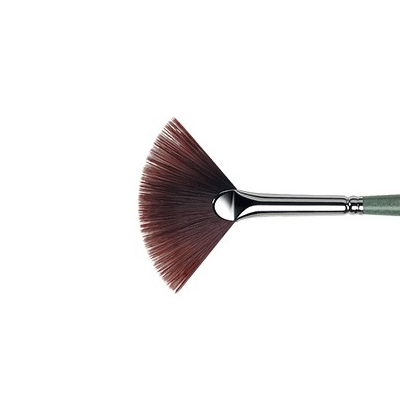
Fan brush
Fan brushes are made from both synthetic fibers and coarser bristles, and can therefore be used with various mediums. They are very practical for painting vegetation, sky and water elements, and for smoothing out color transitions with thicker paints such as acrylic and oil. To achieve this, the color blend can be created with a flat brush, and then the brushstrokes can be carefully blended with the fan brush. The fan brush is also a great tool for blending colors with dry pastels.
Pastel brush
Dry pastel brushes are round with soft, very short, and perfectly even bristles, designed to create smooth blends of dry pigments.
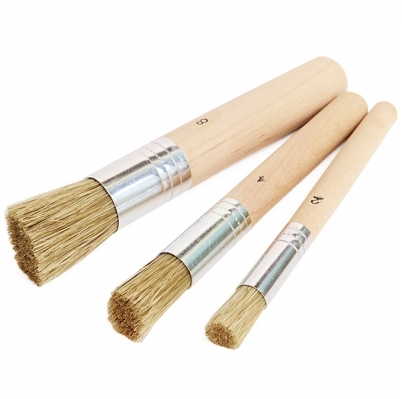
Stencil Brush
A firm , wide, round brush with a flat tip, ideal for filling stencils with thicker paints using dabbing or circular motions.
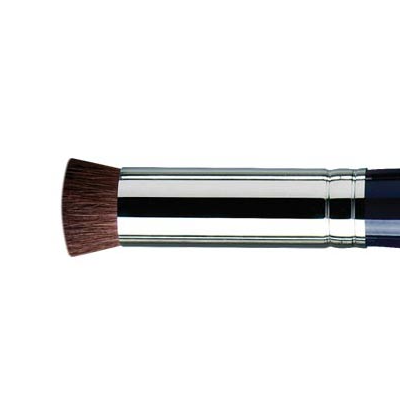
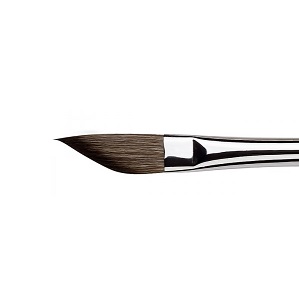
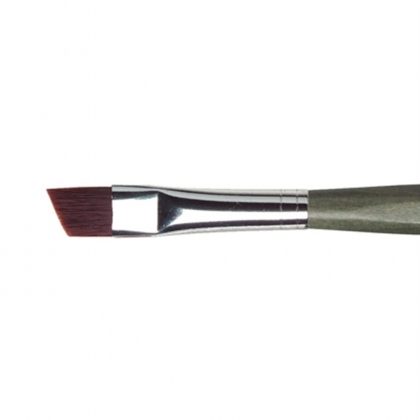
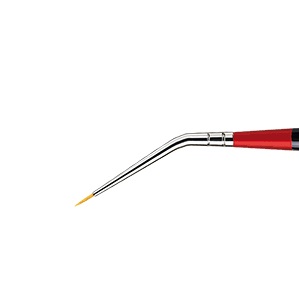
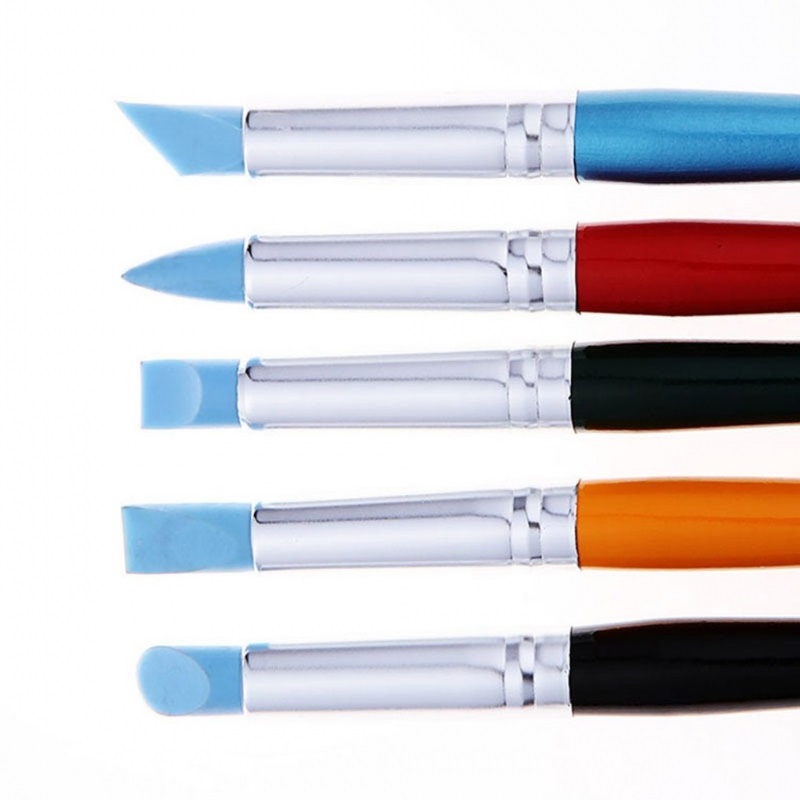
In addition to these basic types of brushes, there are a wide variety of shapes designed for decorative effects or specialized uses, such as cat’s tongue, combs, the so-calleddagger brush, various angled, curved, very thin/micro brushes, brushes with a water reservoir, foam brushes, as well as hybrid brushes with rubber or silicone tips, used for dry and oil pastels and for creating texture.
Types of Hair
, a soft, natural hair brush by Kolinski
Kolinski brushes are considered the finest among sable brushes. In fact, this name is somewhat misleading, since all so-called sable brushes are made entirely from the tails of various species—in this case, the Siberian sable. The name Kolinsky comes from the Kola Peninsula in northern Russia, but the species is also found in Mongolia and China.
To withstand the harsh climate, it has adapted by growing a thick coat of fur. A single tail yields a maximum of 6 grams of fur, and the price per kilogram of Kolinsky is equal to that of gold. The thicker the brush, the longer the hair needed, since half of its length remains in the ferrule.
Long bristles are rare, which makes wide brushes very expensive. Items with a diameter of about 1.5 cm or larger are usually made only to order.
During production , the strands can be arranged with a tip as thin as a needle, making them suitable for both backgrounds and very fine details.
Properties and Applications:
Sable brushes are durable, flexible, and always return to their original shape. They are also highly absorbent.
They are ideal for more fluid types of paint, such as watercolor, gouache, and ink, but are also useful for painting very fine details in oil painting.
Tip: When painting with oil paints, it’s best to mix the paints with a separate brush or palette knife, rather than with your expensive Kolinsky brush, which would otherwise wear out quickly.
Red samur
As we mentioned above, sable brushes are actually made not from sable (which, incidentally, is brown), but from members of the Porovidae family found in Asia. Characterized by shorter bristles and, consequently, a lower price, they rank second in quality after Kolinski.
For the experienced artist, red sable brushes are characterized by slightly less elasticity and durability, but they still have equally good water-absorbing properties, making them ideal for painting with watercolor, gouache, ink, and sometimes oil.
Squirrel
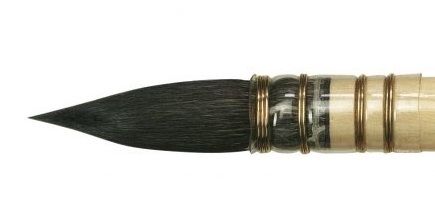
Squirrel-hair brushes are traditional in France and are often referred to as “Petit Gris” (from the French for “little gray,” or the species of squirrel native to those regions). In this case as well, the hair is harvested exclusively from the tail. Nowadays, the fur of the Canadian squirrel and the blue Kazan squirrel (from the city of Kazan in Russia) is used, since the French variety is protected. Often, instead of a metal ferrule, this type of hair is combined with a so-called “French ferrule” made of a transparent plate or a bird’s feather, secured with wire. Squirrel brushes can also be shaped with a very sharp tip.
Properties and Applications:
These are the brushes that hold the most water. Their bristles are very soft and delicate and can break if too much pressure is applied, which makes them suitable only for the wettest types of paint, such as watercolors and ink.
A hair's breadth
For brushes made of ox hair, only the long hair from the front of the ears is collected. The best source for this purpose are Alpine cows from France, Switzerland, Italy, Austria, and Slovenia. The brushes come in various colors—the light ones are mainly from the Alps, while the dark brown and black ones come from Central and South America. They allow you to create a fine tip.
Properties and Applications:
Ox-hair brushes are highly wear-resistant, affordable, and have good water-absorbing capacity, and are suitable for all types of paint.
Goat hair
To make goat hair brushes , the hair is selected along the length of the animal’s spine. The hair can be white or brown. It is also used to make more affordable imitations of squirrel-tail brushes.
Goat hair is also wear-resistant and has good water absorption.
It can be used for painting with watercolors, gouache, and tempera, as well as with ink, and for applying varnish.
Stiff natural bristles
Stiff brushes made of natural bristles are crafted from pig bristles, the quality of which is determined by their origin. Only bristles from the animal’s spine are used. They are characterized by their split tips.
The best bristles come from the Chinese province of Chongqing, while brushes with slightly softer bristles are mainly produced in Hankou. The bristles are sorted by length and bleached.
The bristle is firm and elastic, always regaining its shape, and holds thick paints such as acrylic and oil well.
Bristles of European origin are also used, but mainly for less expensive hobby and student brushes, since they are of lower quality in every respect. They are not usually bleached for this purpose.
Synthetic hair
Brushes with synthetic bristles are becoming increasingly popular. The first ones were made of nylon, which was later replaced by polyester fibers, which are much more absorbent.
Synthetic fibers range from stiff to relatively soft and can be dyed various colors to mimic natural hair. They offer excellent value for money for artists. The ultimate goal in the global production of polyester-fiber brushes is for them to match the quality of those made from expensive and rare types of animal hair.
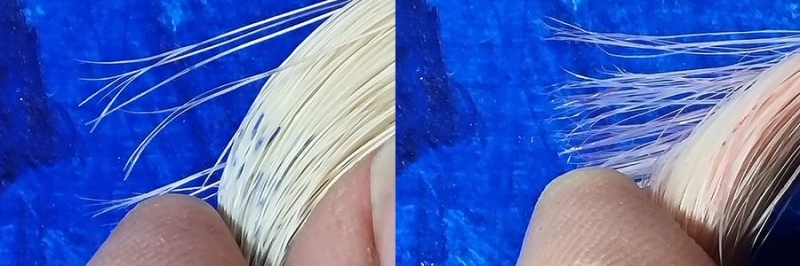
This type of filament is very durable, with average to good liquid dye retention properties and good ability to retain concentrated dyes. Polyester is durable in use. with one technical drawback—if used to apply rapid, repetitive pressure while applying thick paint, its tips burn due to the heat generated by friction, which permanently distorts the brush’s shape and causes the bristles to stick out in different directions.
Translated from Royal Talens’ Artists’ Materials Manual (2020): Martina Petrova


