

How do you choose an easel?
Home » Uncategorized » How do you choose an easel?
Before choosing an easel...
As some of the most durable and expensive art supplies, easels are an important investment for artists and should therefore be chosen carefully.
To choose the tripod that best suits our needs, we first need to ask ourselves a few questions:
- What will the easel be used for—for painting or for displaying artwork and visual materials?
- Where will it be used—at home, in a workshop, in a studio, or outdoors?
- How compact, lightweight, and portable should the tripod be?
- In what position will the artist work—at a desk or a table, sitting or standing?
- What formats does he prefer to paint in—what size easel is needed, and what capacity should it have?
- Is storage space needed for easel accessories, and what other specific needs does an artist have depending on their skill level?
- And, of course, what value for money does it offer given its capabilities?
With this unique questionnaire, the variety of tripods is narrowed down to a minimum, making it as easy and quick as possible to choose one that will truly be useful and last a long time.
The Most Common Types of Tripods
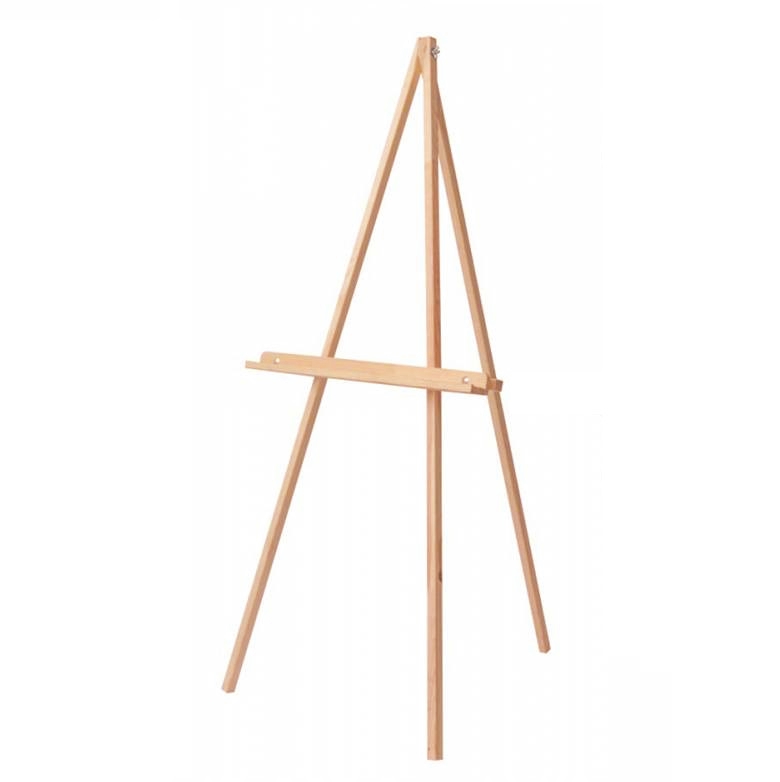
Simple Tripod
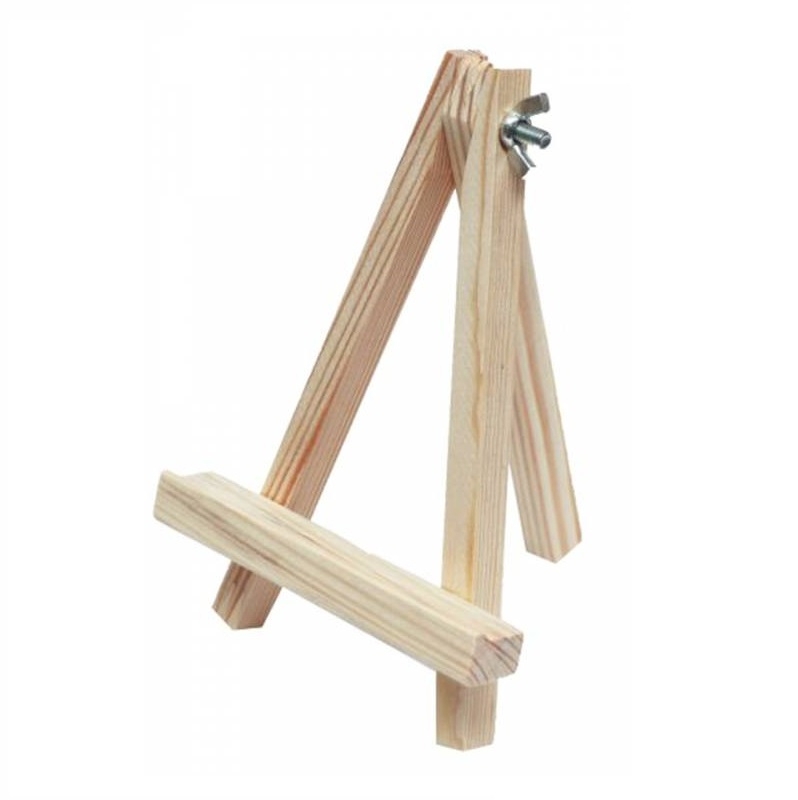
These are the simplest types of stands and are used for exhibition or gallery purposes. They consist of two thin, interlocking legs supported by a third (hence the name “tripod”) and a crossbar for holding the canvas or panel upright. The angle of the tripod and the height of the canvas can be adjusted using the three locking bolts. They are usually made of lightweight pine wood. They can be easily folded flat or completely disassembled by hand.
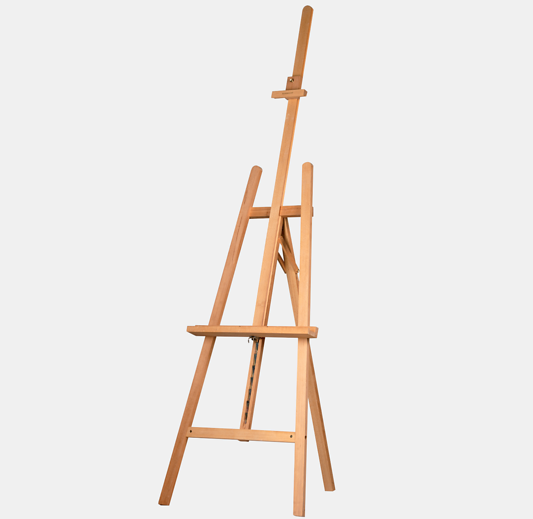
Lyre-style easel: A-frame easel for painting
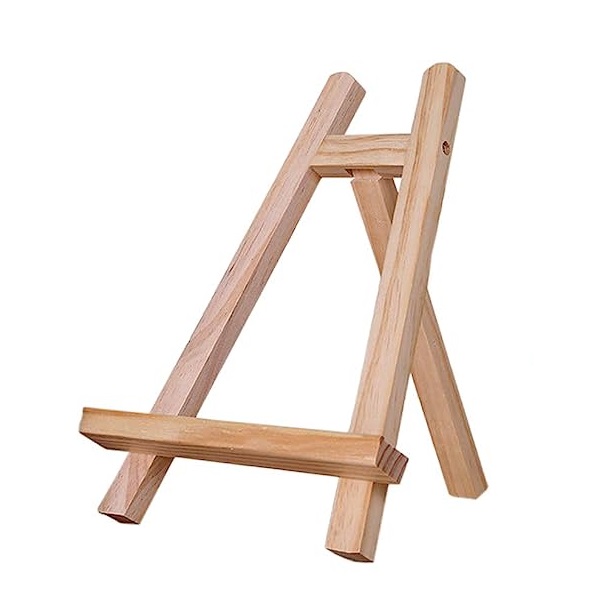
The A-frame tripod is again based on the basic tripod design —two front legs supported by a single leg— but here it is much more stable, with the ability to secure the canvas from both the top and the bottom. The tilt, as well as the tripod’s support bar, can be fixed or adjustable on higher-end models. The price range corresponds to the strength of the material from which it is made—pine for more budget-friendly models and beech for more expensive easels. They are usually transported fully assembled and are suitable for indoor painting. When folded, they are completely flat.
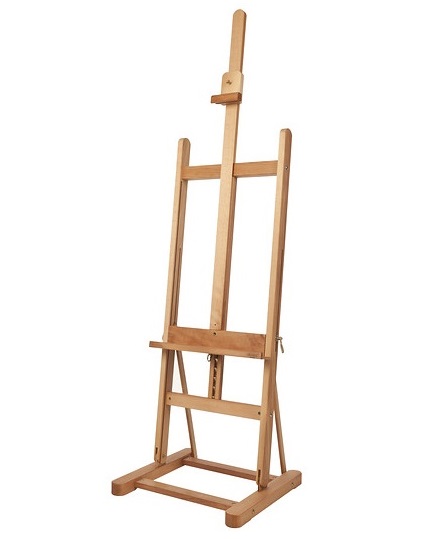
Professional Tripod: H-shaped
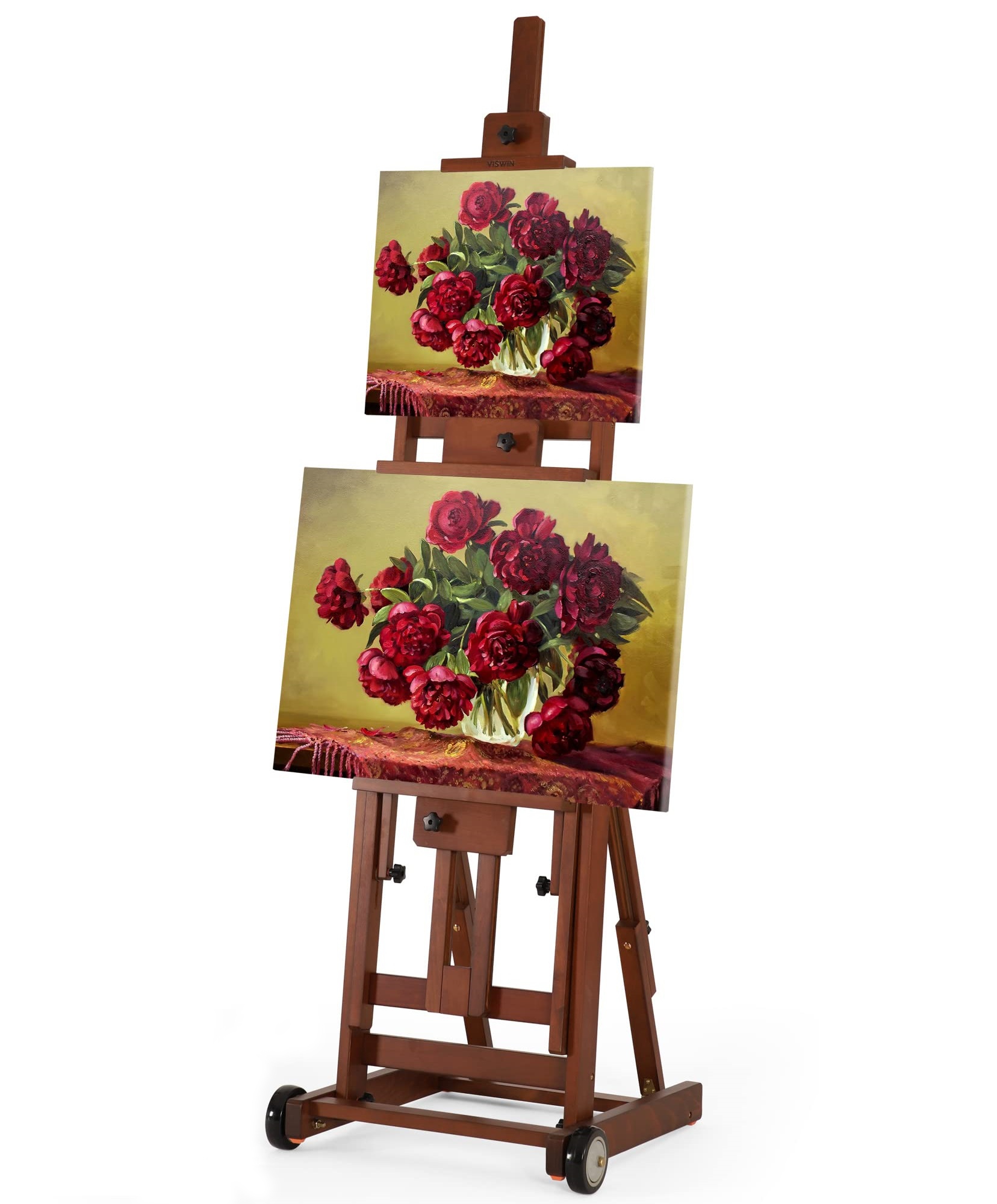
These are the most stable and sturdy painting easels at home or in the studio. Since they are quite heavy, they are not designed to be moved frequently, but there are models designed for this purpose that come with wheels. They are compatible with a wider range of canvas sizes and allow for a greater angle of inclination; the more expensive models among them can even support the painting surface in a horizontal position (which is useful for watercolorists). The better models also feature a shelf for supplies. For greater stability Tripods with this mechanism are usually made of beech or oak. This model offers perhaps the widest variety of sizes and proportions.
The most professional H-shaped easels consist of a comprehensive drawing and storage system featuring a shelf unit, fold-out shelves, compartments, mini drawers, or a box at the base, so that everything you need is within reach while you work. Models capable of supporting two canvases at the same time are common.
Some Variations of the H-Shaped Tripod
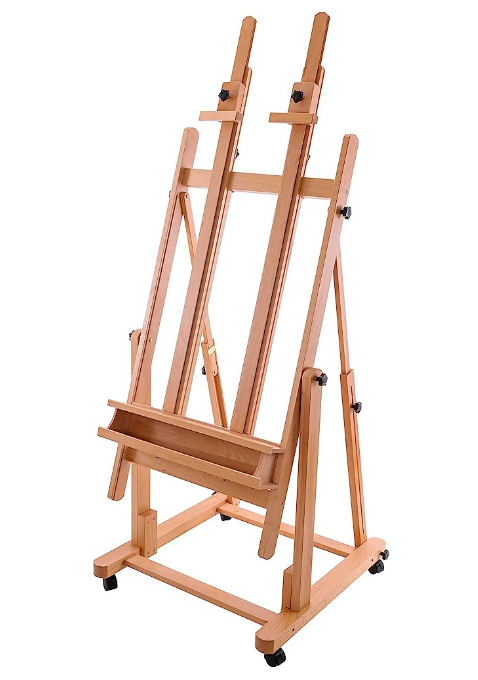
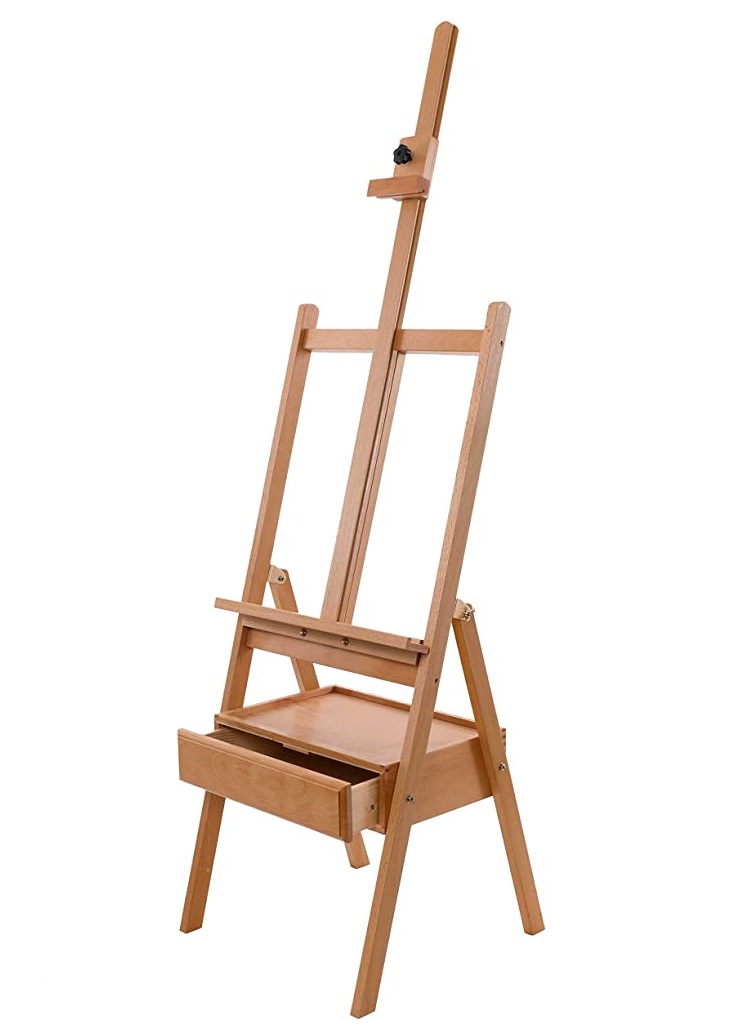
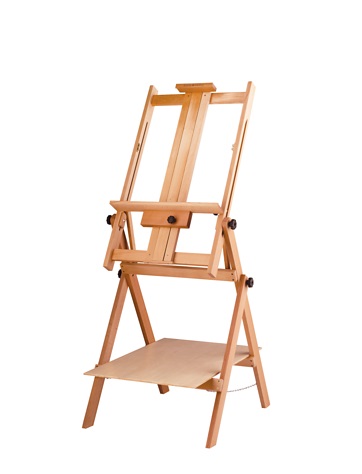
Folding tripod
Folding tripods are the lightest and most compact tripods, suitable for outdoor use. They consist of three collapsible legs and a support arm that tilts to a horizontal position or acts as a crossbar, along with a clamp to secure the canvas. The retractable legs allow the tripod to be folded into a bundle, usually measuring 60–80 cm, which is secured with straps or stored in a case for easy transport. The advantage of the adjustable legs is that they can adapt to uneven surfaces. This type of of easel is suitable for drawing with pastels, pencils, and watercolors, where no heavy pressure is applied. It is common to find made of lightweight metal such as aluminum.
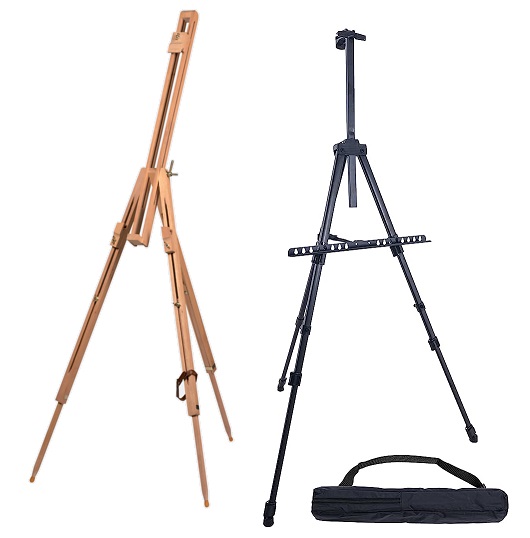
Tripod with short legs
These specific tripods consist of a narrow support shaft ending in three short legs, which can support even large canvases. Some of them are also designed with a hinged arm for positioning and painting in a horizontal position. Many of these easels have a center bar for holding two canvases at once. They also fold into a single, longer bundle for easy storage.

Sketch Tripod
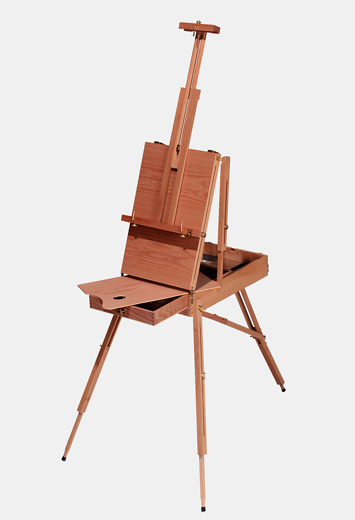
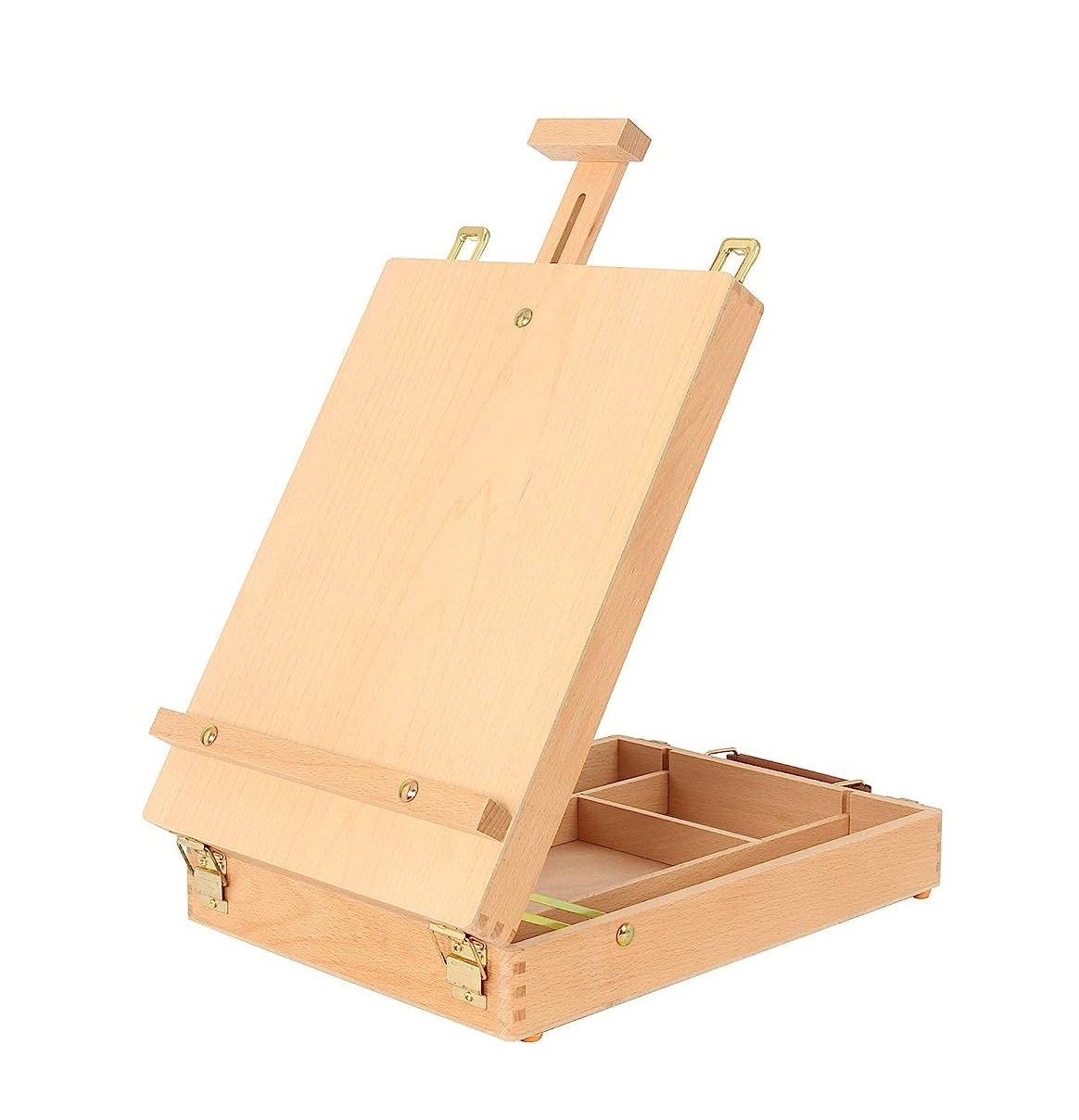
Sketch boxes, or French-style easels, consist of a box with compartments and a shallow storage drawer, an adjustable clamping rod for the canvas, and feature the same retractable legs as portable tripods. All of this fits into a compact accessory case, usually including a wooden palette, and weighs 5–8 kg. Its design also allows it to be used as a tabletop easel. Sketch stands are among the most expensive, but also the most useful and functional stands.

Tabletop tripod
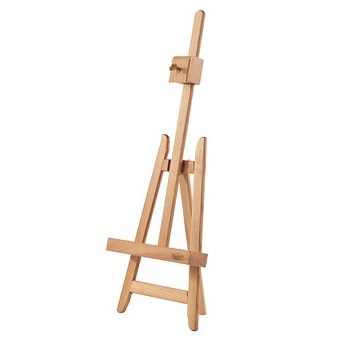
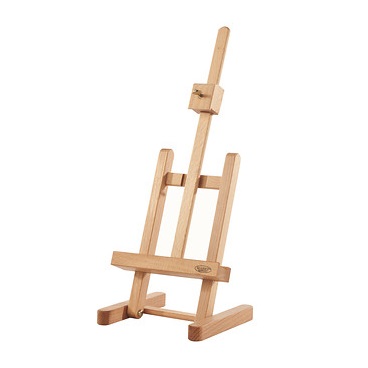
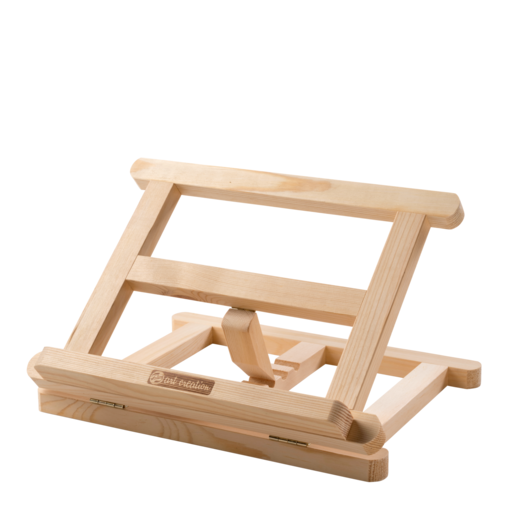
Easels for painting on a table or desk range from scaled-down versions of larger models (primarily the H-shaped easel) to simple tilting stands, as well as wooden boxes or cases with compartments and drawers. They come in portrait and landscape orientations, as well as with a solid back.

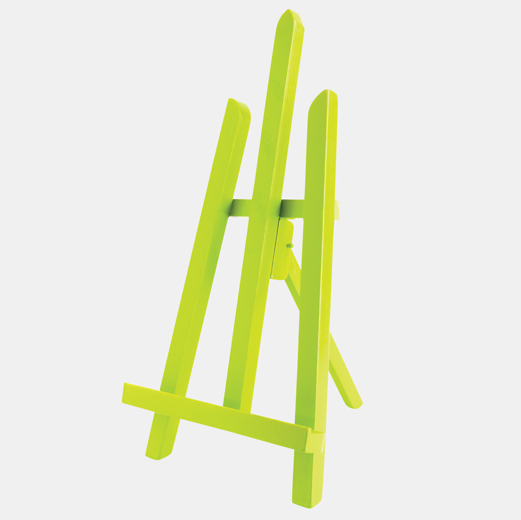
Decorative Tripod
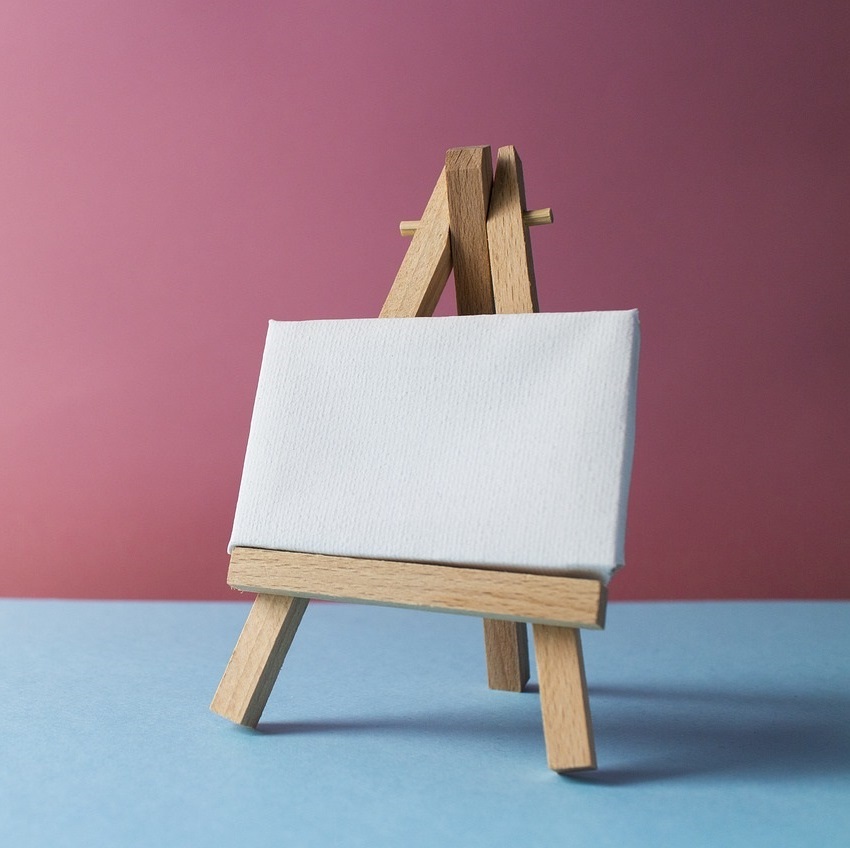
For desktop stands , we can also add mini stands for decorative purposes, suitable for small canvases, signs, pictures, souvenirs, and photography. They are available in natural wood color or painted.
The Benefits of Painting from a Easel
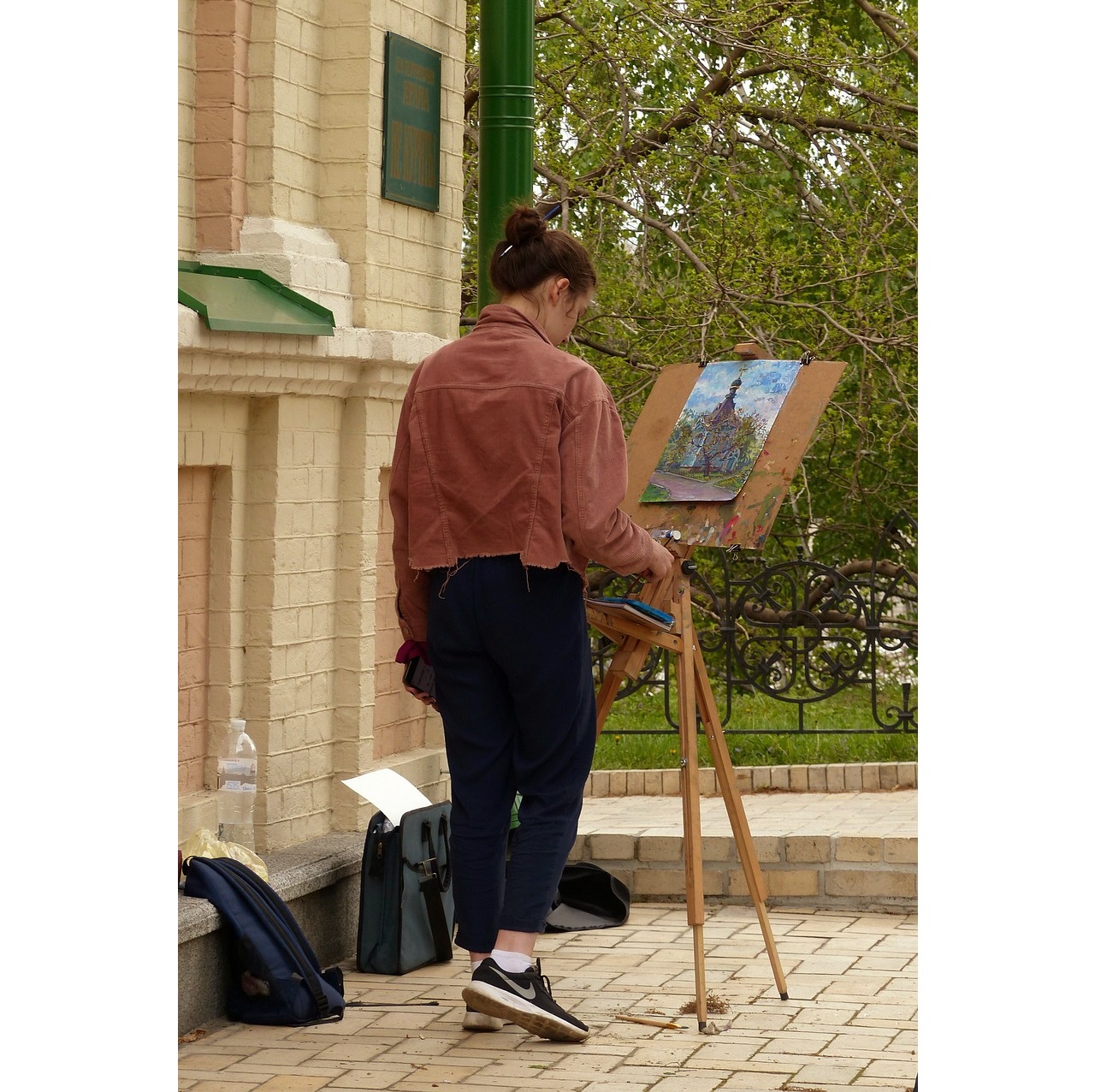
An easel is an essential piece of equipment not only for experienced artists but also for beginners, offering numerous advantages:
- It allows for a great deal of freedom of movement , both in the overall body posture and in the arm, which significantly influences one’s style and painting possibilities. Thus, the gesture with brush is not limited to the wrist but can be executed with the entire hand;
- By stepping back from the easel, one gains a realistic sense of the overall composition, its impact, and its level of completion, allowing one to notice and correct mistakes in time. This also speeds up the process when working from a sketch or photograph, or when drawing a live model or composition;
- In this vein, the larger the format you are working on, the more important it is to view it as perpendicularly as possible— rather than at a slight angle—to avoid perspective distortion;
- Painting while using an easel relieves tension in the back, shoulders, and neck during long painting sessions, promoting good posture;
- The angle of the easel can be adjusted to eliminate unwanted, distracting glare from wet paint. Some easels allow the canvas to be tilted toward the artist, which is important for those working with dry pastels—this prevents the pigment powder from accumulating on the painting. Others, as we mentioned, can be used in a completely or nearly horizontal position, which is convenient for watercolor painting;
- An easel is an easy way to set up and take our studio with us wherever we find inspiration to create. Setting up the easel creates a workspace—not only physically but also mentally— and helps us achieve a focused state of mind (known as “flow”), which is at once productive, calming, and relaxing.
Author: Martina Petrova


