

Specialty Mediums and Varnish for Acrylic Paints
Home » Uncategorized » Specialty Mediums and Varnish for Acrylic Paints
Acrylic Paint Thinner
The pouring technique for applying acrylic paints is achieved by mixing paint or ink with a pouring medium and pouring the mixture onto a canvas or other surface. The colors can be poured all at once or separately, after which the surface is tilted in different directions until it is completely covered, creating unpredictable abstract shapes and patterns. Once dry, the pouring medium becomes transparent and colorless. It can be thinned with water, and for a thicker consistency, an acrylic binder. Gently stirring the paints in the container prevents the formation of bubbles.
Photo Transfer Gel
Using transfer gel, you can transfer copies or images printed with a laser printer onto cardboard, canvas, wood, stone, and fabric. To do this, generously coat the colored side of the print with the transfer gel and place it face down on the desired surface, which can also be treated with a thin layer of the gel beforehand. The sheet is carefully pressed and smoothed from the center outward to remove any air bubbles that may form, and then left to dry for 24 hours. The final step is to moisten the paper with water and rub it off, leaving only the (mirror-image) design, which can then be colored or varnished.
Phosphorescent Gel
This is what is known as a glow-in-the-dark medium, which charges when exposed to light and remains visible in the dark. Its brightness and the duration of the glow depend on the intensity and duration of the light to which it was previously exposed.
The effect is best when the medium is applied on its own as the final layer of the painting. When mixed with other colors, its luminous properties diminish significantly.
Grainy structural paste
Acrylic relief paste for creating a plaster-like texture, containing ground volcanic rock with fine, medium, and coarse grain textures. It can be applied in thin or very thick layers and can be reshaped until it is completely set (for example, by “cutting” it with a putty knife). It can be painted after drying or mixed with paint beforehand.
Pearl Medium
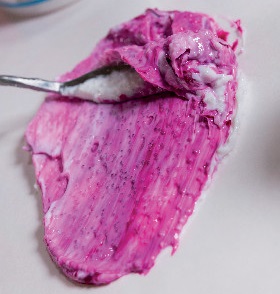
Pearl medium resembles relief paste, but instead of pumice, it contains tiny transparent glass beads. It is best to use transparent colors when coloring it, so as to highlight the transparency of the pearls.
Brocade
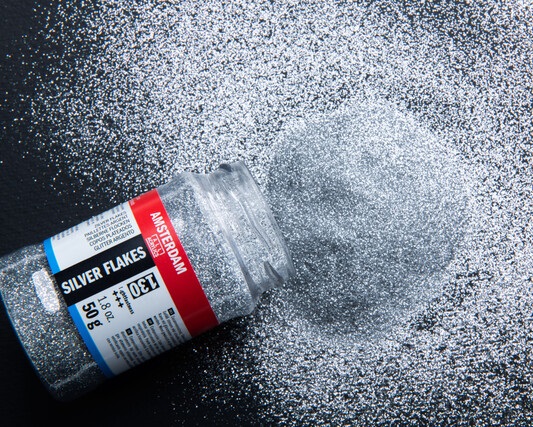
Fine brocade, or glitter, can be added to transparent paints or mediums for a more delicate look, or sprinkled onto wet acrylic paint for a more intense effect. The sparkle of the particles is preserved and enhanced when used with glossy gels and varnishes.
Varnish for Acrylic Paints
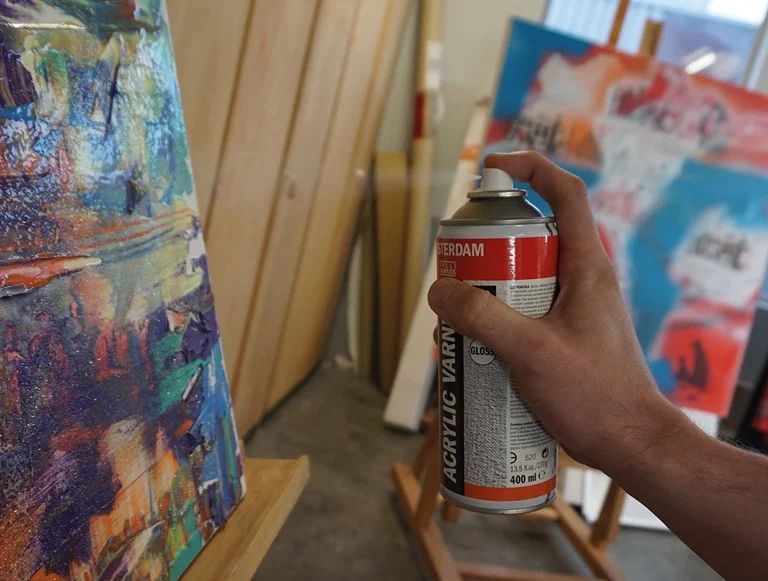
Acrylic varnishes consist primarily of a solution of acrylic resin in a thinner. They protect the colors from the elements and determine their sheen. High-quality varnishes can be removed from the painting without damaging the paint, even after many years.
During the varnishing process, the elements involved—the painting and the varnish—must be at room temperature. For example, if the painting is brought from a cold room into a warm one, condensation may form on its surface; the moisture from this condensation could become trapped under the varnish and eventually turn white. This same moisture would prevent the varnish from spreading evenly and adhering properly to the paint, causing small droplets to form.
Drops can also form if the paint layer is sealed too tightly due to its high binder content (in the form of a gel or medium). To prevent this, wipe the painting with a cloth dampened with a small amount of white spirit; once it has evaporated, the varnish can be applied. Amsterdam acrylic varnish is available in the following finishes: matte, semi-matte/satin, gloss, and high-gloss.
It is important to remember that matte and semi-matte nail polishes (as well as when mixing glossy and matte polishes) should be applied in only one direction to achieve an even sheen. Also, apply only one coat to prevent any visible streaks or uneven shine. If you want to apply more than one coat of matte varnish, you can use a spray. The matte finish of the varnish is actually due to the dry ingredient silica, which resembles finely ground glass and tends to settle. This makes it necessary to shake or stir the varnish well before use.
All-Purpose Varnish
Acrylic paint is often used not only for painting, but also for hobbies and crafts. In such cases, a harder, scratch-resistant finish is needed, such as Amsterdam’s Permanent Varnish No. 133.
Acrylic Cleaner
Acrylic paint is known for its quick drying time, which is especially noticeable when working in the sun. If you leave a brush with acrylic paint on it and it dries, you can remove the paint with Cleaning Fluid No. 013 as follows:
Soak the dried-out brush for about an hour in a glass container with a small amount of the liquid, then wash it with soap and water. Submerge only the bristles of the brush, as the cleaner can corrode the varnish on the handle. Do not use to clean synthetic fabrics, as they may also be damaged.
The cleaner is completely biodegradable.
Oil paint on acrylic
Acrylic paint is not a good base for oil paints because it is not porous enough and is very flexible. However, there are two ways to achieve a reliable result:
Paint is applied over a primer suitable for both acrylic and oil paints. The sketch is built up using diluted acrylic paint, which leaves the surface sufficiently porous after it dries. This allows the oil paint to penetrate the dry acrylic resin and adhere to the primer.
When sketching with acrylics, you can use gesso instead of white acrylic paint. Any mixed color should contain enough gesso so that the oil paint will adhere well to it afterward. All Royal Talens gesso products that we offer are formulated specifically to work with both acrylic and oil paints. Thus, if the sketch itself is dense enough, the preliminary priming of the surface can be skipped entirely.
Translation from Royal Talens’ Artists’ Materials Manual (2020): Martina Petrova


