

Watercolor Masking Fluid: User Guide
Home » Uncategorized » Watercolor Masking Fluid: User Guide
Introduction
The traditional way to create white areas in watercolor paintings is not to add white, as is done with other media, but simply to leave the paper unpainted. Watercolormasking fluid is the perfect tool for achieving crisp lines and outlines when using this technique.
Its consistency makes it easy to apply with precision, and its reliable ability to isolate the paper from the paint allows you to color freely until the picture is finished. The masking fluid helps us focus specifically on adding color, rather than on avoiding or “protecting” certain areas, which is sometimes impossible.
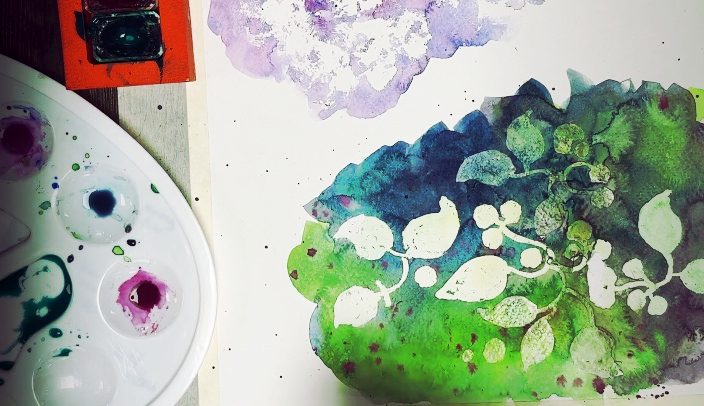
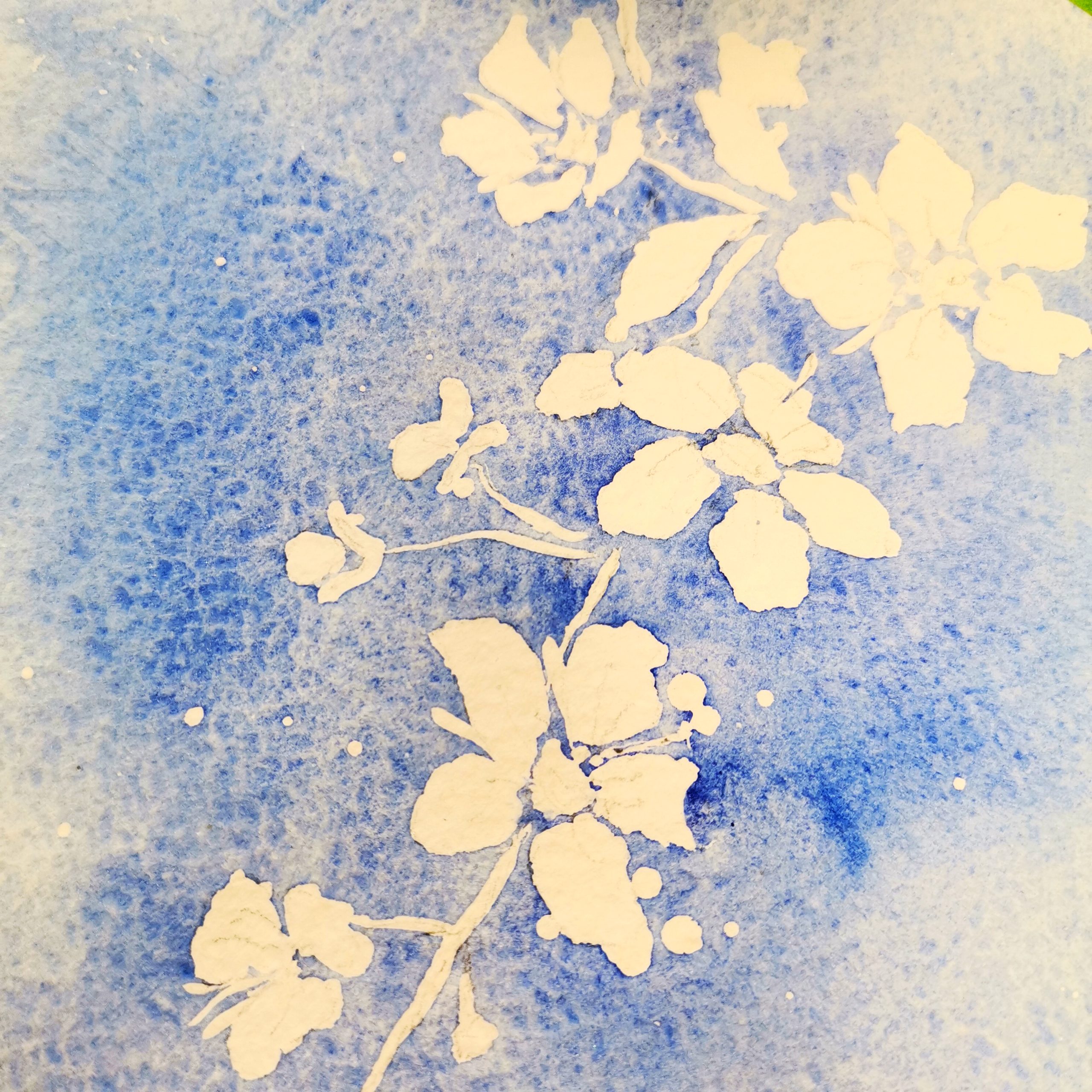
It is typically used to create contrast and pure white highlights, but the white areas can be further colored or softened with a wet brush. Liquid rubber is useful for painting in the “negative” style, in which the main elements of the painting’s composition are lighter than the surrounding background.
What is a masking fluid for watercolor?
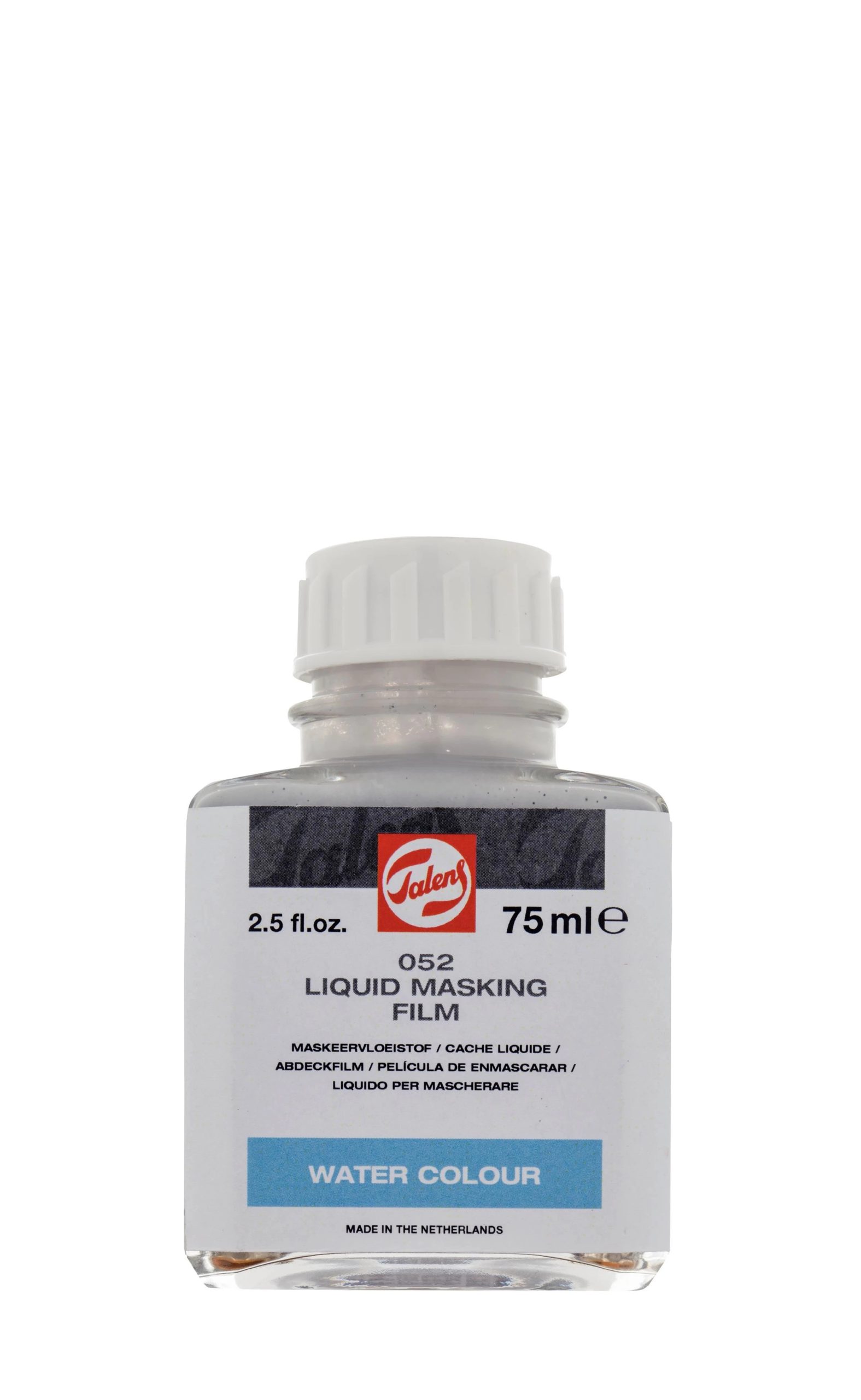
The masking fluid is an additive for water-soluble media such as watercolors, tempera, and some types of ink.
It is an ammonia-based latex solution— which explains its unpleasant odor—containing a small amount of pigment.
Also known as liquid painting rubber, latex milk, and reservoir, the masking fluid is most often yellowish-white, blue, or gray, which makes it visible on the paper.
The layer of liquid rubber acts as a completely waterproof barrier on the paper, leaving clean areas with distinct outlines. It is useful for watercolorists and calligraphers.
Preparation
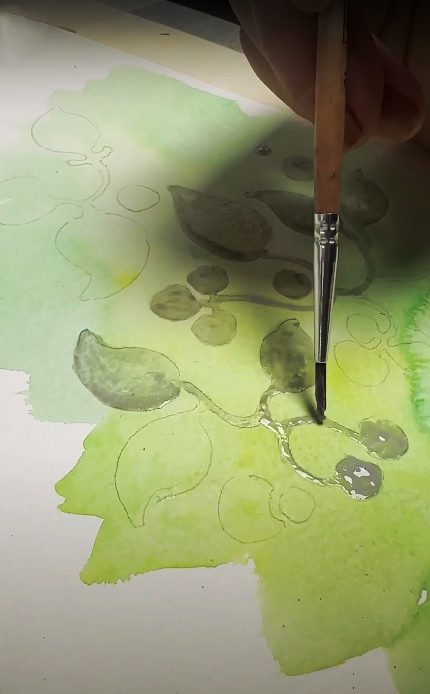
Before taking any steps with the liquid, it’s a good idea to test it on the paper we’ve chosen. This will prevent the paper from tearing when peeling it off, as often happens with lower-quality watercolor paper. The liquid should be applied lightly to a completely dry surface.
Once we’ve finished this check and have planned exactly where to apply the rubber, we pour a small amount of it into a container and close the bottle. One tablespoon is usually enough for fine details. The liquid dries out gradually, even when tightly sealed, so it’s a good idea to minimize its exposure to air.
What is used to apply the concealer?
Watercolor masking fluid is a well-known enemy of traditional brushes, as it irreversibly clumps the bristles together. We never use our favorite brushes to apply masking fluid. If you want to work with a standard brush, it’s a good idea to get some inexpensive disposable brushes or to set aside an old one for this purpose.
A helpful tip before you start is to saturate the bristles with soap or soapy water. This makes cleaning easier afterward and extends the life of the brush. Here’s how you can alternate the steps: soapy water—squeeze out excess water—masking fluid—painting—rinse with clean water.
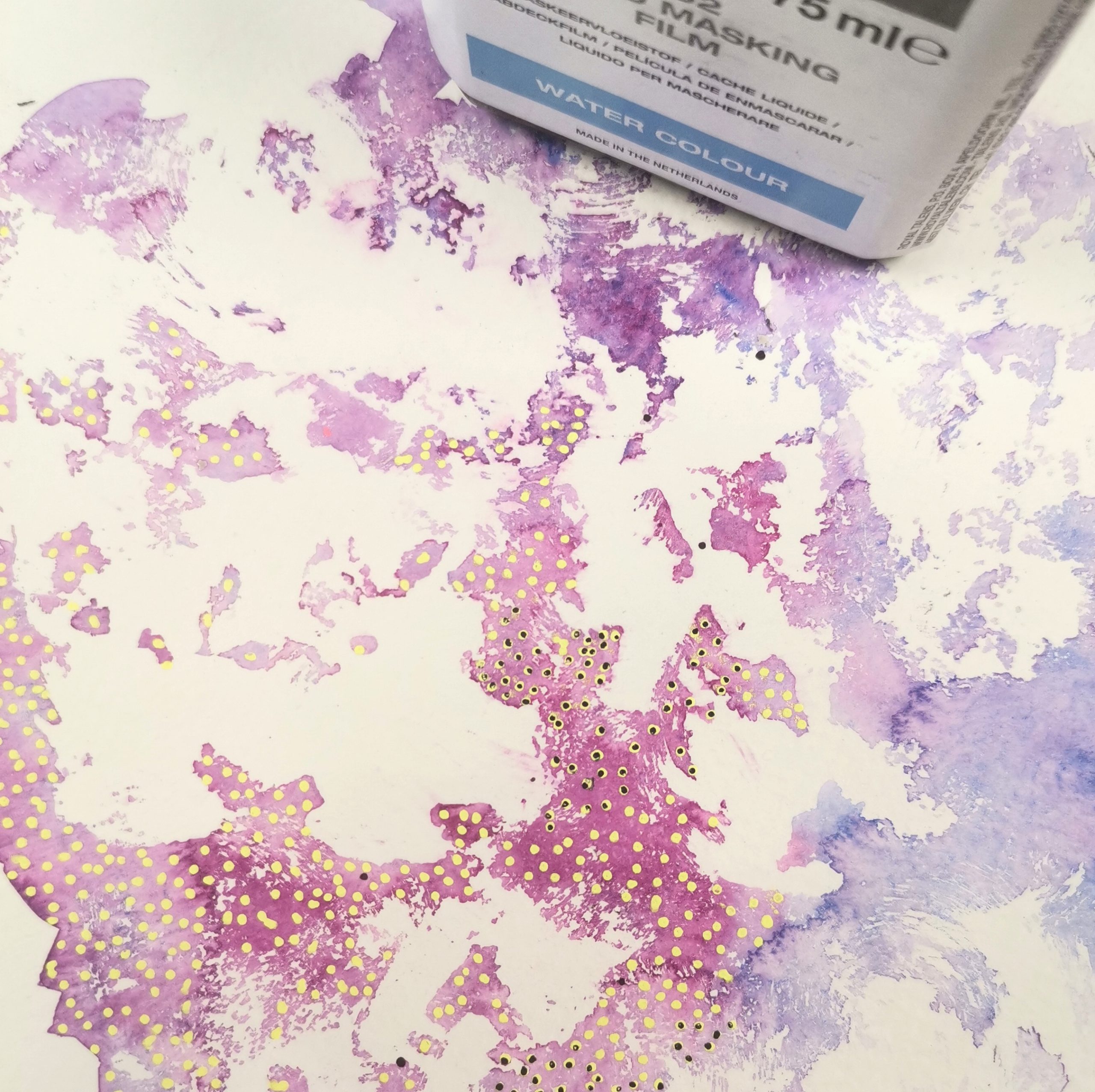
Other tools for applying liquid rubber may include:
- the straight edge, which is very handy for drawing precise straight lines and can be adjusted
- metal and bamboo nibs for ink
- the punctuation marks
- silicone brushes, which come in various shapes and are very easy to clean
- toothpicks, cotton swabs, and other similar items on hand
- a toothbrush that’s convenient for generous brushing
- the different types of fungi and rollersthat can be used to create textures. The same effect can be achieved using coarse fabric, mesh, or bubble wrap.
Whichever option we choose, once the rubber has dried , gently run a paintbrush over it without rubbing, so as not to lift the dried liquid.
Drying and Removal Time
On paperusually dries in 10 to 30 minutes, depending on the composition of the specific brand and the thickness of the layer. You can continue painting while it’s still wet once it has completely dried.
It’s extremely important not to leave it on the sheet for more than a day or two. The sooner you peel it off, the easier it will be. It’s best to do this immediately or within a few hours after the drawing has dried. That way, we can be sure that the paper won’t be damaged when we remove it.
Peeling is done carefully with clean fingers, a hard eraser, or a bread eraser. Depending on the type and method of application, this can be done by rubbing it off gradually or by pulling it off in one piece. If the eraser has been applied to a colored area, the color may fade as it is removed. Peeling it off reduces the risk of tearing the paper.
More Helpful Tips
- Coagulation (thickening and the formation of lumps until it dries) of the masking liquid is completely natural. The process is accelerated when air is introduced into the container, for example, by shaking it. However, if necessary (as required by the composition of some brands), the bottle containing the liquid can be shaken or stirred gently before use.
- A clever trick for extending the life of the tire is to store the bottle with the neck pointing down. Once tightly secured, the cap can be further wrapped with tape or aluminum foil.
- If it thickens slightly, before it starts to form lumps, latex paint can usually be thinned with a few drops of water. Similarly, it can be lightly tinted with watercolor if it isn’t clearly visible on the paper.
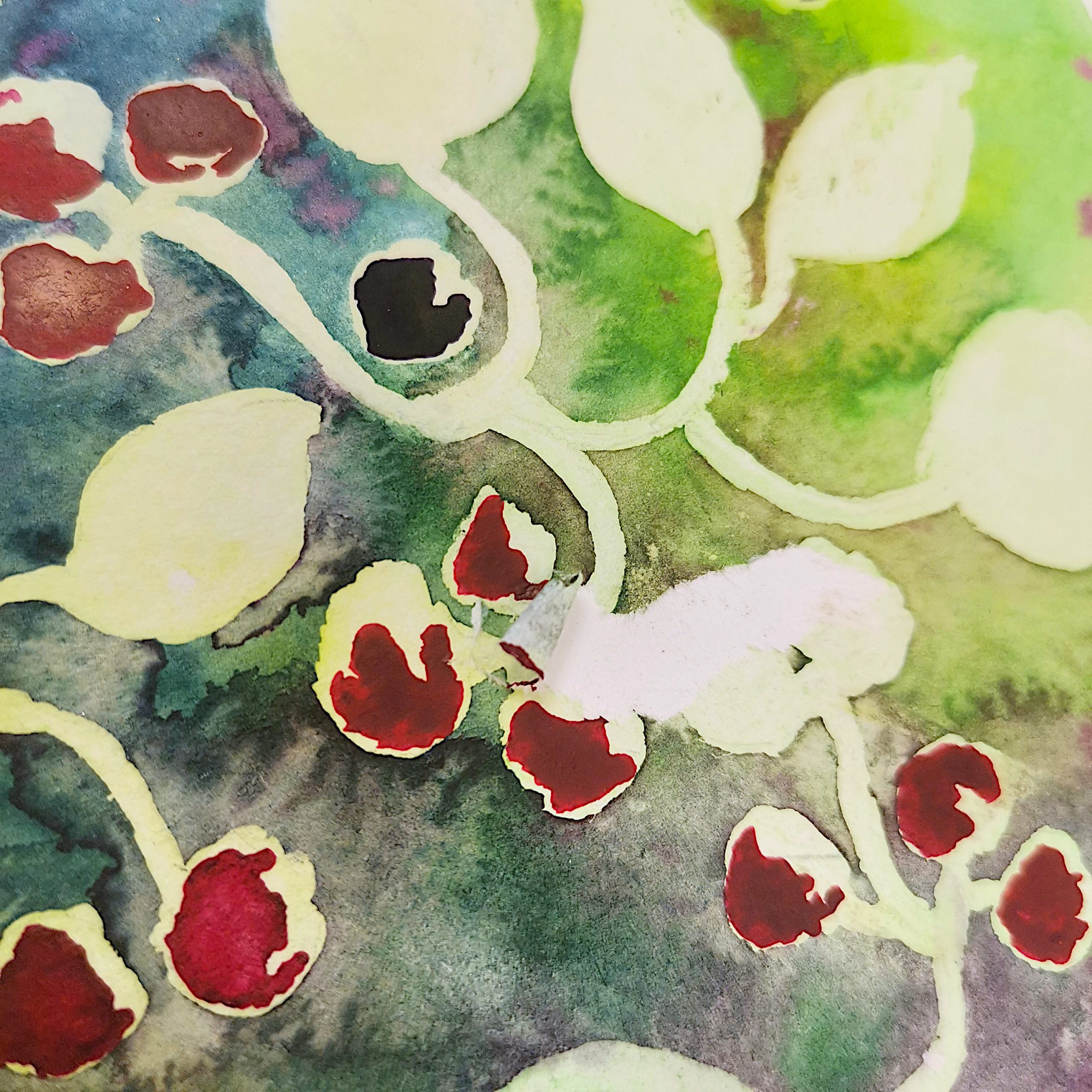
- It’s good to let to be allowed to dry on its own. Speeding up the process with a hair dryer can cause it to stick too tightly to the paper, making it impossible to remove without damaging the painting . You can use the cool air setting.
- It is recommended that liquid painting rubber not be applied to large, continuous areas. The product is intended more for shapes and details that would otherwise be difficult to achieve simply by tracing around them with a brush. Applying too much liquid to a large area increases the risk of the paper tearing when peeled off. For large uncolored areas, we can apply it only along the edges.
- With proper storage the masking fluid usually remains usable for up to 2–3 years. A very strong, unpleasant odor, the appearance of large lumps, and a change in color indicate that it’s time to throw it away. Spoiled rubber is not only difficult or impossible to apply, but it can also leave a stain on the paper.
Author: Martina Petrova


