

The Different Types of Pastels for Drawing
Home » Uncategorized » The Different Types of Pastels for Drawing
Pastels are divided into dry, oil, and wax pastels, all of which come in softer or harder varieties depending on their composition. The technique for drawing with charcoal and chalk is very similar to that used with dry pastels.
Dry pastels
Dry pastels are manufactured so that their composition includes as few additives as possible besides the pure pigment. This is achieved through a combination of pigment, a minimal amount of binder, and extremely fine kaolin. The well-balanced ratio of these ingredients makes it easy to apply color, giving it a velvety feel. When drawing with dry pastels, the colored powder transfers to and remains on the paper. Thus, in theory, any surface with sufficient texture can be used. However, more satisfying results are achieved when using specialized pastel paper with a light texture.
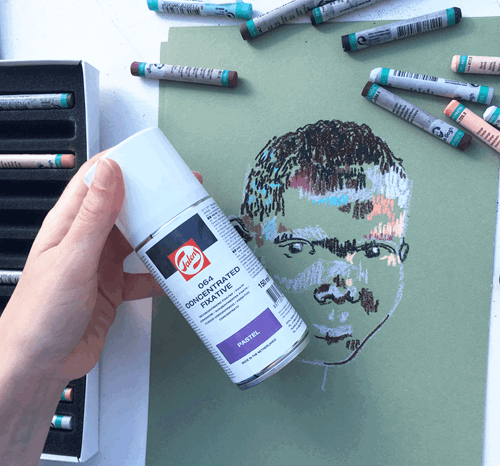
Unlike paints, pastels do not adhere to the paper through a binder in their composition. The pigment particles simply remain embedded in the fibers of the paper and are therefore prone to smudging. To seal and protect pastel drawings, you can use a spray fixative.
Aerosols of this type usually alter the velvety appearance of the colors and can darken them if used excessively. Therefore, the best way to apply them is to let each layer dry (alternating between pastel and varnish), with the final layer either sprayed on or finished with a little color and left as is.
Drawing Chalk – Rembrandt and Van Gogh Carè
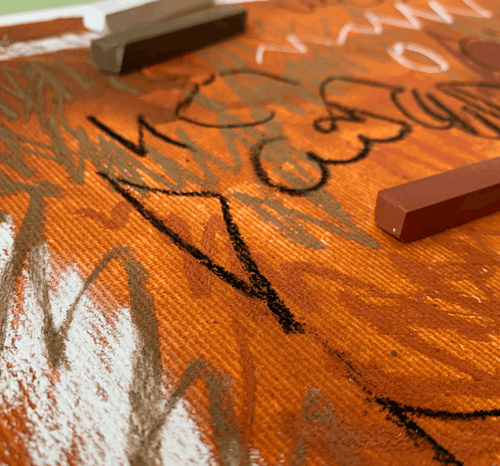
Carè pastels are also made from the ingredients mentioned above, but with more kaolin added, which makes them harder and, consequently, more suitable for sketching. They adhere more firmly to the paper, but are still not completely smudge-proof. Here, too, the use of a fixative is recommended.
Carè paints are ideal for application with a brush and water, allowing you to create shading effects. The paint dissolves partially, leaving a fine line that reflects the pressure applied while painting.
The Rembrandt Carè line features traditional earth tones, complemented by black, white, and gray, all of which offer the highest level of lightfastness.
Talens Charcoal
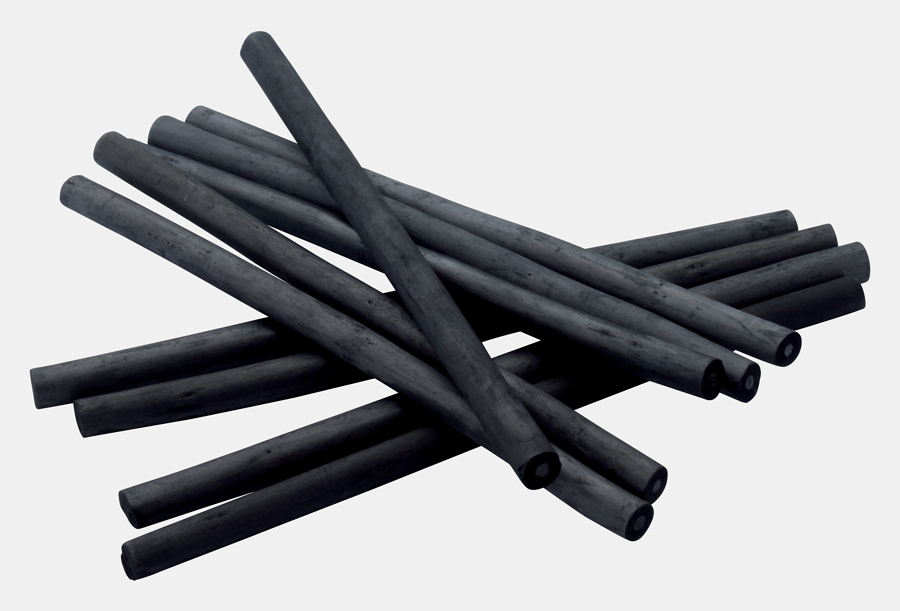
Talens charcoal are made from carefully selected willow twigs. This is a traditional, very soft drawing medium that is also prone to smudging. Unlike colored dry pastels, charcoal does not change significantly when fixed with a spray.
Hairsprays
As we mentioned earlier, protective sprays for dry media such as pastels, charcoal, chalk, sanguine, and graphite pencilsprevent pigments from smudging on the paper by improving their adhesion to the paper. Colored pencils contain wax, which gives their marks a characteristic sheen—a quality that can be a drawback when the artwork is displayed. This slight sheen can also be eliminated using a fixative.
Oil pastels
Oil pastels contain pigment, wax, and non-drying mineral oils. The binders in the composition remain unchanged; they do not dry or harden, which again necessitates sealing the finished paintings— in this case, with varnish. Varnishes based on solvents such as turpentine and white spirit should be avoided, as they would dissolve the pigments (but solvents can be used intentionally to create glazing effects). To this end, special water-based coatings have been developed that spread easily over greasy surfaces without forming droplets. This makes the paintings completely smudge- and stain-resistant. Oil pastels adhere to almost any surface, but slightly rough and porous surfaces are best suited for them.
Wax crayons
What is the difference between wax pastels and oil pastels?
Wax crayons can usually be found among art supplies in a children’s classroom. They are harder and blend less easily, leaving the lines they create more visible. Their colors are noticeably less opaque and paler. Unlike wax pastels, oil pastels produce a richer color that can completely cover the paper when smudged and layered, and with professional-grade oil pastels, it is even possible to imitate the impasto techniques characteristic of oil paints. The feel of wax pastels, on the other hand, is reminiscent of drawing with a paraffin candle.
Comparison of Our Oil and Wax Pastel Lines
The most pigment-rich of the oil pastels we offer are Cray-Pas Expressionist , followed by Van Gogh , respectively suitable for dedicated enthusiasts, students and pupils in drawing schools. We also offer the 60 Van Gogh colors in bulk.
We’re expanding our lineup with Panda and the even better Cray-Pas Junior, which are perfect for kids and beginners.
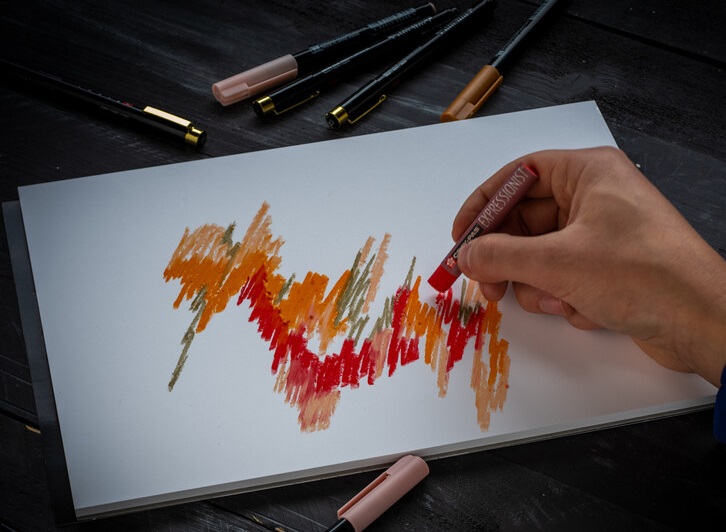
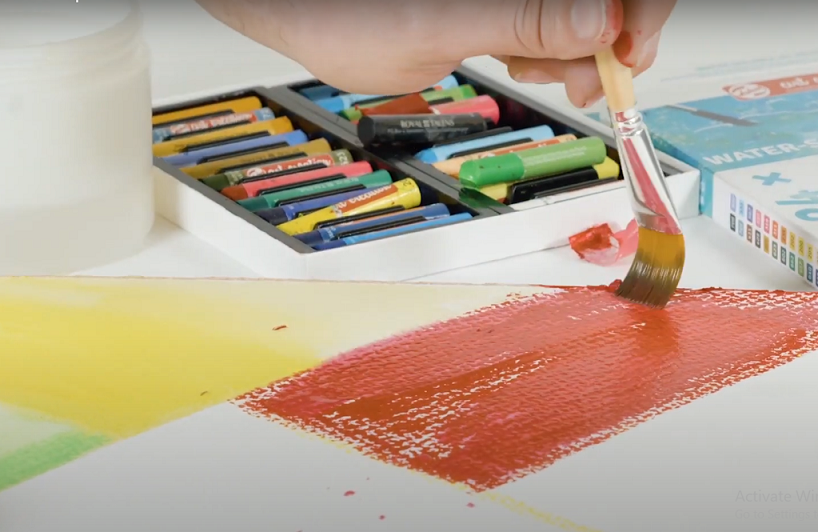
You can also find Art Creation water-soluble pastels, which can be applied and blended just like regular pastels, with the option to dissolve them in water to achieve a watercolor effect.
Last but not least are the break-resistant Wasco children’s wax crayons, made from pigment and synthetic wax. They are made with completely safe ingredients, making them a good option for trying out the most basic pastel drawing techniques in the early stages of learning.
Translated from Royal Talens’ Artists’ Materials Manual (2020) by Martina Petrova


