

A Variety of Additives for Acrylic Paints
Home » Uncategorized » A Variety of Additives for Acrylic Paints
Acrylic paint is a versatile medium with very few practical limitations. It adheres to almost any surface that is at least slightly absorbent and free of oil. It can be thinned with water or acrylic mediums, and the adhesion between individual layers is excellent.
The strong adhesion is achieved thanks to the binder in the paint, which is a dispersion of microscopic particles of acrylic resin in water. The binder opens up many possibilities for mixed-media techniques, in which the paint is mixed with sand, small pebbles, wood shavings, wood, fabric, and paper elements, among others, as well as for murals. The paint is durable even on new walls—the acrylic resin withstands the corrosive alkaline composition of fresh cement and plaster, and once dry, it is water-resistant and moisture-regulating.
The acrylic dispersion plays a key role in the paint’s formula. Once the water has evaporated, the colors lose some of their volume and the brush strokes become less defined, while the pigments remain completely covered by a protective film of acrylic resin. Drying time is relatively fast, but it depends on the temperature and humidity.
If we want to work on a white surface, we can achieve this by using gesso or modeling paste. All acrylic additives must be used at a temperature above 10 ºC and must be protected from freezing.
* Since the various products of this type that we offer—which are part of the Talens and Amsterdam lines—look quite similar, they are additionally numbered for the artist’s convenience.
Acrylic Adhesive
The binder is a thick, milky-white liquid that dries to a colorless, transparent finish. It is a useful base product with a variety of applications:
– when mixed with pigment , the result is an acrylic paint that darkens slightly after it dries
– effectively attaches small elements to mixed-media paintings
– It can be used as a sealer on highly absorbent surfaces such as walls, cardboard, and fabric before applying paint or primer.
Acrylic Primer Gesso
The primer is designed to prepare the surface for painting. Although it is based on pure acrylic, just like acrylic paint, it has a slightly different composition, including a specific amount of dry material (mostly gypsum), which makes it porous after drying. In this way, the primer provides good adhesion for both acrylic and oil-based paints.
GThe gesso can also be tinted with acrylic paints. The Talens gesso we offer is relatively thicker than that of other brands, so it retains its density and viscosity when tinted.
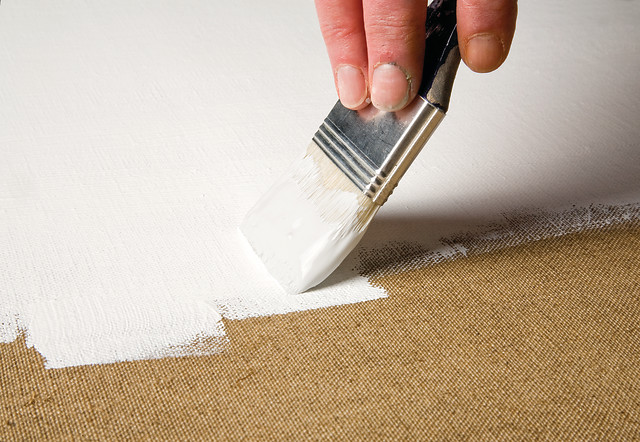
White, black, and clear gesso
The concentration of white pigment in the Amsterdam gesso series is slightly higher than that of Talens, meaning it provides better coverage.
Transparent gesso reveals the substrate and makes it part of the artwork. Some artists use it as a base to add “texture” to the paper (i.e., roughness) when drawing with dry pastels and pastel pencils.
A black gesso contains synthetic iron oxide and is useful for painting in darker tones.
Structural Paste
Modeling paste for a three-dimensional effect and volume follows the same recipe as gesso, but with significantly more thickening agents added, which make it much thicker. It can be used undiluted to create relief that can be painted later, or it can be colored beforehand to produce a very thick acrylic paint.


Types of mediums for acrylic paints
A number of gel mediums, ranging from very runny to very thick, are also based on pure acrylate. The most important qualities they share are the absence of pigment (or color), transparency, and water resistance once dry. They can be mixed with paint or used as an adhesive for mixed-media techniques. Mediums are additives that alter the properties of paint.
Glossy and Matte Acrylic Medium (Thinner)
The easiest way to thin acrylic paint is by adding water. However, the more water we add, the less protected the pigments are after drying, and the greater the risk of flaking. In this case, you can use the acrylic medium, especially in the topmost layer of the painting. This way, additional acrylic resin is added to the pigments, which “envelops” and protects them. The medium facilitates the blending of thin layers of paint wet-on-wet. It makes the colors more transparent and either enhances or reduces their brilliance.

Gel Media
The Amsterdam thickening gels we offer come in three different varieties: a light formula (almost as thick as paint), a thick gel, and a transparent texturing paste (very thick). Gel mediums also lose some of their volume after drying, and the thicker the gel, the more pronounced the brush strokes remain. They also make colors more translucent and come in matte and glossy finishes.
When used for bonding, any of the gels would be equally useful. Delicate surfaces, such as those made of paper, are well protected if they are sealed on both sides. Fine or non-absorbent materials such as sand, wood shavings, glass fragments, and small stones should be mixed with a generous amount of gel to ensure they adhere firmly. However, do not overdo it, so as to preserve the natural appearance of the chosen decorative material. When applied thickly, matte gels turn white due to their matting agents.

A Medium for Transparency
A glazing medium increases the flow and transparency of the paint when we want to apply a translucent layer of color over an opaque one. Glazing can be likened to placing colored glass over a painting, which optically alters its hue and adds depth.
The best results are achieved when the medium is tinted with transparent or semi-transparent paints, which are usually marked with ☐ or ⧄ on the packaging.

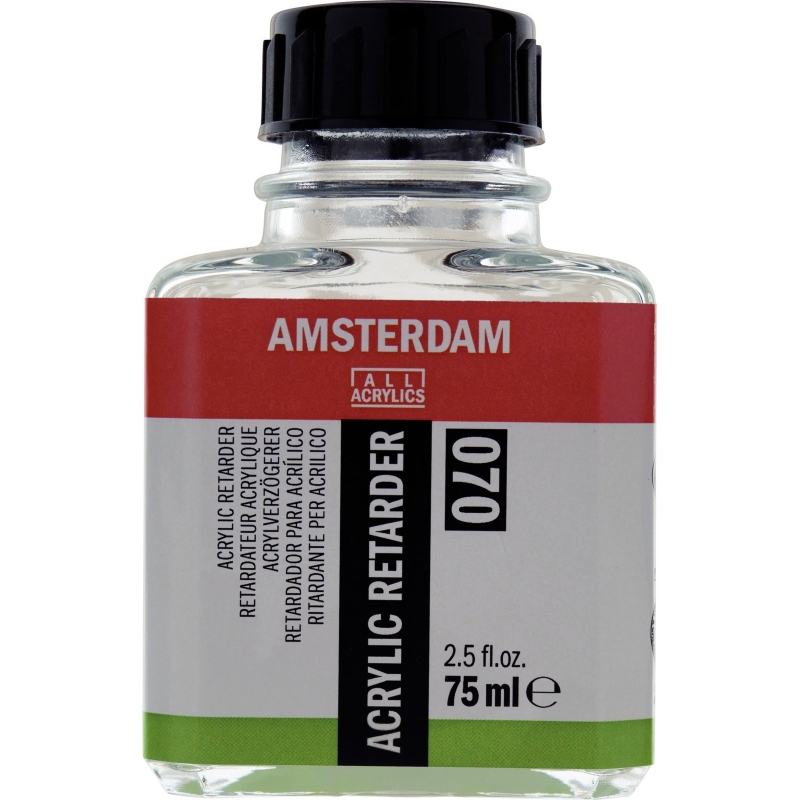
Acrylic Retarder and Drying Retarder Medium
The short drying time of acrylic paint can be extended with a retarder additive. Use it sparingly—mix the paint with no more than 5% retarder, which provides 20% more working time. The retarder thins the paint, making it easier to blend colors smoothly.
The medium also makes it easier for the artist, allowing more time for wet-on-wet painting. With it, there’s no risk of overdoing it, since it’s a mixture of the aforementioned retarder and the acrylic medium: the more of it you add, the longer the paint will take to dry.

Thickening Agent
With just a small amount of this thickener, we can significantly increase the paint’s viscosity to create a much more textured brushstroke. Because of this property, it has virtually no effect on the paint’s tinting power or color coverage. Although very similar to gel mediums, this thickener differs from them in that it cannot be used on its own in its pure form or for gluing.
It is best to add it gradually to the paint, using a spatula, until the desired consistency is achieved. If you add too much, the paint may become unusable, even if you add more of the color.
To be continued…


