

How do you paint with tempera paints?
Home » Uncategorized » How do you paint with tempera paints?
What are the distinctive properties of tempera paint?
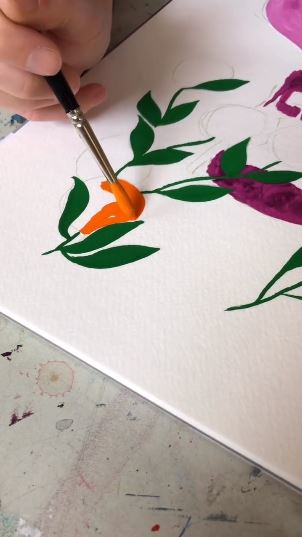
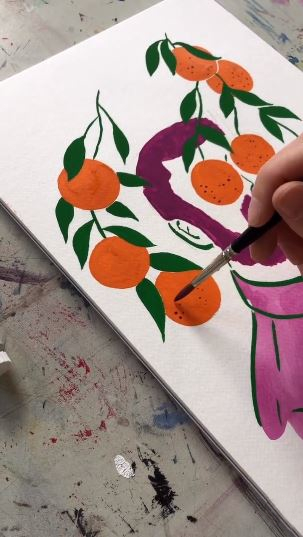
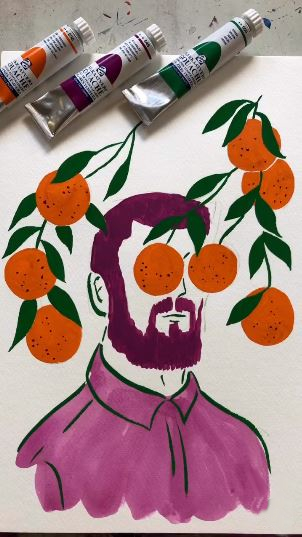
As we discuss in another article of ours, tempera paint* combines the opacity of acrylic with the water solubility of watercolor.
It is very versatile and can be either completely opaque or as ethereal as watercolor. However, it is intended to be used primarily in its opaque form. Consequently, if we want to lighten a color, the standard practice is to add white, not water. That is why white is usually the most commonly purchased or comes in larger packages.
In slang, tempera is also called ” thick watercolor.” It is diluted and cleaned up using only water.
Once it dries out, it can always be reactivated with water. This means we can safely set aside our palette and return to the painting we started hours or days later. And we can make use of the leftovers by wetting them again. Of course, the most pleasant to work with is paint freshly squeezed from the tube. That’s also when it’s easiest to judge exactly how much water we need for a smooth, creamy application.
And what is gouache?
In everyday life, the words gouache, tempera , and poster paint have become synonymous, but in fact they denote three paints that differ in content:
- Traditional tempera, also known as egg tempera, is made by mixing natural pigments with egg yolk as a binder. If desired, it can be turned into an oily medium, similar to oil paints, by adding painting oil. Paintings made with egg tempera form a surprisingly durable and long-lasting (given its composition) layer of color. It was also the most widely used medium for painting before the advent of oil paints.
- Poster paints consist of pigment and some type of starch- or cellulose-based binder or adhesive, such as PVA. They are opaque and quick-drying, but of low quality. They were once used for temporary posters rather than permanent paintings, hence the name “poster paints.” They are suitable for use with children.
- Gouache is actually what is widely available in art stores today. It resembles watercolor in its main ingredients – pigments and gum arabic as a binder. Gouache is quite thick, which gives control and precision with the brush. High-quality gouache leaves a very smooth and completely matte layer, with a color resistant to fading and other changes (the so-called lightfastness, marked on the packaging of better paints).
The Difference Between Watercolors and Tempera Paints
If we love the pleasantly unpredictable nature of wet, transparent paint, we’ll be happier if we switch to watercolors and watercolor ink. When tempera paints , you can see that the colors dry with a “grainier” texture than watercolors. This is due to the larger pigment particles. Excessively diluted gouache can also become “brush-marked” and form small pools with defined edges.
Watercolor and tempera paints can be combined by applying watercolor as a background and then continuing with tempera.
The Difference Between Acrylic and Tempera Paints

Tempera paints are thick and can be mixed with water just like acrylic paints. When wet, they are almost indistinguishable in consistency. However, the differences between them outweigh the few similarities apparent at first glance.
Tempera and acrylic differ mainly in their water resistance. The acrylic resin in acrylic forms a hard plastic layer that is completely waterproof after drying. On the other hand, tempera, whose binder is gum arabic , can be left to dry and then reused or dissolved on the sheet.
In addition, the polymer coating produced by acrylic paint is much more resistant to cracking, fading, and dust. Gouache, on the other hand, is a much more delicate medium. It is prone to cracking if applied too thickly, as well as to soiling, since it is much more porous. Traditionally, it is protected by placing it behind glass, but there are also varnishes for tempera paints with UV filters and varying levels of gloss.
Last but not least, acrylic paints offer a variety of consistencies, levels of transparency, sheen, and additives for mixing to create different effects. Mediums can be used to achieve thinning, thickening, delayed drying, specific gloss, relief, and textures.
Techniques for Painting with Tempera Paints
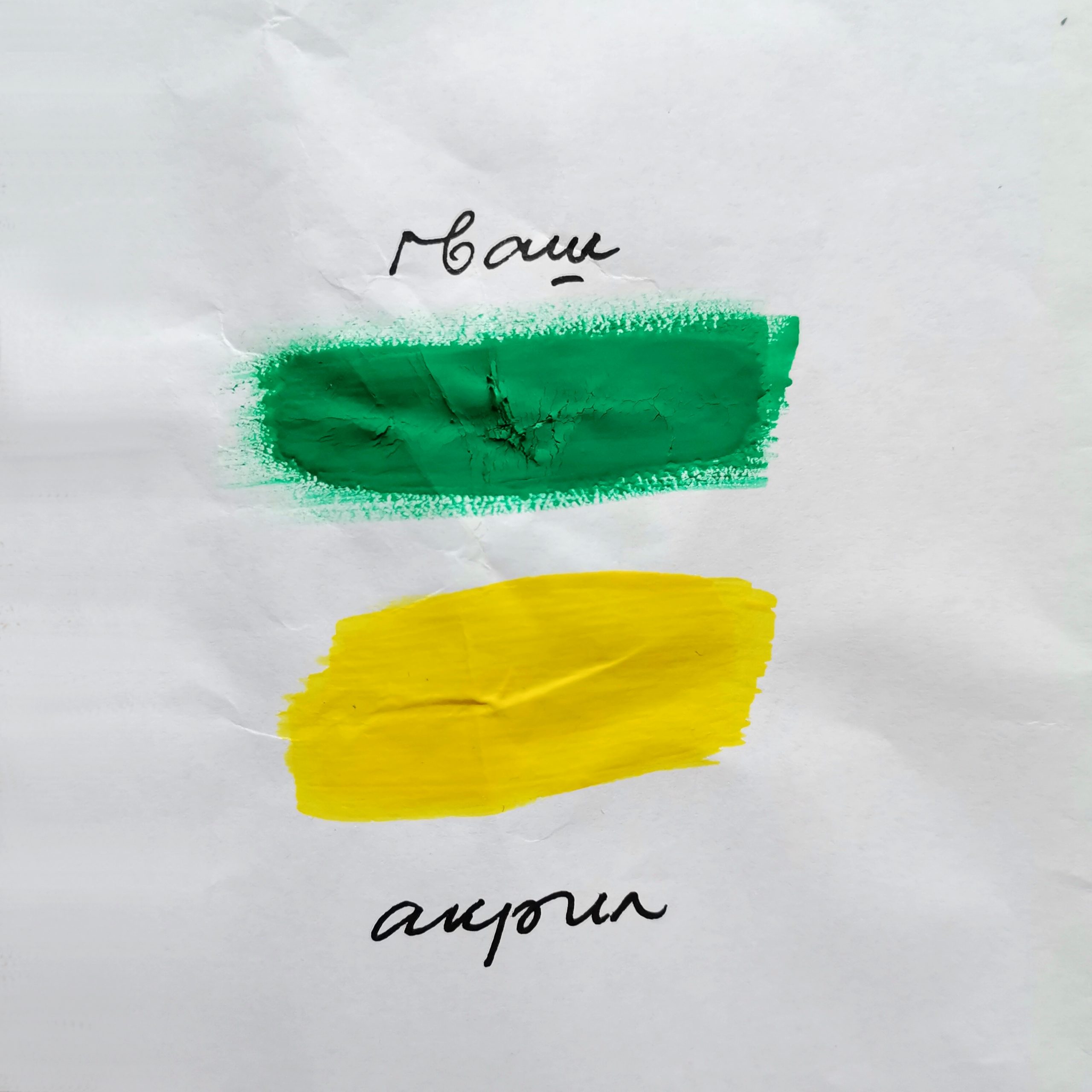
Everyone discovers their own approach and technique for this medium, but oUsually, you start with transparent layers of gouache, which are then built up with increasingly opaque layers. The transparent layer establishes the overall color scheme and eliminates the white of the paper. Furthermore, this reduces the risk of the top layers of paint dissolving the underlying ones when the brush passes over them.
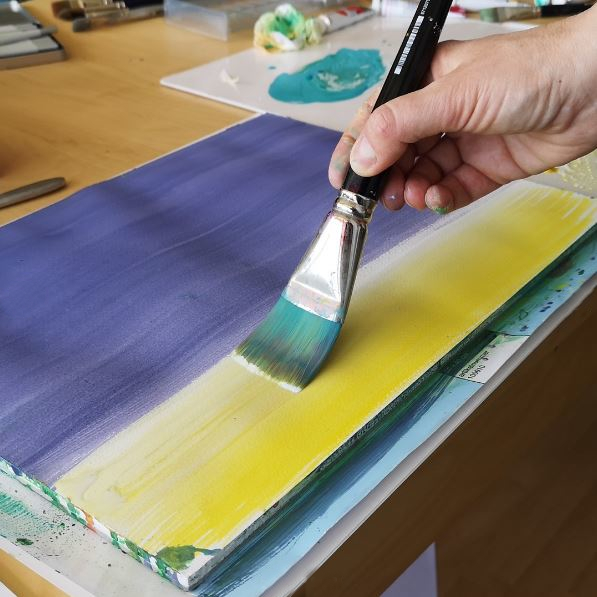

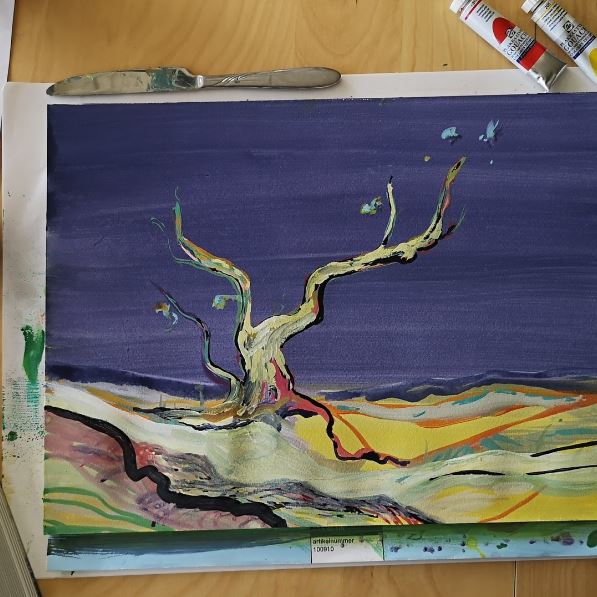
Apply the paint in thin layers. Applying layers that are too thick increases the risk of the paint cracking after it dries.
For smooth blending and mixing on the paper, it’s best to work wet-on-wet.
The great thing about tempera paint is that,
We don’t necessarily have to avoid the areas we want to remain white or distinctly light. Since the paint is opaque, these details can be added later. When we want to paint over an area that has already been colored, it’s best to do so in stages and wait for each layer to dry. Repeatedly painting the same spot with a wet brush activates the color underneath and blends it with the top layer. .
With gouache, we can paint on paper of various colors, including black.
For example, if we’ve planned a painting with lots of light tones and white, we can use kraft or another tinted cardstockto make the painting stand out.
Drying
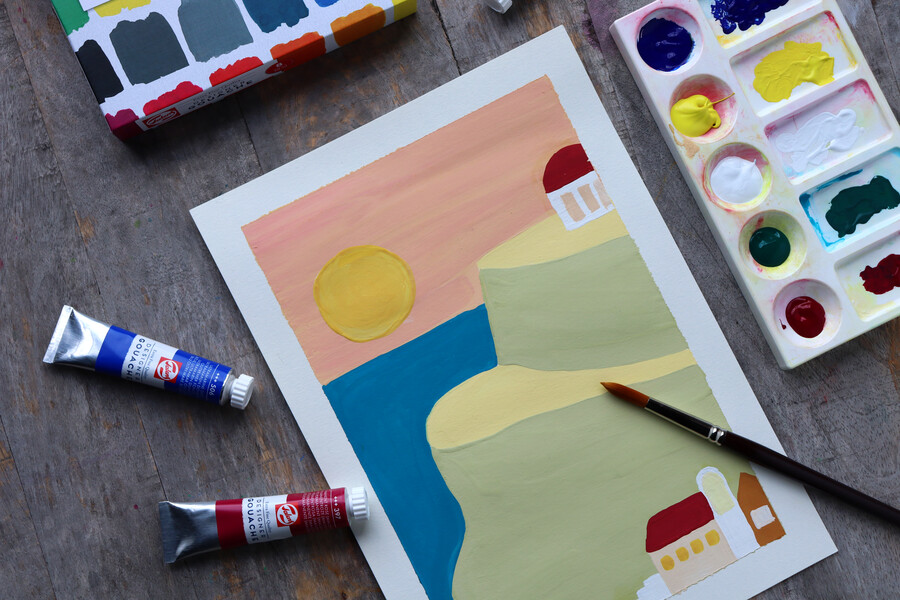
The gouache dries to a completely matte finish. The colors don’t shimmer when viewed at an angle, which is great for displays and photos.
However, it has one feature that takes some getting used to:
Light colors dry darker, and dark colors dry lighter.
In what form is it available?
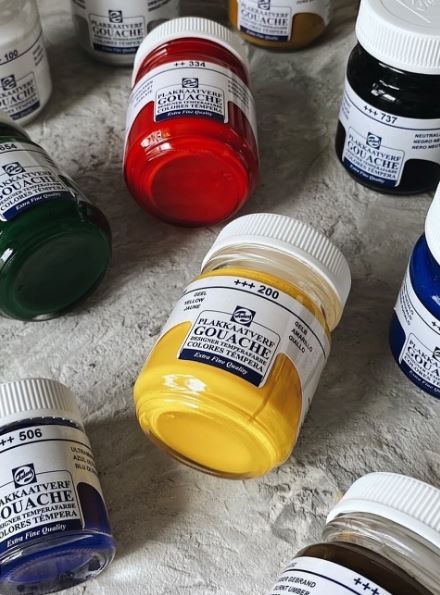
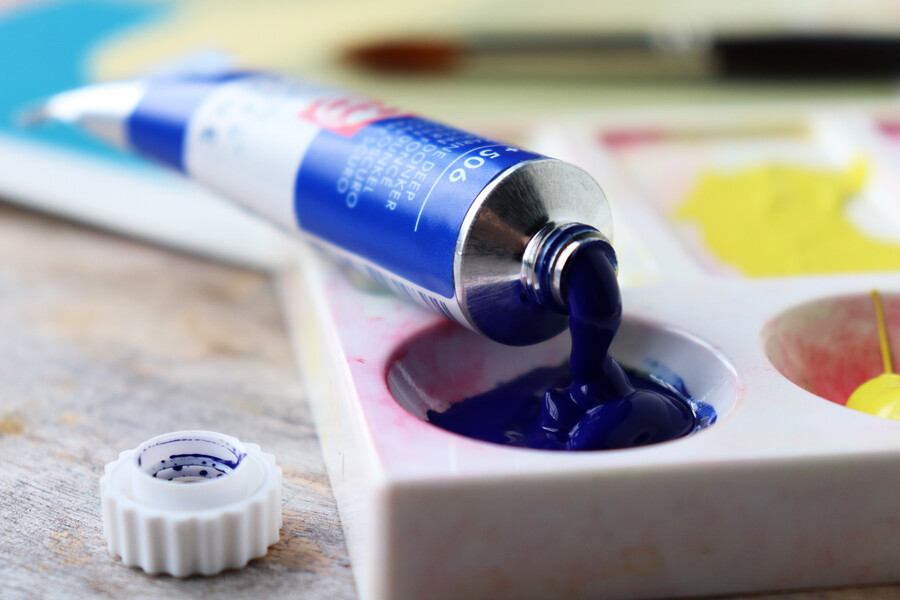
You’ll find gouache in small jars or tubes. They are better than the gouache in small tubs that has been all the rage lately.
What kind of paper goes well with tempera paint?
Watercolor paper that will withstand getting wet, with a density of 300 gsm and up. Mixed media paper is also possible. You’ll notice that watercolor paper containing cotton absorbs the colors much more quickly. With papers that have an insulating coating for mixed media, however, the colors seem to remain on the surface.
The papers come in smooth and textured varieties, which you can choose based on your personal preference. On textured paper, you can create textures using the dry-brush technique. And if you prefer smooth paper, you can try heat-pressed watercolor paper as well as Bristol board.
If we’re working with a drier technique, we can also use paper with a lower grammage or cotton-free paper. For practice , we recommend Fabriano Accademia, which is suitable for various techniques taught in art schools and academies.
Other Surfaces for Painting with Tempera Paints
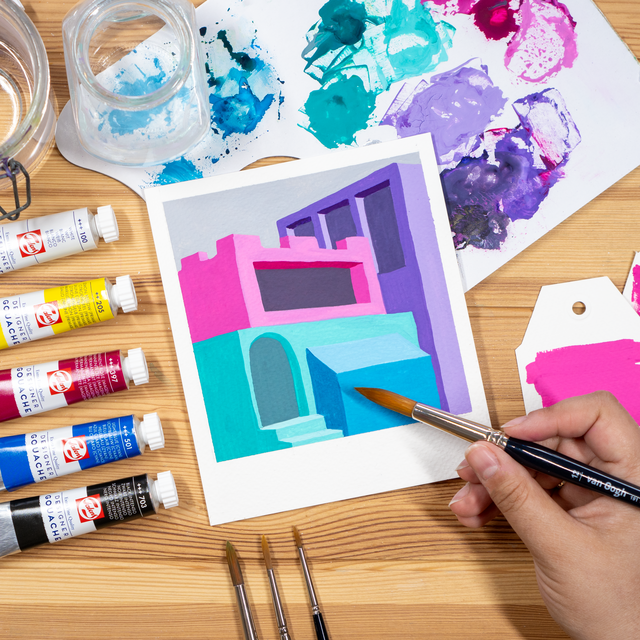
With tempera paint can also be used to experiment on canvas. Since tempera is not malleable once dry, it is recommended to paint on primed or mounted surface that won’t warp. It is also possible to work on a stretched canvas, but for the same reason, it’s best to use a small one. In that case, paint with a drier, less diluted paint to avoid unwanted effects such as running. If you intend to work with varying degrees of transparency (i.e., by adding more water), it is better to use paper.
Tempera paint also adheres to other porous surfaces such as unvarnished wood, stone, clay, ceramics, papier-mâché. This makes it suitable for certain hobbies or school projects. Unvarnished gouache, however, is prone to smudging if it gets wet. To seal the paint, choose a solvent-based varnish that will not dissolve the colors when applied with a brush.
What kinds of brushes do we need?
Gouache isn’t particularly picky when it comes to brushes. Usually, synthetic brushes are a good choice. Their elastic bristles provide enough flexibility and firmness needed for painting with these creamy paints.
You can also use watercolor brushescan also be used, but some of them are much softer (difficult to control) and hold too much water for this purpose. Softer brushes are used for wet-on-wet painting at the beginning, while the stiffer ones are used for thicker paint later on.
Which colors should we choose?
Option II using the CMYK model (cyan – magenta – yellow – black):
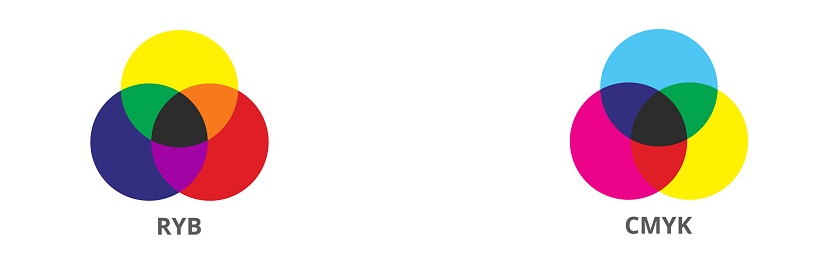
Mastering color theory gives the artist flexibility and confidence. Additionally, working only with primary colors frees up funds for higher-quality art supplies.
It might be a good idea to try out one color from a few different paint brands first, before investing in a full palette.
As we progress in our painting, colors that we’ve found ourselves using regularly—and that we don’t want to have to mix every time—are naturally added to our palette.
What else do we need to get started on the actual drawing?
In addition to paints, brushes, and paper, we need:
- palette – plastic, ceramic, glass, or paper
- two containers of water—one with clean water and one for rinsing the brush
- a cloth or paper towel for cleaning and drying the brush
- adhesive tape for securing the sheet, if it is not in a sketchbook
- a small water spray bottle to keep the paints moist and ready to use.


Displaying and Storing Paintings
Just like watercolor paintings, gouache are displayed, protected behind glass.
There is another method for protecting drawings, namely varnishing them. Tempera varnish enhances the colors and makes them resistant to moisture and dust. Varnished artwork can also be mounted on a rigid surface such as a wooden panel or canvas.
For storage in a folder or box , parchment paper , which is smooth and insulating, can be used between the sheets.
Author: Martina Petrova


