

The Easiest Ways to Transfer Images for Linocut
Home » Uncategorized » The Easiest Ways to Transfer Images for Linocut
What is linocut?
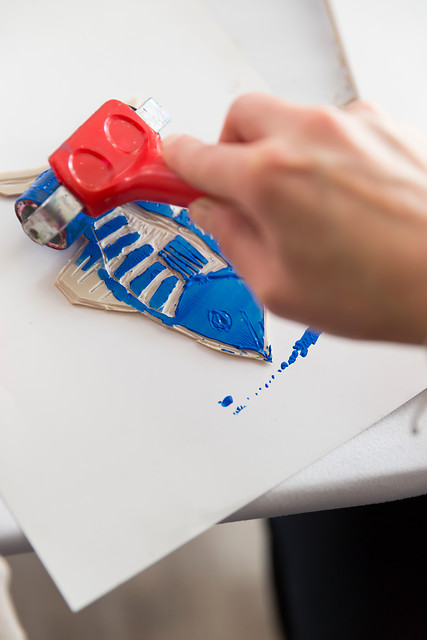
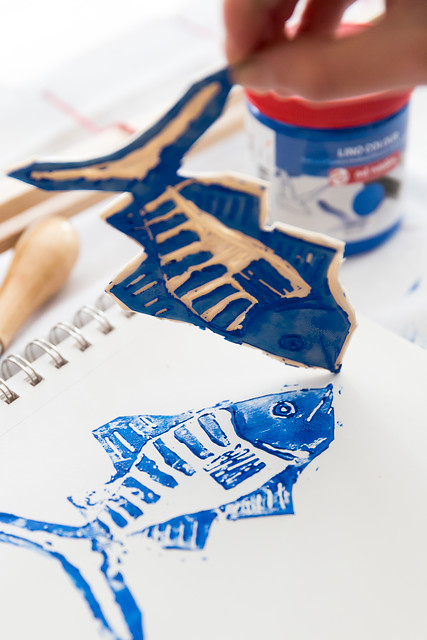
Linoleum engraving (or linocut) is a printmaking technique for producing images that involves carving designs into a sheet of linoleum using linoleum engraving tools. By nature, it resembles woodcarving and xylography. Engraving with the chisels leaves raised areas, which, after being inked with a roller and pressed against a sheet of paper or piece of fabric , produce the desired image. The pressure can be applied by hand with a wooden spoon, a bar (a type of flat tool), or using a print press.
Before actually cutting, however, we need to transfer our drawing or digital design onto the surface of the linoleum. There are several methods for transferring drawings and prints onto linoleum or rubber for ink printing, with varying degrees of precision. Of course, this is assuming we haven’t decided to draw directly onto the linoleum.
Indigo Paper Transfer
- the most common method
- The drawing is traced once onto a sheet of indigo paper
- When printed, the image is a mirror image of the original
Perhaps the most common method is to trace the image onto so-called carbon paper (indigo). The outlines of the original are traced onto the sheet of indigo paper, which is placed with its inked side facing down on the linoleum.
The same principle applies to shading the background of an image with a soft graphite pencil (preferably 4B or darker), dry or oil pastel and then trace it again.
If we have a sketch drawn with a soft pencil on a non-transparent sheet of paper, it would show through (albeit faintly) if we turned it face down and carefully rubbed it with a flat object or a wooden spoon.
Tracing
- works on the same principle as indigo
- The drawing needs to be copied twice
- After printing, the original image is produced
The image can also be traced with a pencil on tracing paper. Then , the already drawn translucent sheet is placed face down on the linoleum and taped down so it doesn’t shift. The image is transferred when we rub or scrape away the outline drawn with a pencil or another object. This produces a mirror image for printing.
Transfer Using Acrylic Medium
- takes relatively more time,
- but it makes it easier to transfer very detailed drawings
- Great for digital art and other printed images
The last method we’ll look at is the most time-consuming, but it’s also the most precise and best suited for images that contain a lot of fine details.
For this, we need:
- print of the desired image
- and some acrylic-based medium – for example, decoupage glue or photo transfer glue.
The image is sized and covered with a thin yet generous layer of acrylic medium on the printed side. Since it dries quickly, you have to work just as quickly.
With some success, this step can also be achieved using white PVA glue (such as C200).
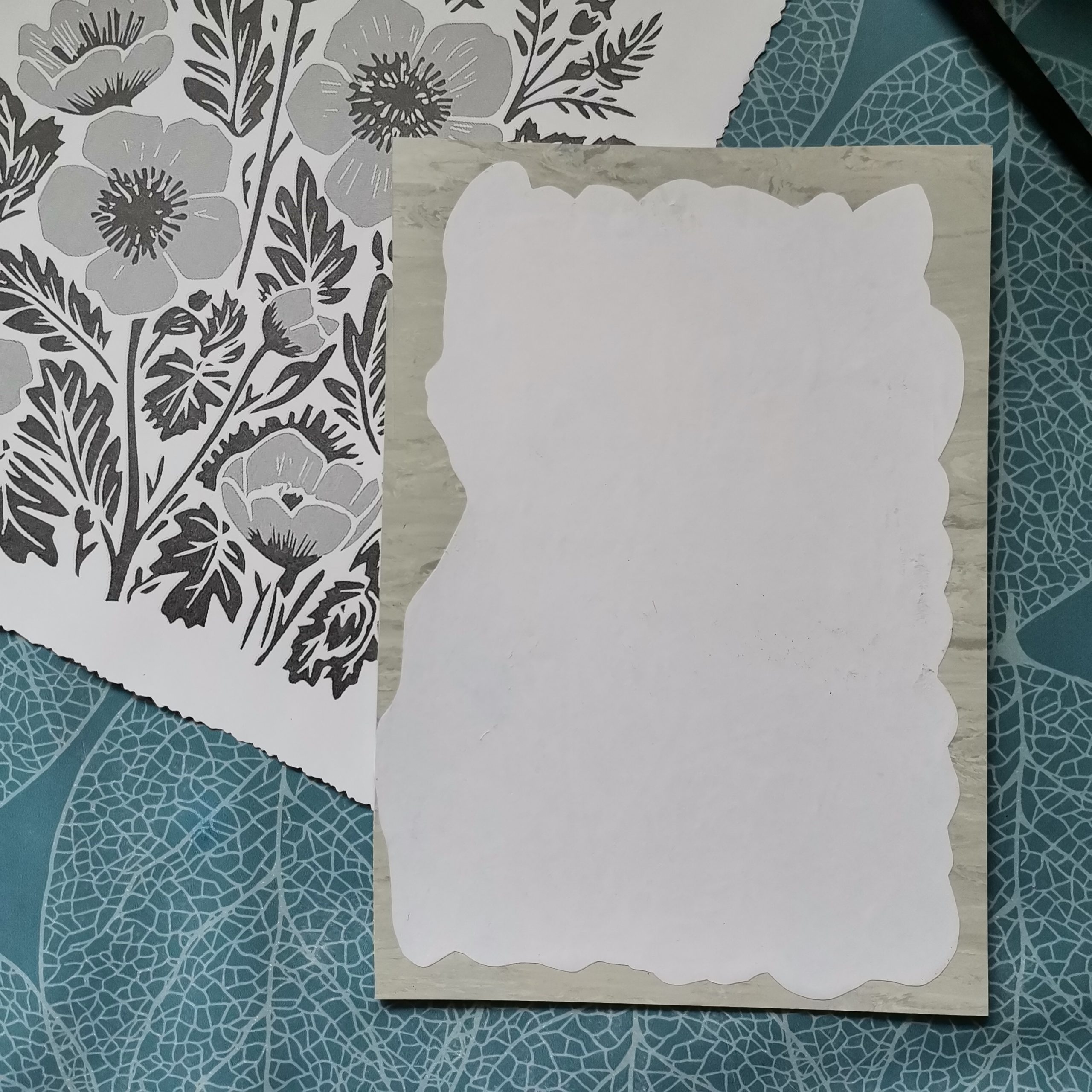
Place the sheet with the print facing down, aligning it with the edges of the linoleum. Air bubbles between the wet sheet and the surface are gently pushed out by smoothing with your hand, a creasing tool, a ruler, a plastic card, or another flat object, taking care not to tear the wet paper.
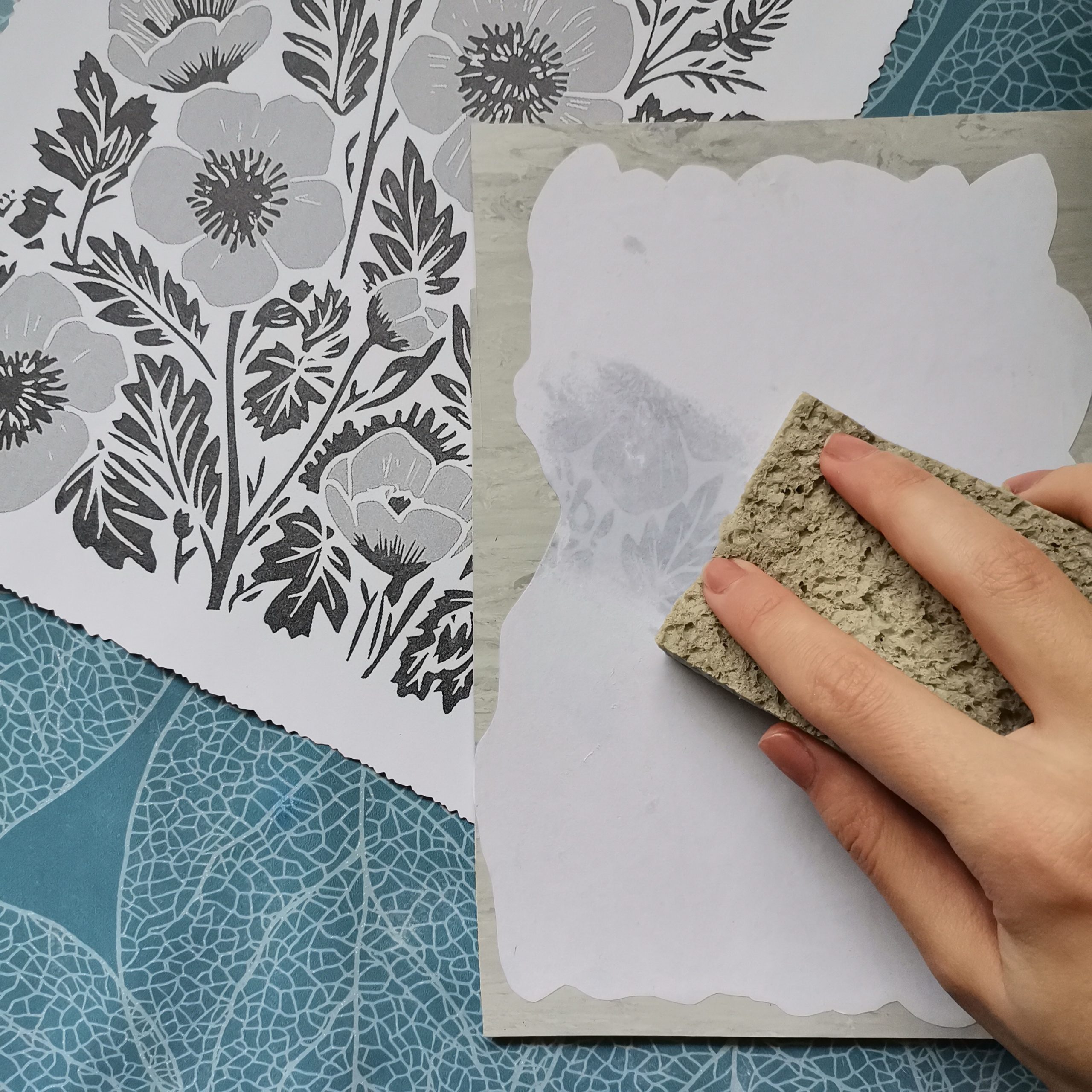
Wait for it to dry thoroughly. After 4–5 hours, the paper can be peeled off after moistening it with a wrung-out sponge. The paper layer is rubbed off, leaving the outline of the print, which you can use as a guide for cutting. Be careful not to get it wet or press too hard, so that the picture itself doesn’t peel off.
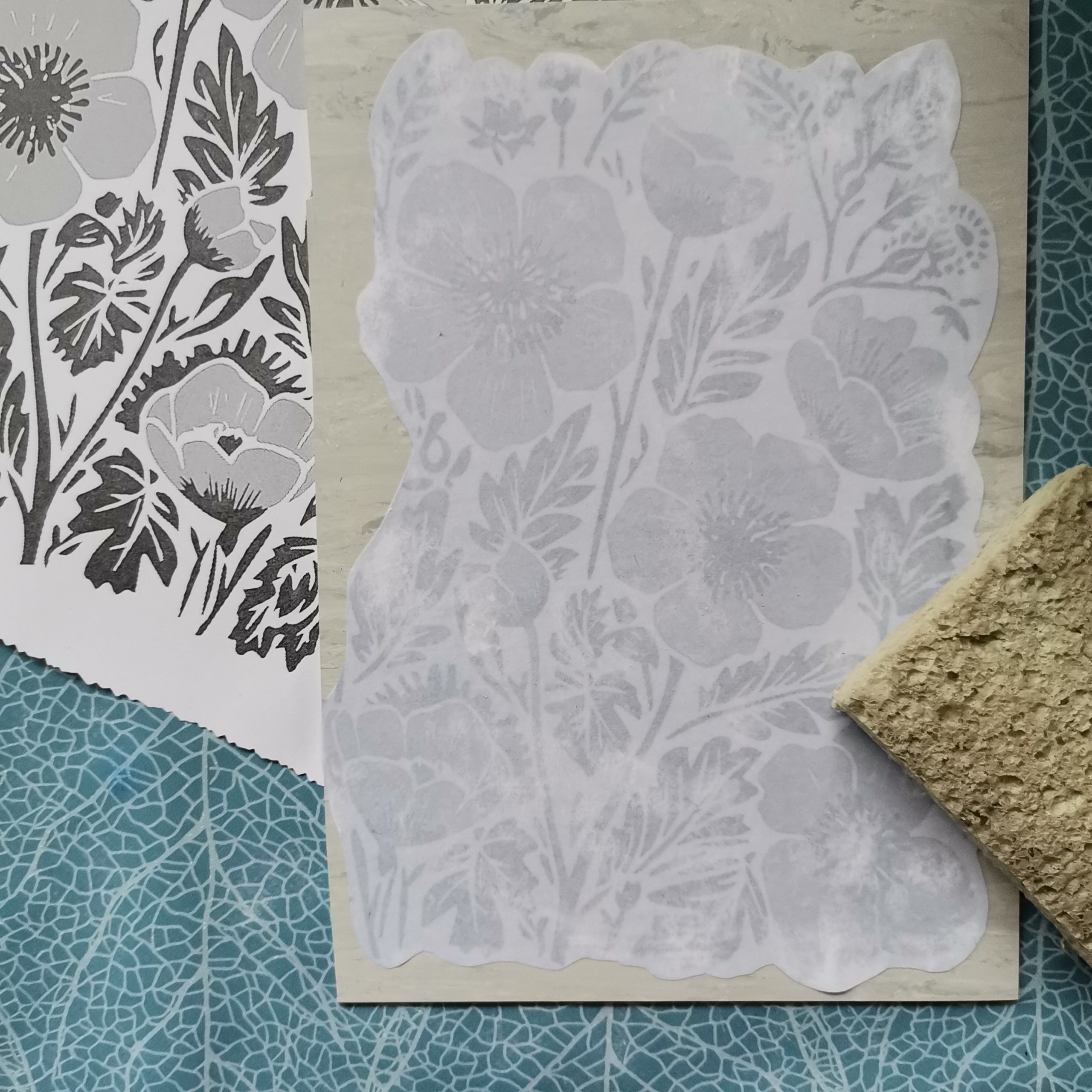
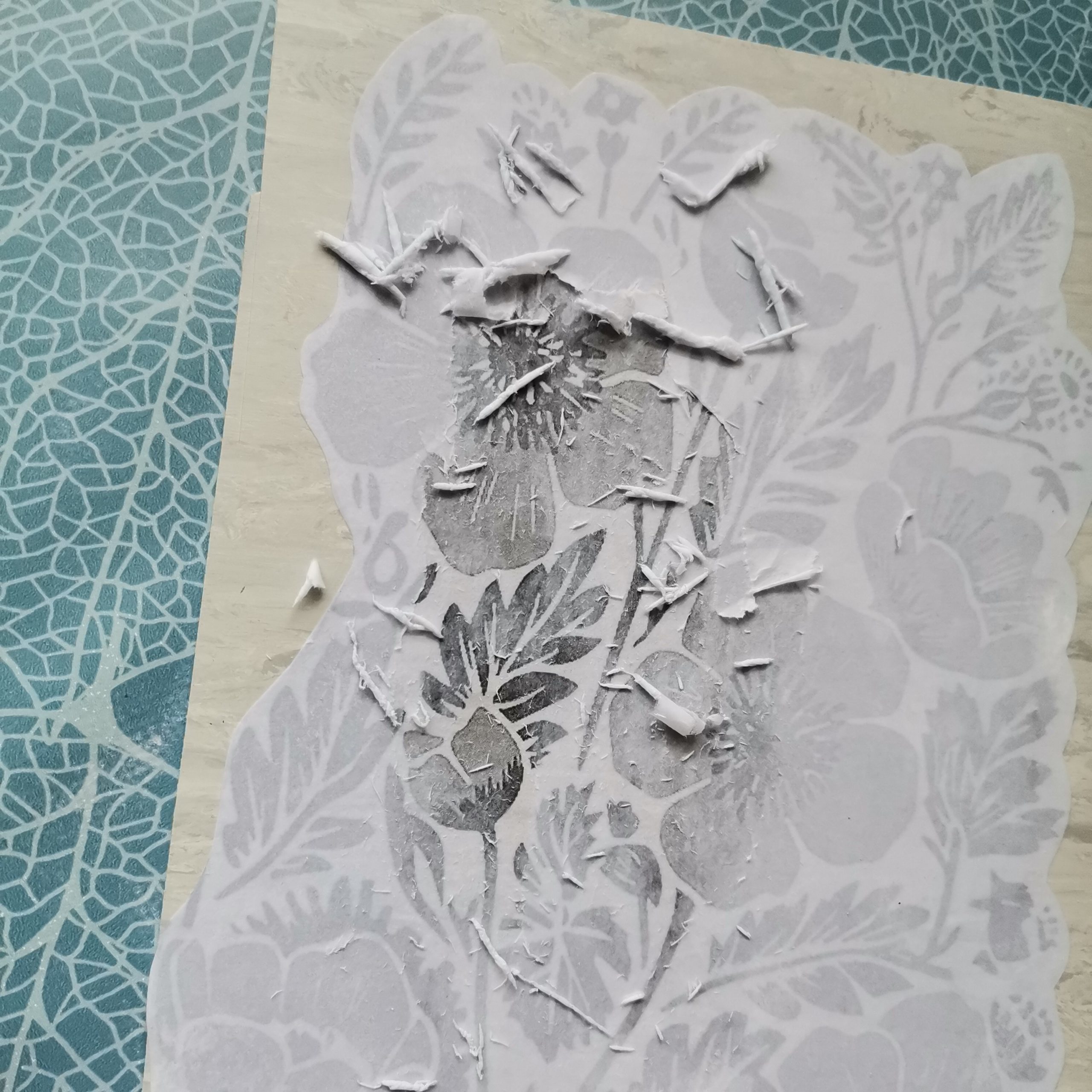
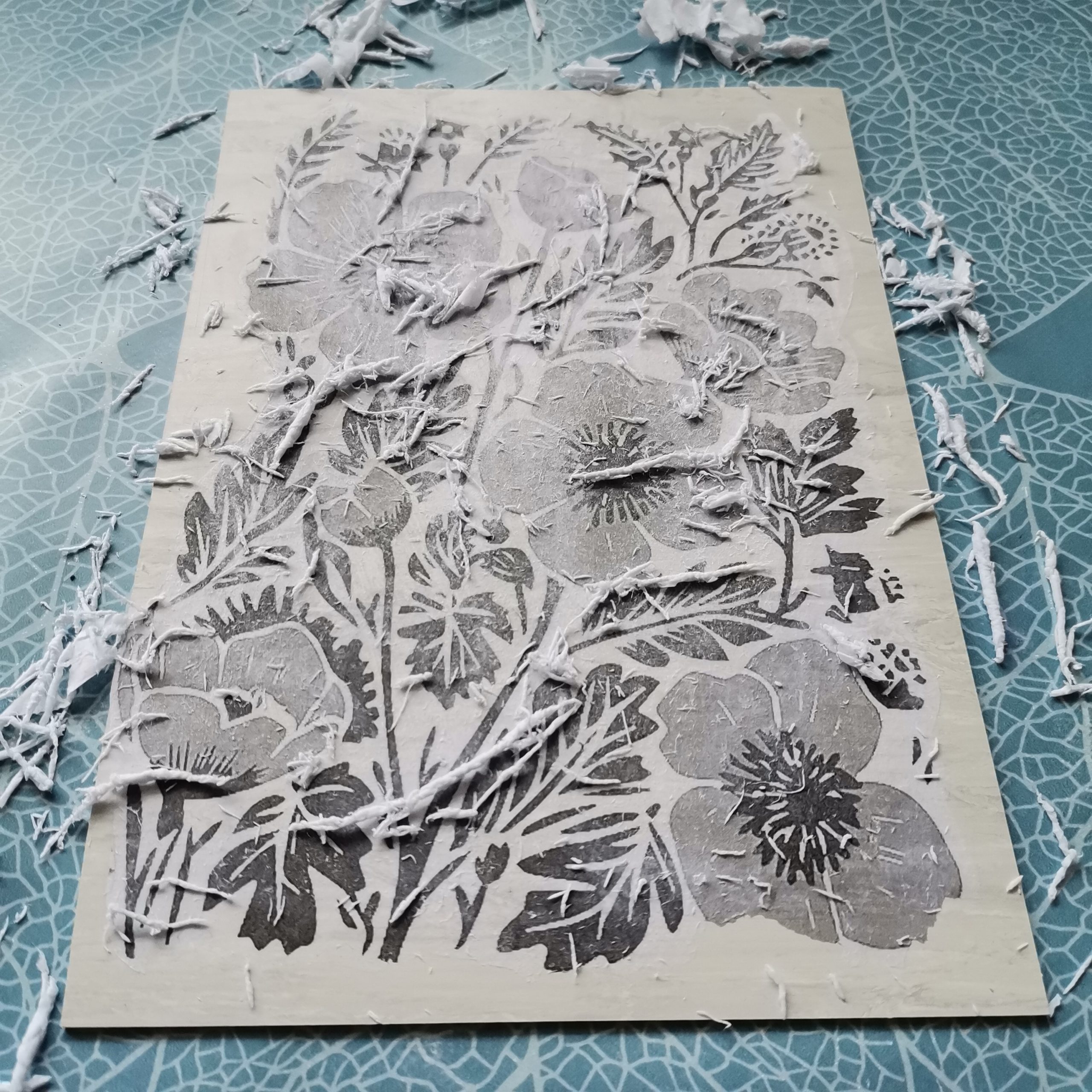
For the same purpose, some manufacturers also offer transfer markers with a wide tip for linocut, which can be used to trace directly onto the back of the printed sheet.
Additional Tips
- Once we have transferred what we want, it is usually repeated by hand, so that it is clear and distinct and to fill in any missing outlines. It is best to use a pigment marker for this purpose. Uninked, lines, especially those made with graphite, easily smudge during the next cutting stage.
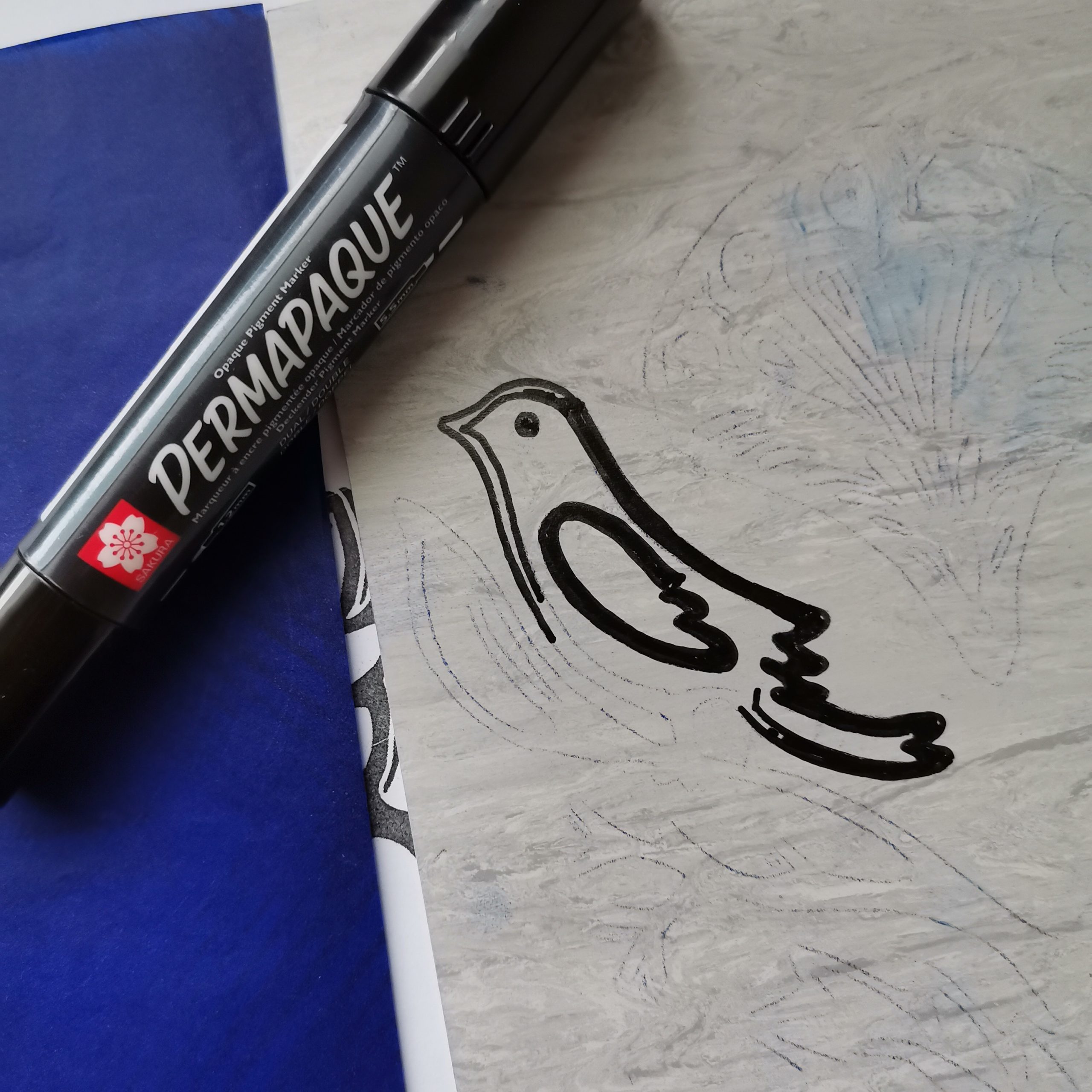
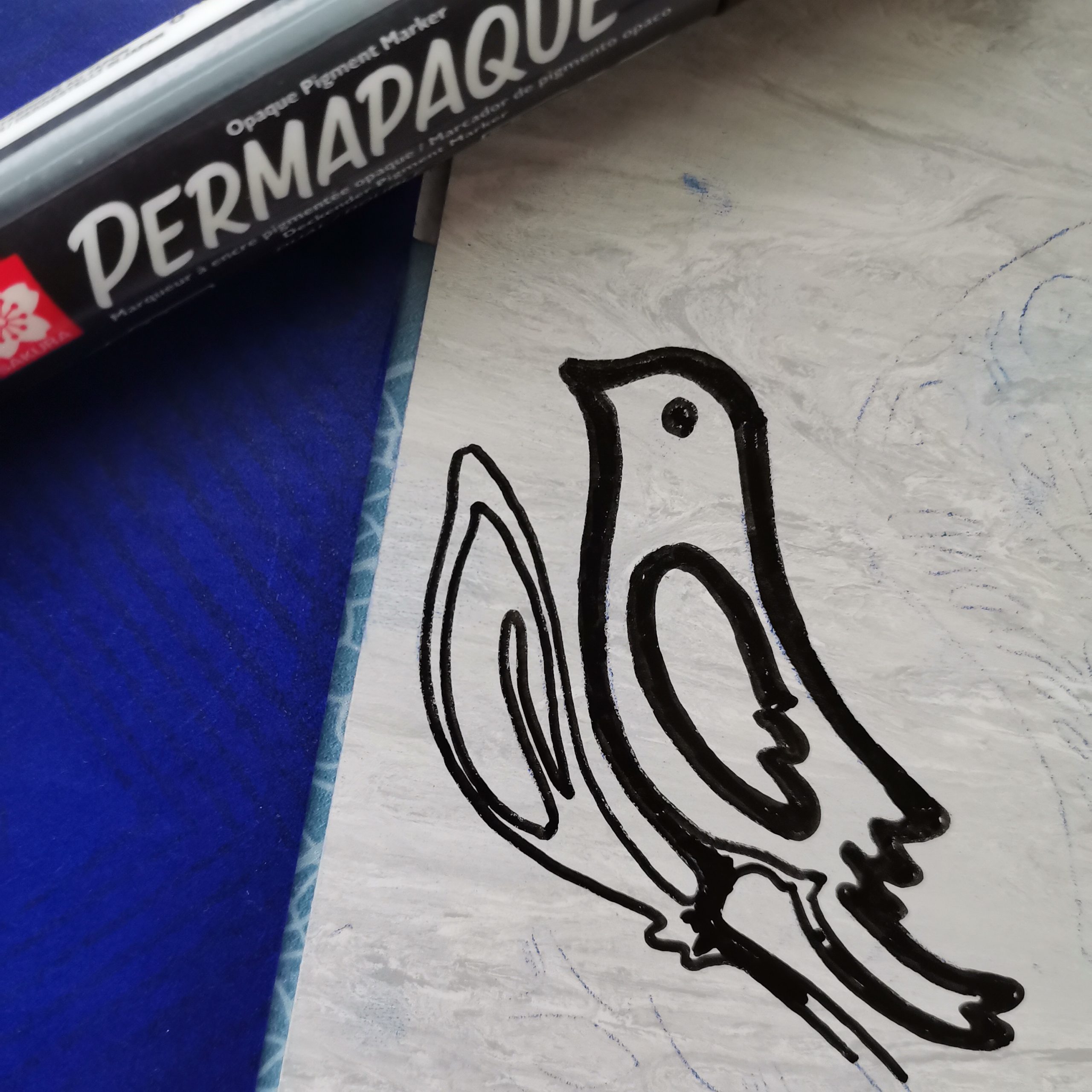
- First , the linoleum can be painted with acrylic paint (such as white) to make the lines of the design stand out after it has been transferred. To ensure a smooth finish without brush marks, the surface can be lightly sanded.
- If we aren’t satisfied with the image, we can dampen the linoleum, sand it down, clean it, and start over.
Author: Martina Petrova


