

The Best Thinner for Acrylic Paints
Home » Uncategorized » The Best Thinner for Acrylic Paints
In addition to adhering to almost any surface and drying quickly, the greatest advantage of acrylic paints is that all you need to thin them is water.
However, when we dilute the colors with water alone, there comes a point when the balance in the paint’s composition is disrupted. Here, we discuss the drawbacks of using water as a thinner for acrylic paints and which products would be more useful for this purpose.
Dilution with water
Diluting with water is undeniably the most accessible, inexpensive, and intuitive method for the artist. It can be used both to achieve a creamier or more liquid consistency and to significantly thin the paint for transparent glazing techniques. With heavily diluted paint, we can apply an initial color layer to tone the canvas and “kill” the white. We can also imitate watercolor techniques.
However, if too much water is added, the pigments usually begin to separate from the mixture. The paints lose their uniform consistency and their ability to adhere firmly to the work surface. As a result, we can also observe pigment particles settling into the texture of the canvas.
In the long run, diluting the paint with water alone—which is convenient for practicing—has a negative effect on the durability of the colors. We can protect paintings created this way with a final coat of varnish. This compensates for the unevenness of the acrylic coating in areas where it is thinner or missing.
Thinning with acrylic paint medium
Liquid mediums for acrylics are formulated to serve as both a thinner and a binder. With each medium, we save on paint. They are a great solution, especially if we have very dense—that is, highly pigmented—colors.
- are acrylic thinners with no added pigments
- preserve the integrity and properties of the colors
- are available in various levels of shine.
By using a medium, we make the desired color more fluid and transparent without altering the ratio between the pigment particles and the acrylic binder. In other words, we maintain the quantitative content of the “glue” that binds and coats the pigments in the mixture. The result is a thinned paint that adheres to the canvas just as well and remains just as flexible and durable after drying.
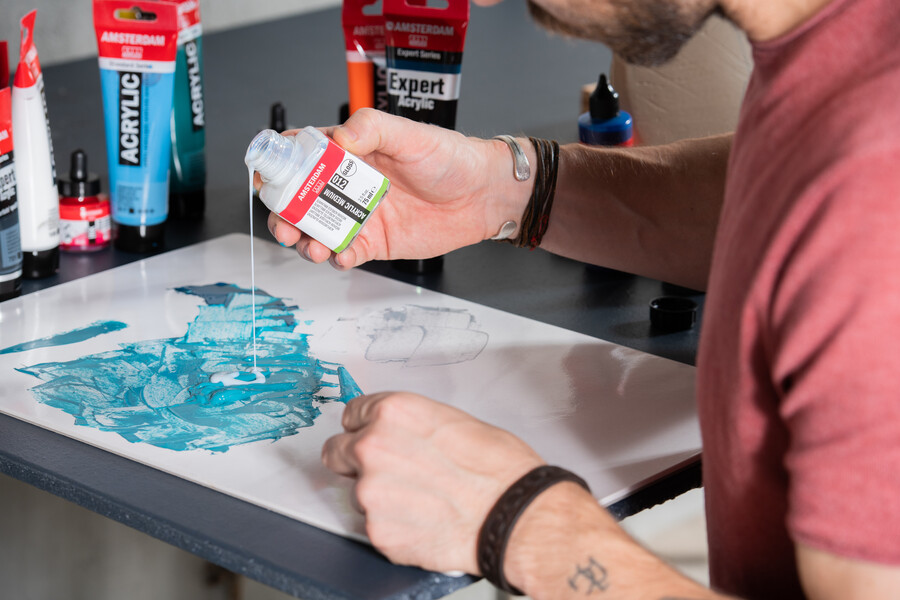
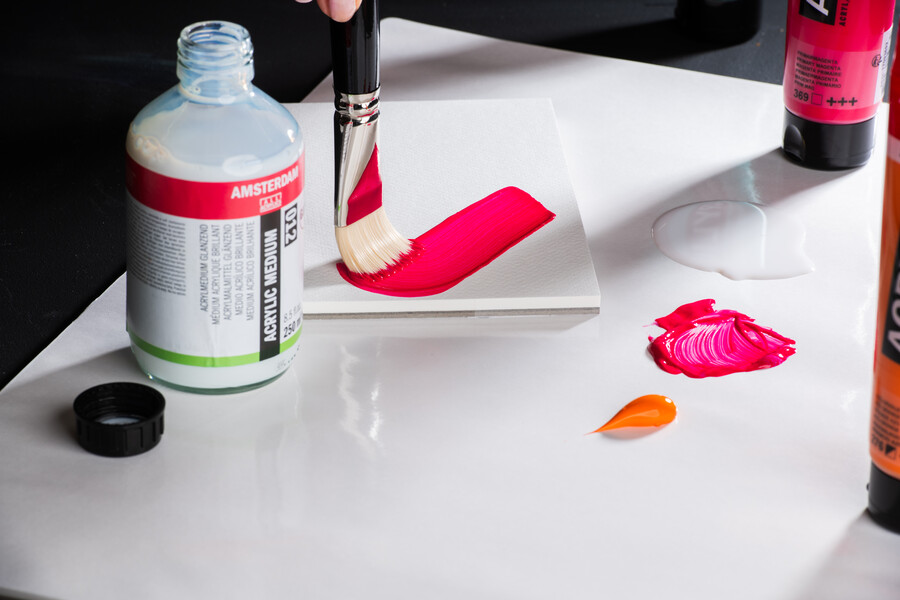
Although it is milky in color, the medium dries clear and does not affect the tone or brightness of the colors. It offers another advantage: a choice of sheen. Acrylic mediums are typically available in glossy, matte, and satin finishes, which determine the paint’s final appearance after it dries. Some brands also include UV protection to prevent colors from fading.
The difference when working with an acrylic medium (instead of water) is particularly noticeable when filling large areas with a single color. The shades appear smoother, more even, and richer.
A Medium for Transparency
If we want to work with a high degree of transparency, we can use a specialized glazing medium. This allows us to apply a very sheer layer of color without worrying about how well it adheres to the underlying layer.
Applying transparent layers in stages provides the greatest control over the build-up of the painting’s tonal values. One technique based on this principle is grisaille (from the French grisaille). In this technique, we first work on the brightness and contrast within the black-and-white range, and then add color using very diluted paint.
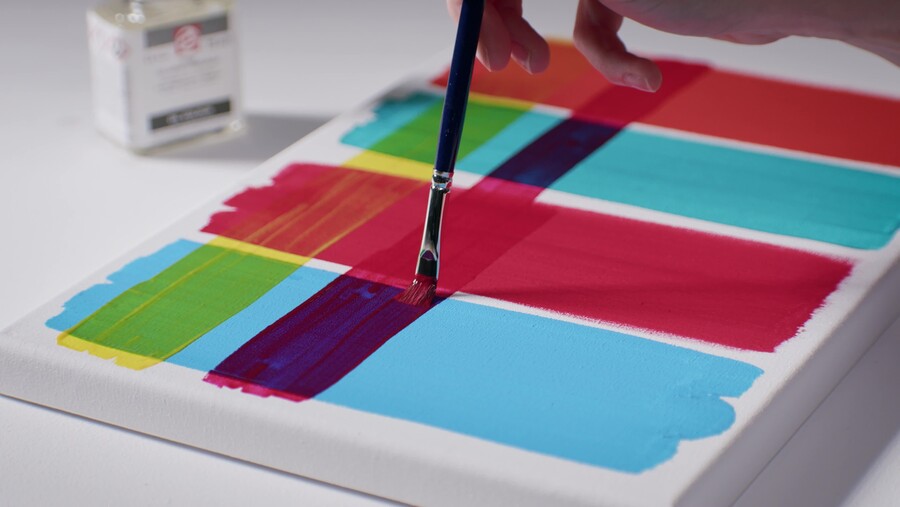
The glazing mediumhas the distinctive property of self-leveling on the canvas. With it, we can convey subtle effects such as highlights, a healthy glow to the skin, as well as blend colors smoothly and even out their tones.
Most transparency mediums slightly slow down the drying time of acrylic paints. This gives you a little more time to blend colors, refine details, or work wet-on-wet.
Here are a few tips:
- When mixing colors, it’s best to add the mediums to the color you’ve already prepared.
- To give ourselves more time to work with acrylic paint, we can use a drying retarder.
- When applying successive layers of color , we recommend using a glossy medium. Repeating the process with the matte may leave a cloudy finish. You can even out the sheen of the painting at the end using a protective varnish.
Acrylic Paint Thinner
A few years ago, pouring techniques became all the rage; in these techniques, paints are thinned to the point where they can be poured onto the canvas, creating unique abstract patterns.
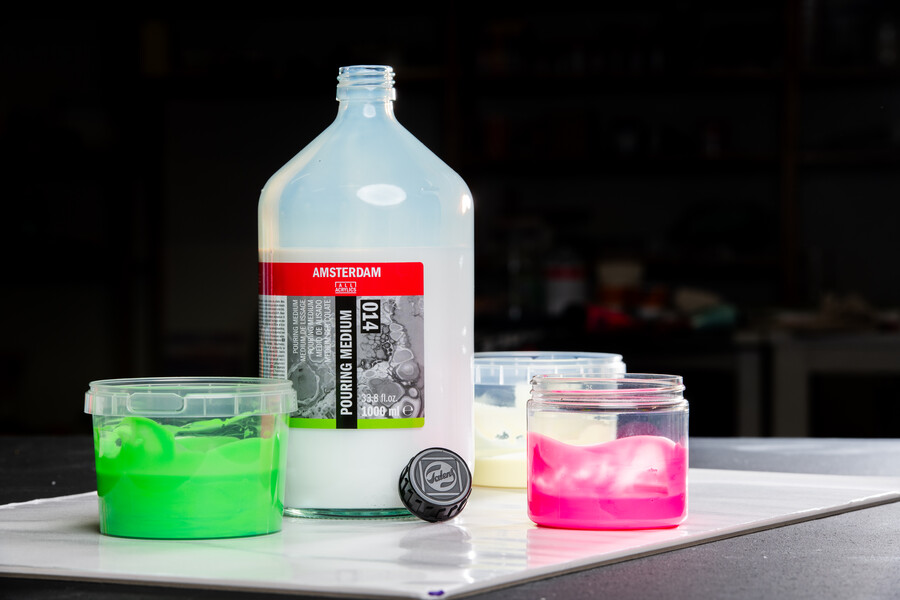
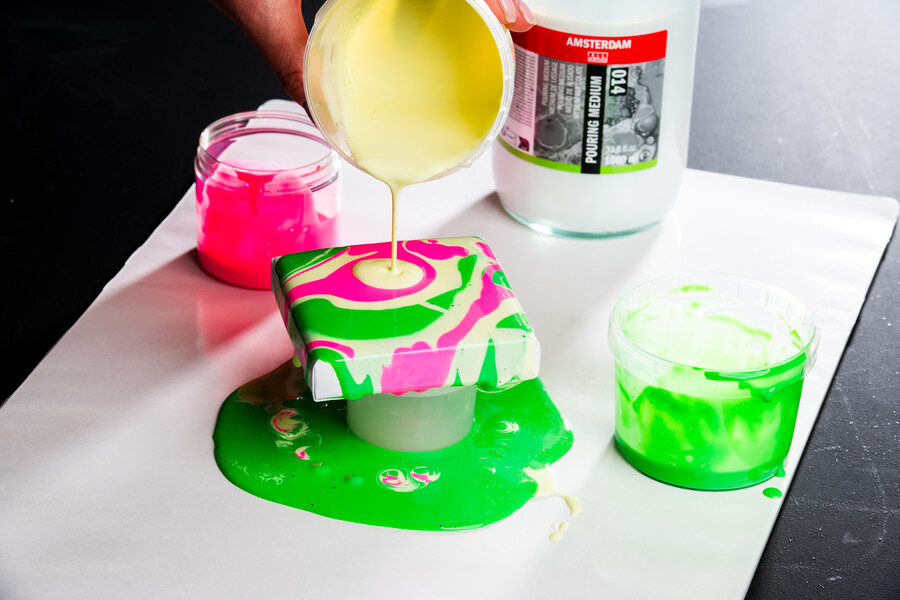
For this purpose, so-called pouring mediums (from the English “pouring”) have been developed, which add a lot of volume to the paints and are also self-leveling. Once dry, they remain very flexible, which prevents cracking. They can be mixed with paints in any ratio and, if necessary, thinned with a little water.
Author: Martina Petrova


