

No products in the cart.
Your order
“Chicago” Bookbinding Screws | Length: 5 mm | 4 Pieces


“Chicago” Bookbinding Screws | Length: 5 mm | 4 Pieces
0.70 €
0.58 € (excl. VAT)
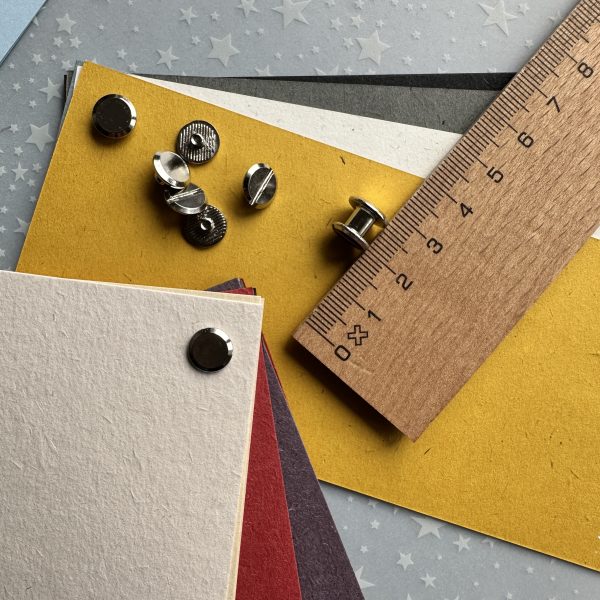
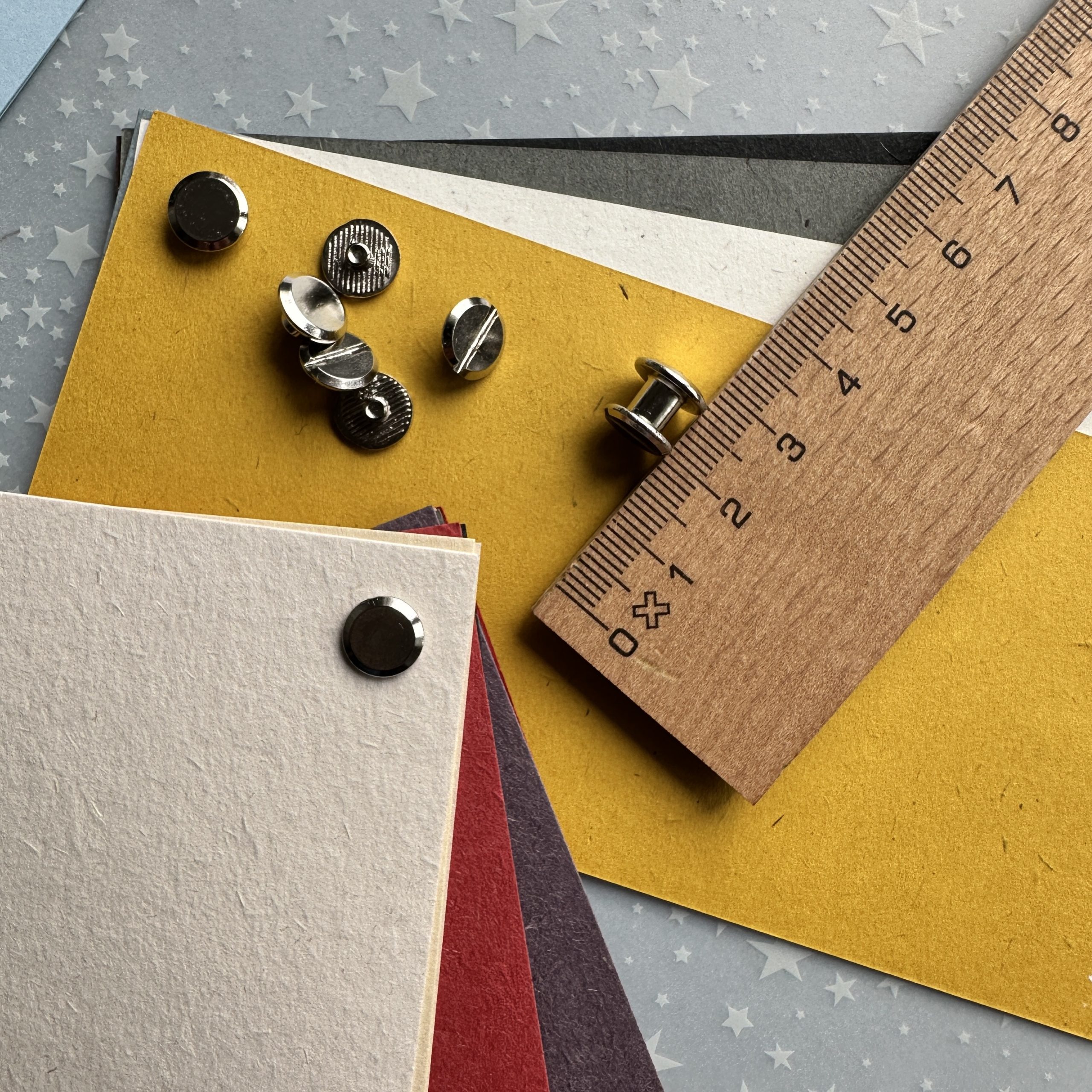
- Shaft diameter: 5 mm
- Working length (height): 5 mm (thickness of the package being clamped)
- Head diameter: 9 mm
- Material: Nickel-plated metal
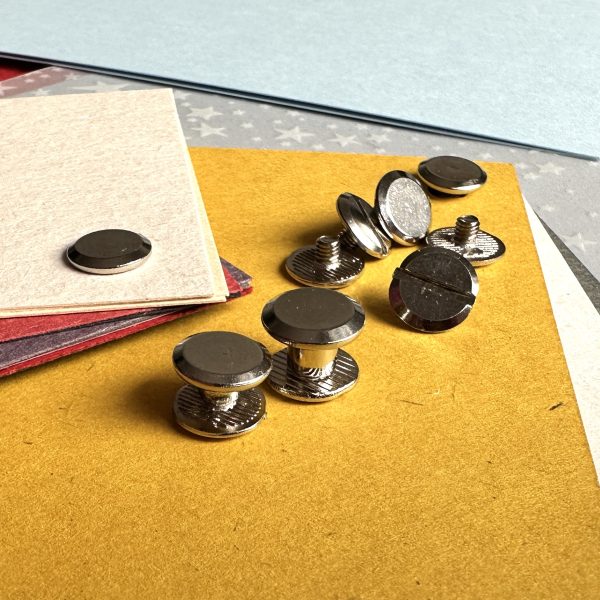
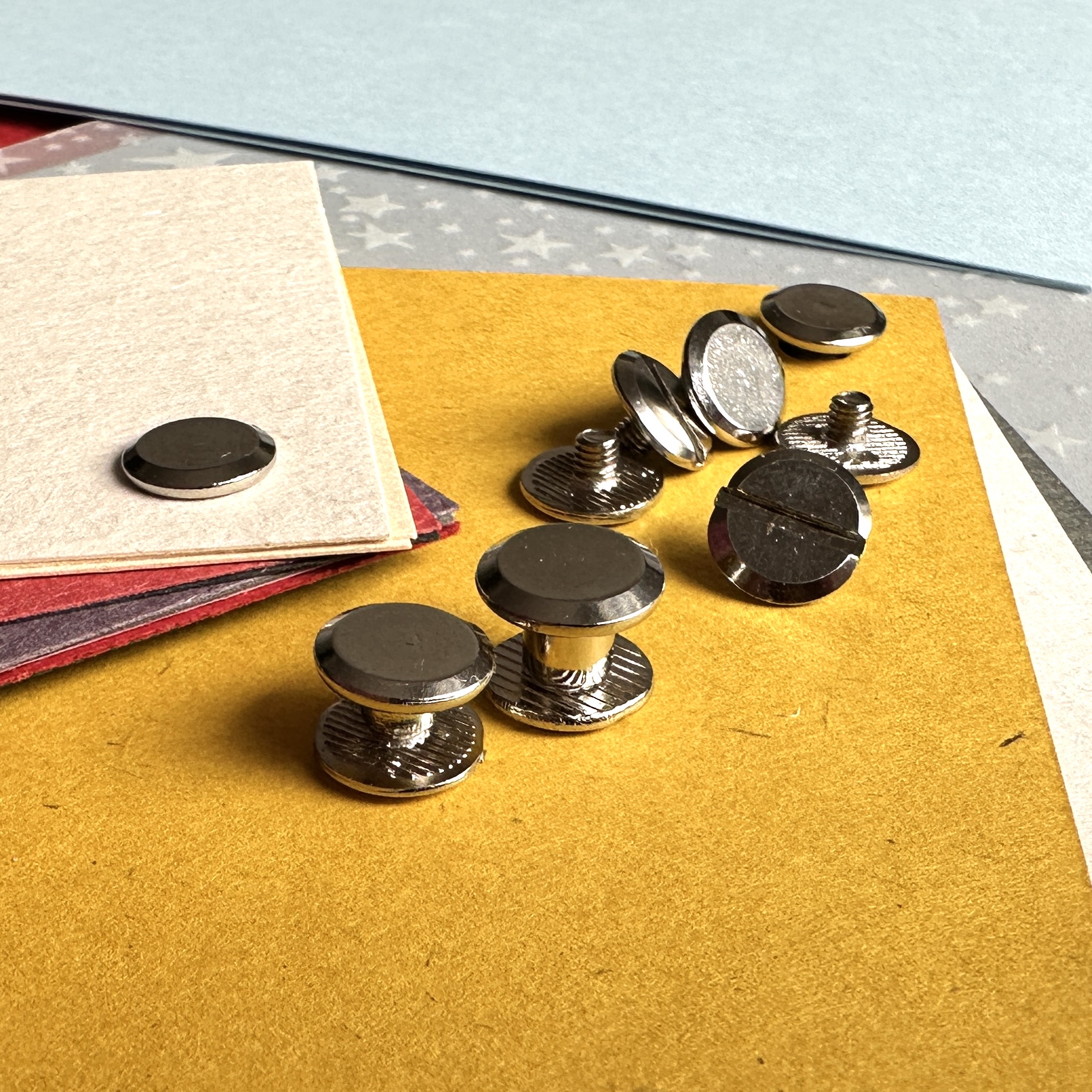
- Set: 4 pieces (each consisting of a blind sleeve and a screw)

Check Availability
Product is available in stores only. Check Availability
Product is out of stock.
Rate Product

What Is a Screw?
- Two-part design: Consists of a female socket with a smooth head and a male screw with a straight slot. It is assembled and tightened with a standard flathead screwdriver and can be unscrewed again without leaving marks on the material if necessary.
- Front and back sides: One head is completely flat and smooth (suitable for the outside of the cover), while the screwdriver slot remains on the back.
- Required hole: The shank is 5 mm and fits perfectly into holes made with a standard office hole punch (which typically has a 6 mm hole) or a leather punch.
Clamping Thickness and Application Ideas
- Capacity (5 mm): This size holds a stack of paper exactly 5 mm thick. This holds approximately 40–50 sheets of standard thin printing paper (80 gsm) or about 15–20 sheets of thicker cardstock for drawing and scrapbooking.
- Fan-fold samples: A classic solution for binding colored cardstock, fabric swatches, leather samples, or color palettes—the pages fan out around the spine.
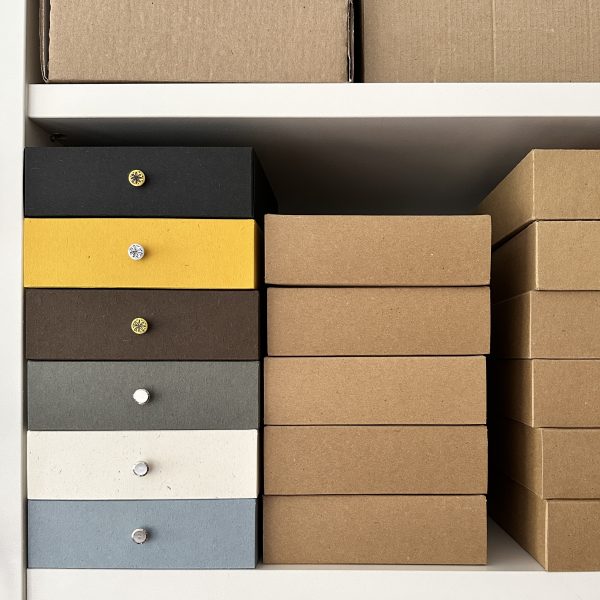
- Albums, journals, and restaurant menus: Binds covers and pages for notebooks and menus where the content can be replaced or added to.
- Leather goods: Binds two or three layers of thin leather for keychains, straps, bag handles, or small pouches.
Operating Instructions
- Tightening the stack: The screw is driven all the way into the sleeve to a depth of exactly 5 mm. If the sides are less than 5 mm thick, the package remains loose and shifts along the axis; if they exceed 5 mm, the screw does not reach the threads. For a slightly thinner stack, the gap can be easily filled with an additional washer cut from cardboard, leather, or felt.
- Page Movement: The pages turn smoothly around the metal shaft. For fans and projects that are opened repeatedly, a drop of dry glue on the tip of the thread before tightening keeps the screw stable, preventing it from loosening on its own due to friction.
We ship 98.5% of orders received by 1:00 p.m. on weekdays (Monday through Friday) the same day, for pickup at a courier office or delivery to an address in major cities on the next business day.
Contact numbers for our online order fulfillment center in the Industrial Zone of Varna:
0898 608 004 and 0878 131 023 on business days from 8:00 a.m. to 5:00 p . m .
An order confirmation and updates on its status are automatically sent to the email address provided in the order. We will call you only if we need additional information or if there is an unavoidable delay.
Shipping Rates
Orders totaling more than 50 EUR qualify for free shipping to a residential address or a courier office .
For orders totaling less than 50 EUR, the cost of shipping is borne by the buyer and is determined based on:
- Selected courier company: Speedy AD or Econt Express
- Delivery method (To an office or to an address)
- The weight and volume of the shipment
The shipping fee is calculated automatically by the system when the order is completed.
There may be a slight difference in the courier service fee upon receipt of the shipment due to discrepancies between the total weight of the shipment calculated by the system and the weight measured by the courier company.
Customers of the Slanchogled online store receive a 30% discount off the standard rate for courier services provided by Econt Express Ltd. and preferential rates for courier delivery by Speedy AD.
Payment Method
- Cash on delivery to the courier upon receipt of the shipment (COD)
- By bank transfer
- Card payment
Shipping Method
- To a specified office or address via Speedy AD courier
- To a specified office or address via Econt Express courier
Returns
- Returns for a full refund are accepted within 14 days, subject to the conditions specified in the Consumer Protection Act
- If a defect is found or the wrong item was shipped, Slanchogled will cover the courier costs for returning the merchandise
- If you wish to return the item for any other reason, the courier fees are covered by the recipient
For inquiries and questions
You must be logged in to post a review.




Reviews
There are no reviews yet.