

No products in the cart.
Your order
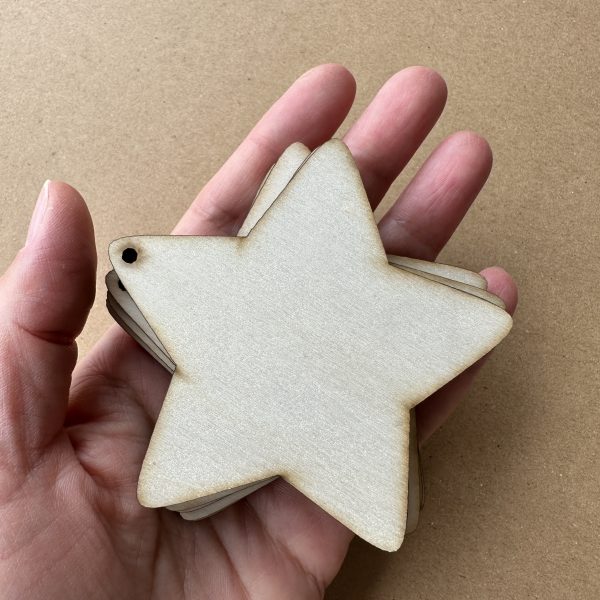
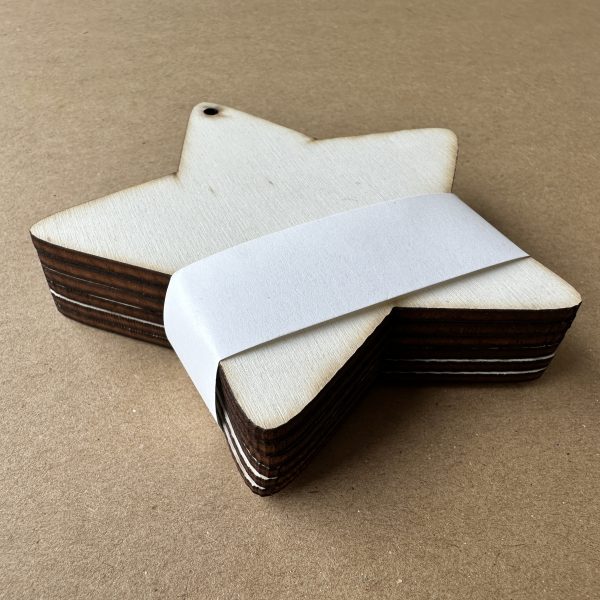
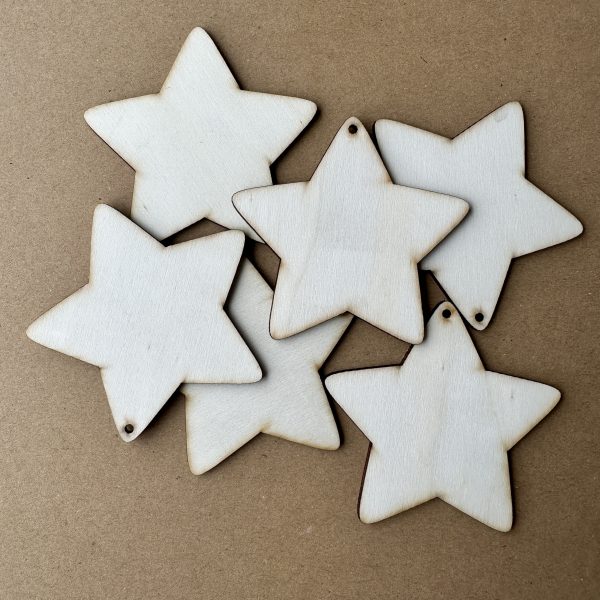
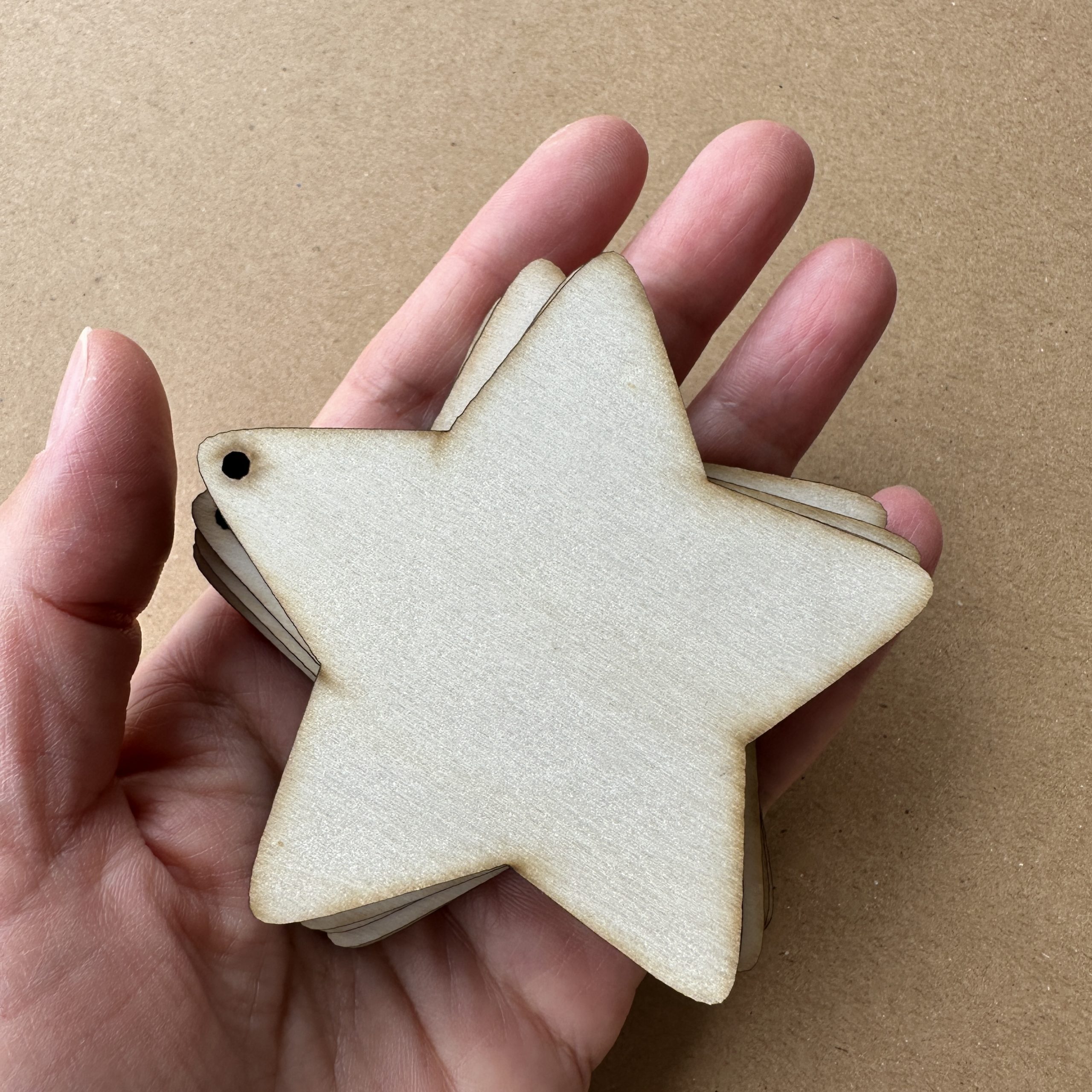
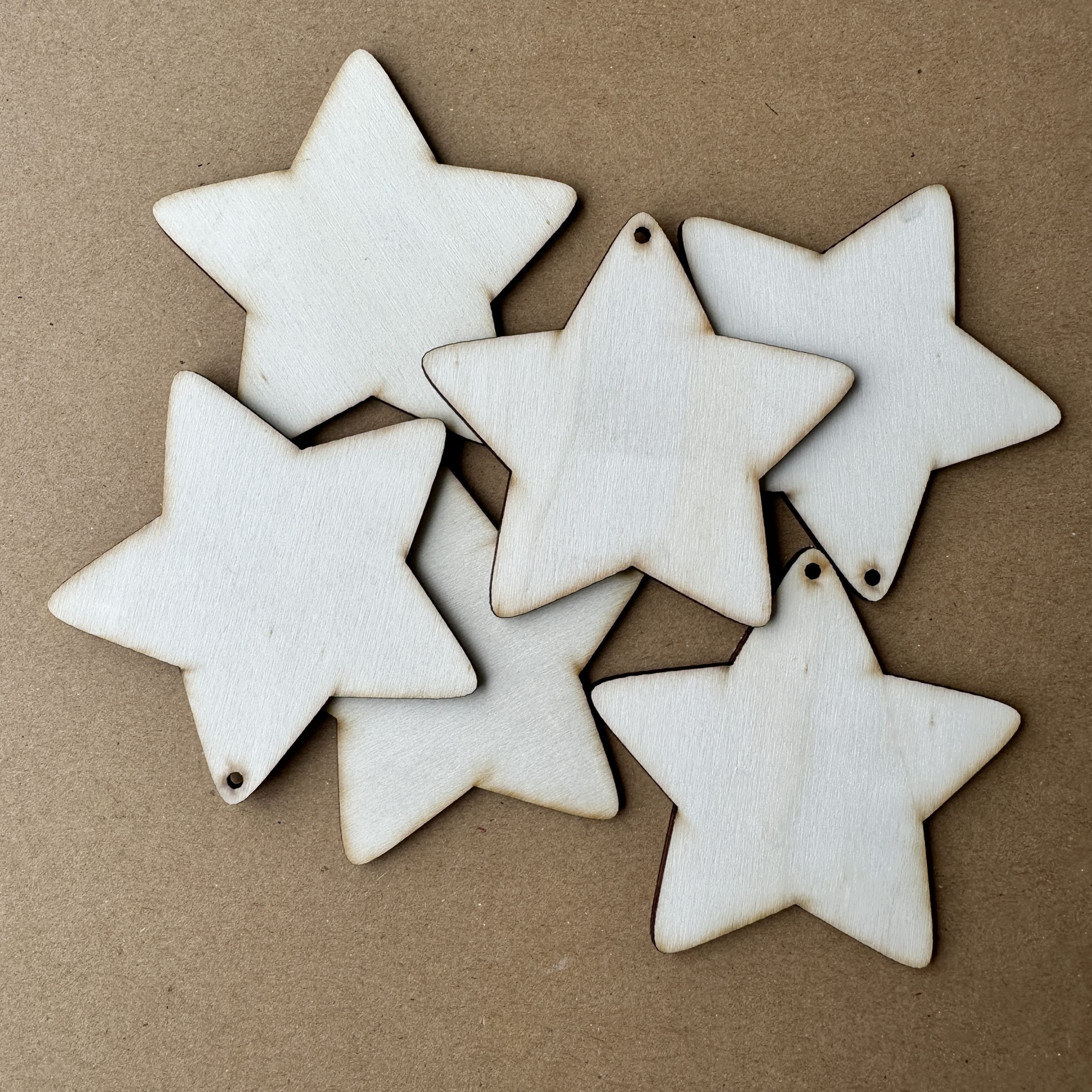
Plywood Blanks | Stars, 8 cm | 6 Pieces


Plywood Blanks | Stars, 8 cm | 6 Pieces
3.00 €
2.50 € (excl. VAT)
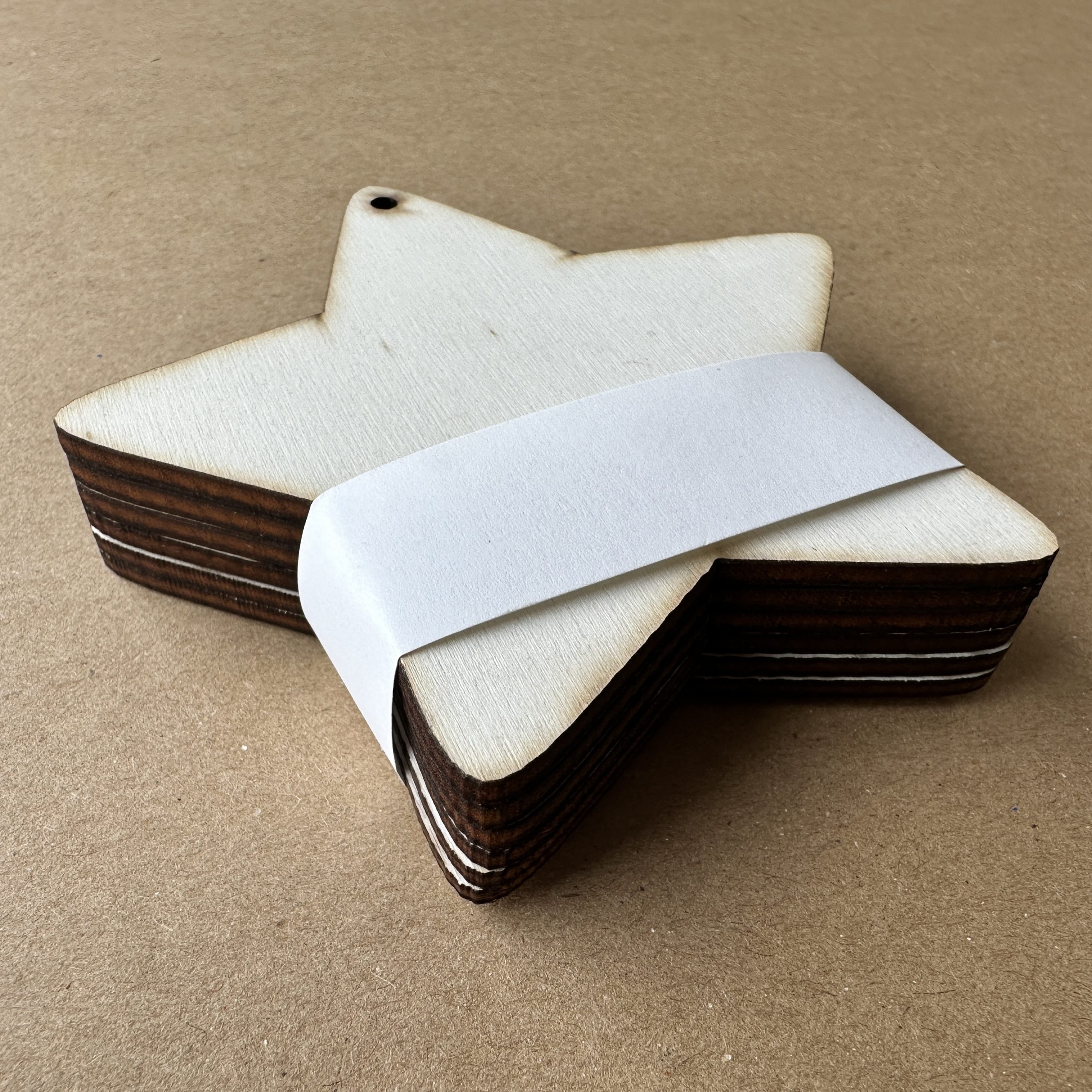
- Size: 8 cm in diameter, 2.5 mm thick
- Material: Paulownia plywood (light-colored, unfinished)
- Cutting: Laser-cut, with a hole for hanging
- Set: 6 pieces, secured with paper tape

Check Availability
Product is available in stores only. Check Availability
Product is out of stock.
Rate Product

What Is This Material?
- Weight and Wood: Paulownia is a very lightweight wood. Even with layers of paint, glue, and additional elements, the star remains light and does not bend the thin branches of the Christmas tree.
- Edges: They are dark from the laser cutting. Sometimes they leave a little soot when first touched, which comes off easily with a quick wipe using a dry cloth or napkin before you start working.
- Surface: Light-colored, without varnish or primer. It absorbs paint, markers, ink, and glue directly.
- The hole: Located at one end (about 2.5–3 mm in diameter)—designed for twine, ribbon, thread, or thin wire.
- Thickness and Water: At a thickness of 2.5 mm, plywood is susceptible to moisture and may warp slightly as it dries if it becomes heavily saturated with water or heavily diluted paints. Using a drier brush and a moderate amount of adhesive keeps it completely flat.
Work Conduct
- With paint: The wood absorbs the paint quickly. Lighter shades fade slightly toward the center, and the grain becomes visible. A preliminary coat of white paint or primer makes the colors on top rich and vibrant.
- After the first coat: Water-based paints or varnishes cause the fine wood fibers to stand up slightly, making the surface feel rough to the touch. A quick rub with a piece of fine sandpaper after drying removes the fibers and restores the smoothness for the next color.
- For decoupage: The wet napkin becomes semi-transparent. On the wooden surface, the motif darkens slightly, while when placed on top of previously applied white paint, it retains its true colors.
- Protection: Raw wood absorbs dust and moisture from the air. A thin coat of clear varnish seals the finished decoration if it will be placed in a more humid area or outdoors.
We ship 98.5% of orders received by 1:00 p.m. on weekdays (Monday through Friday) the same day, for pickup at a courier office or delivery to an address in major cities on the next business day.
Contact numbers for our online order fulfillment center in the Industrial Zone of Varna:
0898 608 004 and 0878 131 023 on business days from 8:00 a.m. to 5:00 p . m .
An order confirmation and updates on its status are automatically sent to the email address provided in the order. We will call you only if we need additional information or if there is an unavoidable delay.
Shipping Rates
Orders totaling more than 50 EUR qualify for free shipping to a residential address or a courier office .
For orders totaling less than 50 EUR, the cost of shipping is borne by the buyer and is determined based on:
- Selected courier company: Speedy AD or Econt Express
- Delivery method (To an office or to an address)
- The weight and volume of the shipment
The shipping fee is calculated automatically by the system when the order is completed.
There may be a slight difference in the courier service fee upon receipt of the shipment due to discrepancies between the total weight of the shipment calculated by the system and the weight measured by the courier company.
Customers of the Slanchogled online store receive a 30% discount off the standard rate for courier services provided by Econt Express Ltd. and preferential rates for courier delivery by Speedy AD.
Payment Method
- Cash on delivery to the courier upon receipt of the shipment (COD)
- By bank transfer
- Card payment
Shipping Method
- To a specified office or address via Speedy AD courier
- To a specified office or address via Econt Express courier
Returns
- Returns for a full refund are accepted within 14 days, subject to the conditions specified in the Consumer Protection Act
- If a defect is found or the wrong item was shipped, Slanchogled will cover the courier costs for returning the merchandise
- If you wish to return the item for any other reason, the courier fees are covered by the recipient
For inquiries and questions
Show only reviews in English ()
You must be logged in to post a review.


Reviews
There are no reviews yet.