

DIY Christmas Card Ideas
Home » Uncategorized » DIY Christmas Card Ideas
How are handmade cards better than store-bought ones?
When we want our loved ones to feel truly special, we can choose a handmade card.
The handmade cards are:
- A wonderful way to make use of the materials we have left over from other projects, such as the pile of beautiful scraps and fancy cardstock that we can’t bear to throw away, or even the scrap of paper we used to test colors on while painting.
- When we’re looking for something very specific in terms of message and style, or we’ve simply overlooked that little detail while shopping, it’s much easier and faster to make and write a card by hand than to go looking for one in stores all over again.
- Although this gesture isn’t very common here, a handmade card can be a gift in and of itself and can be given on its own as a thoughtful gesture to loved ones and colleagues.
- Nothing compares to the feeling or the personal touch that goes into a handmade card, no matter how simple it may be. For the sentimental among us, it’s a keepsake that reminds us of the time we received it and the people who gave it to us.
- Making cards by hand is both enjoyable and relaxing, and once it becomes a hobby, it can even turn into a small business. It’s also an opportunity to create cherished family memories or foster social interaction among children and adults during workshops and activities.
2023 ❄️ Our DIY Christmas card ideas
The yellow leaves and cool evenings remind us that winter is approaching, but also that we have plenty of time to prepare beautiful Christmas cards and gifts for the winter holiday season.
Simply put, each card consists of a piece of cardstock, a themed shape, and text that complement each other stylistically. So, in three steps, we can create our own design.
Base
Once we’ve chosen the right cardstock, we can decide what size our card will be and whether it will be a single-panel card or a folded card with two panels. To avoid having to cut it, we can use an A4 sheet folded in half, and for maximum convenience, there are also pre-cut and pre-creased card blanks available with matching envelopes to go with them.
For this year’s designs, for example, we’ve chosen a dark green, kraft and white embossed Tintoretto cardstock.
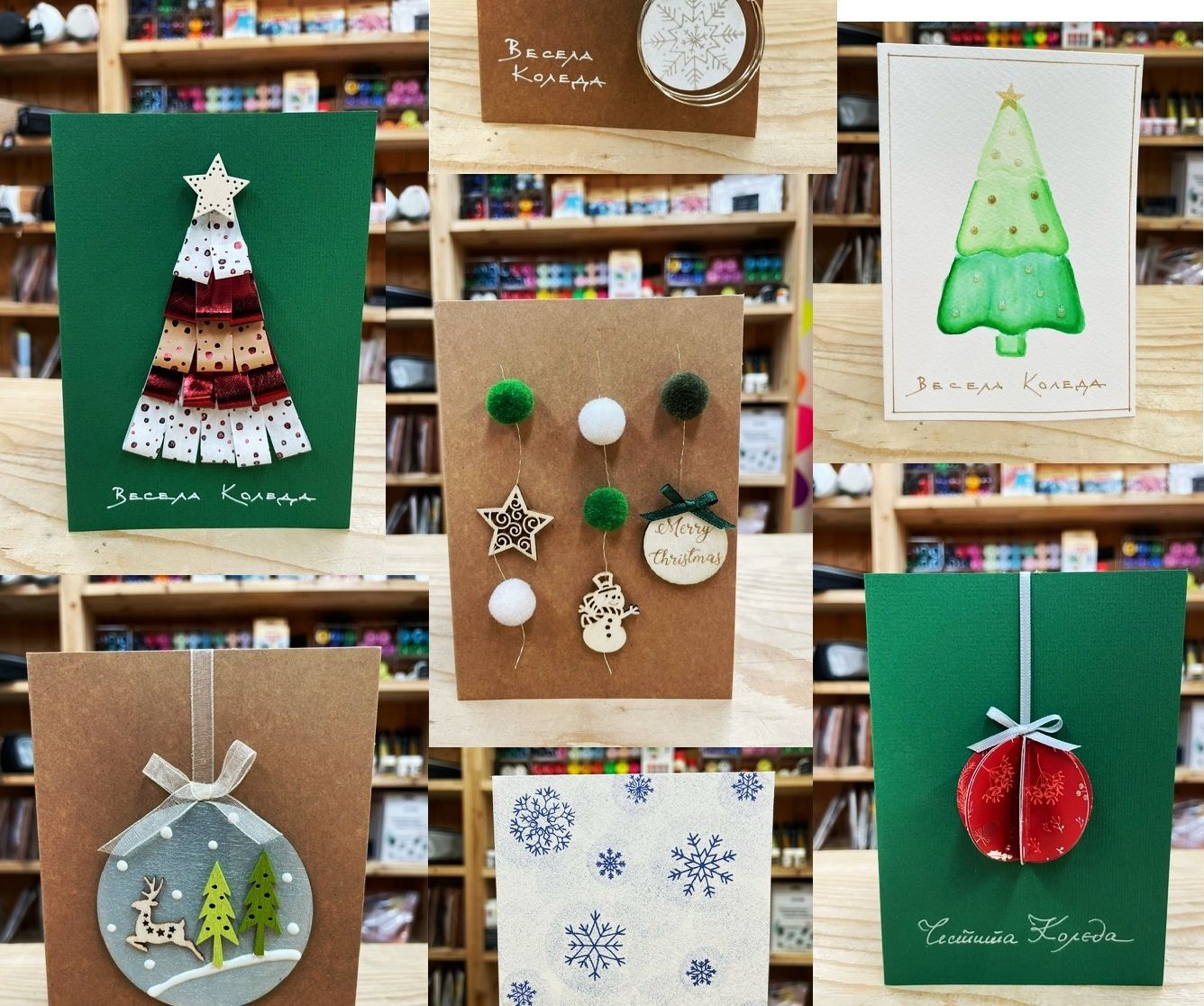
Christmas Molds
Simplifying shapes and using silhouettes is key. And “less is more” 😉. For example, the Christmas tree is a triangle, the ornaments on the tree are circles, and the presents are squares. The silhouettes can be made from wooden sticks, wire, string, adhesive rhinestones and more—or they can be cut out of cardboard, and then paint or decorate them with a stamp and ink.
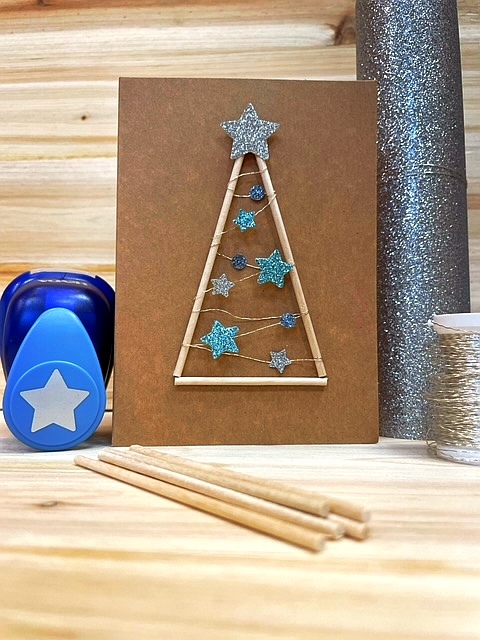
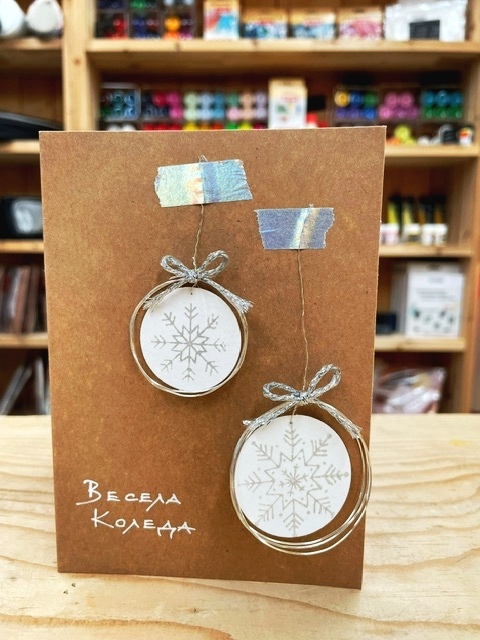
If we go with an app, paper punches and pre-cut shapes made of wood or felt turn out to be a very useful option. They can be further decorated with ribbons, bells, shiny ribbons, pompons, brocade, confetti and gilding.
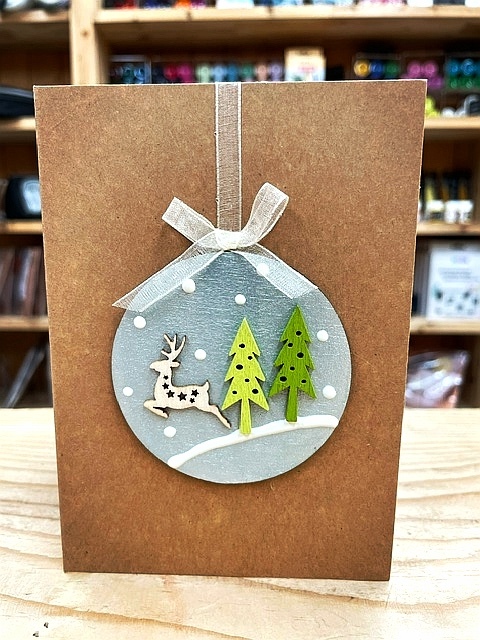
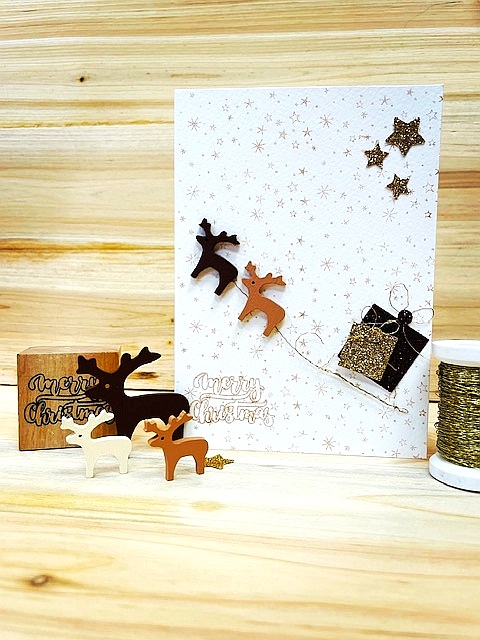
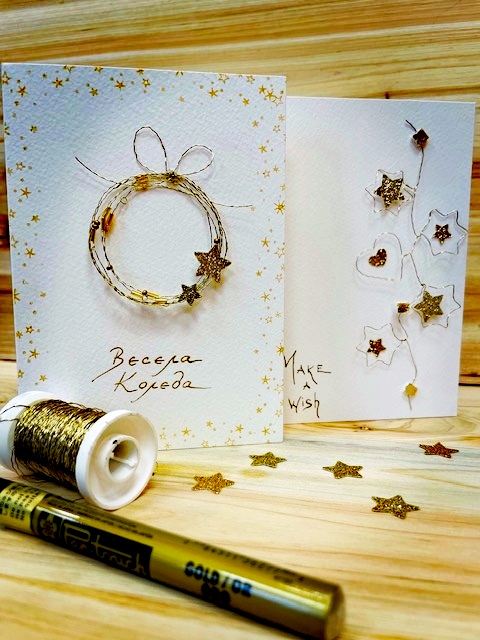
To add three-dimensionality to flat shapes, self-adhesive volumetric strips and squares are used, which slightly lift the images from the plane of the cardboard. Figures made of different materials such as textiles and wood can be glued firmly with a hot glue gun , but for small elements like these, this will also work with simple double-sided tape .
Overwriting
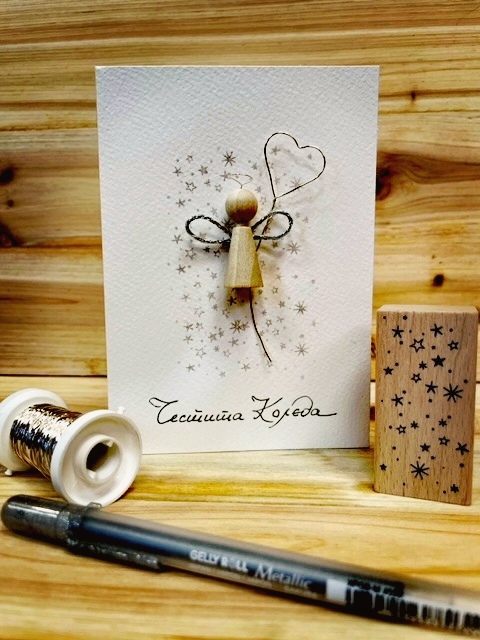
The handwritten message adds a personal touch (literally 🙂) to the card. The ink from our gel pens and acrylic markers stands out against both light and dark backgrounds, giving you the freedom to write on a wide variety of surfaces, including wood. If you can’t decide on a color, white, gold, and silver shades are always a good choice for the season.
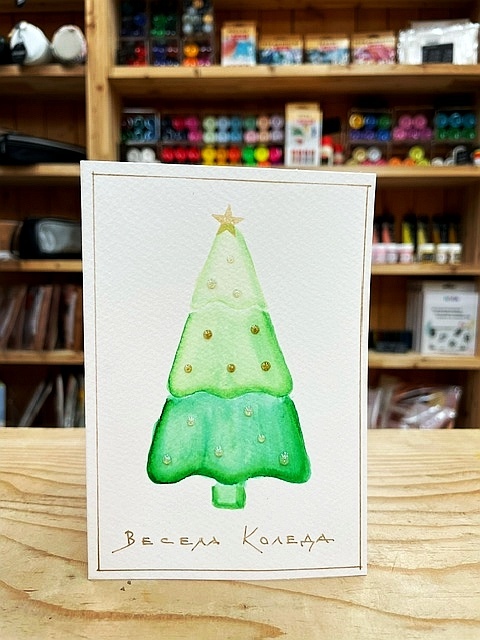

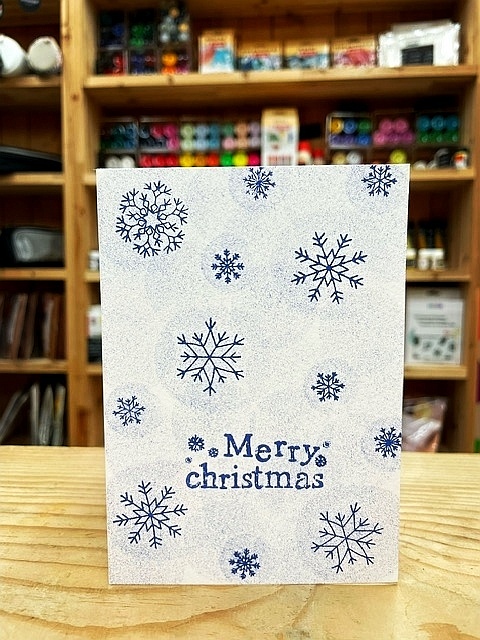
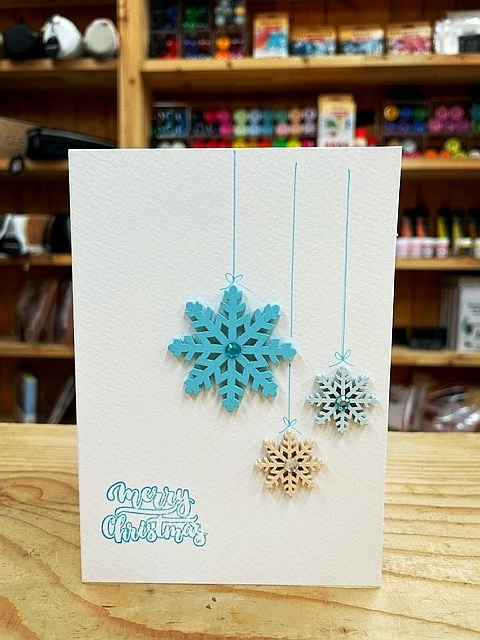
On larger cards, the Christmas greeting can also be added using embossed outlines, and there are also glue pens that you can use to sprinkle glitter or gold dust on.
Of course, the easiest option is still to use pre-made greetings in the form of a figurine, sticker, or stamp.
2024 ❄️ We're adding new main characters to last year's designs
For our latest ideas, we’re focusing mainly on the warm feel that wood and kraft paper provide, adding variety with a new innovation: small embossed tiles made of self-hardening clay, which are incredibly versatile in their simplicity.
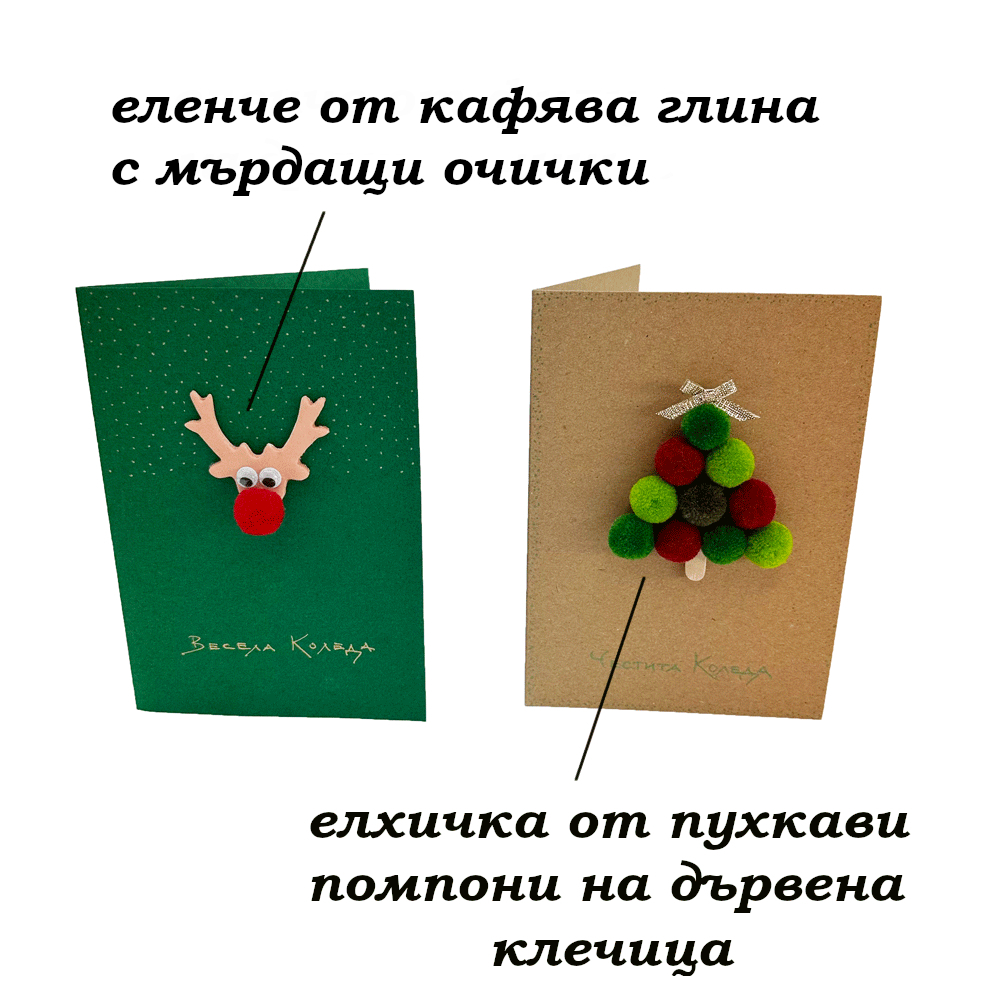
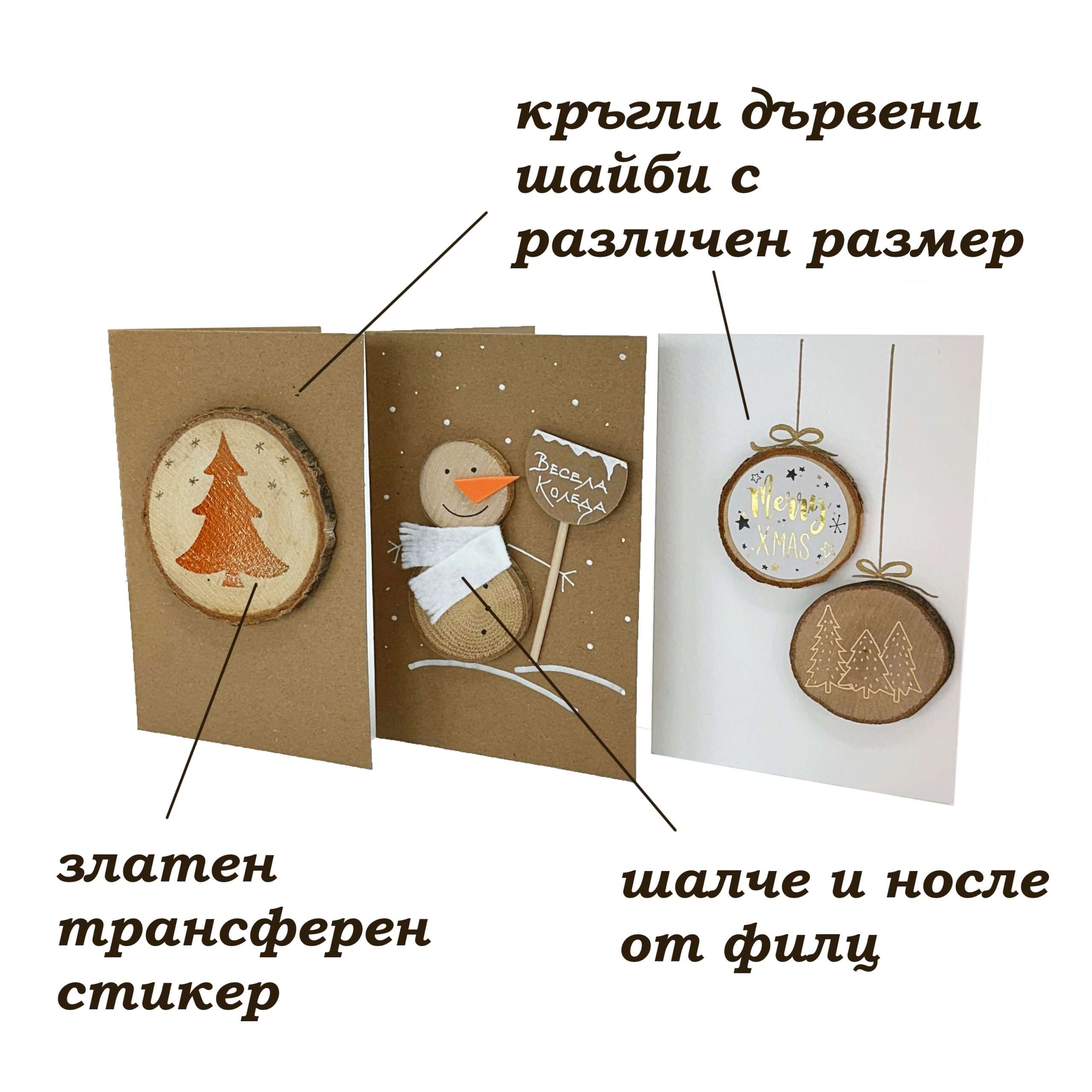
Decorative materials used:
- brown clay unfired
- metal molds for cutting
- cashmere pom-poms
- small and large natural wooden washers
- thin felt
- transfer and paper stickers
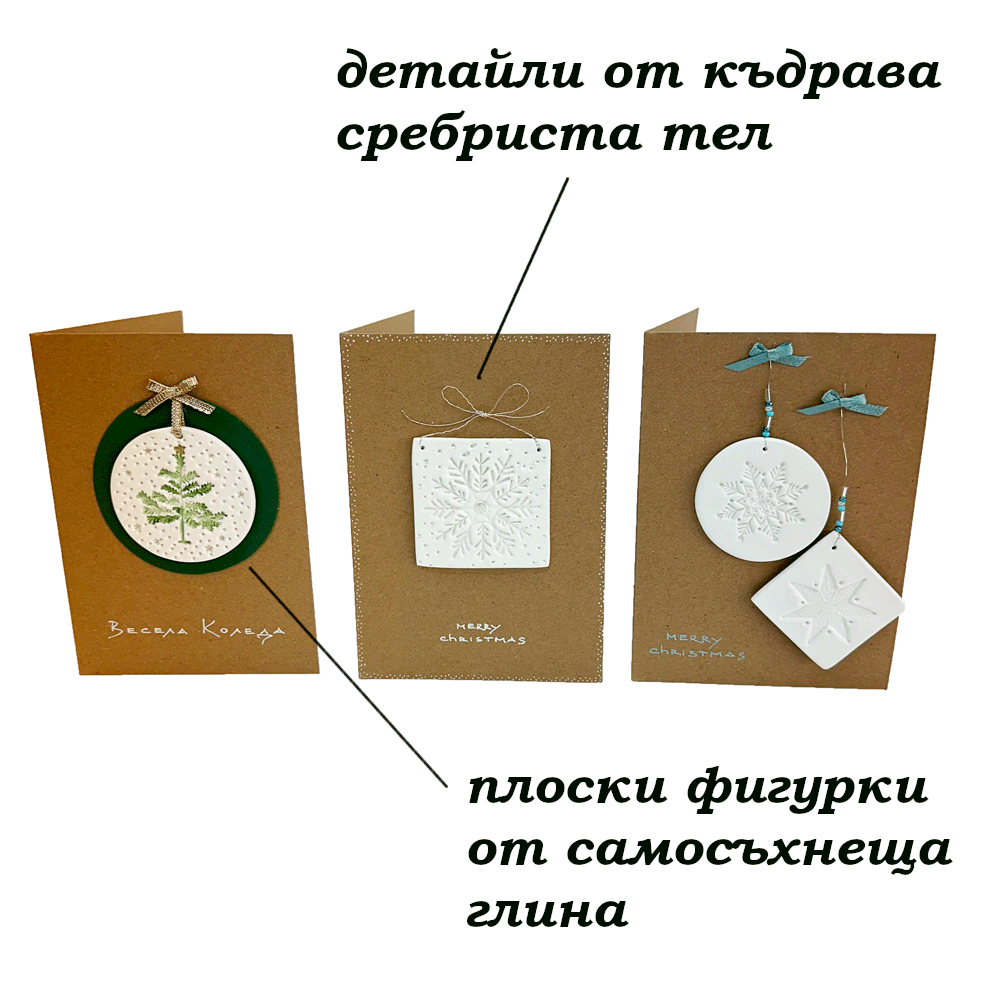
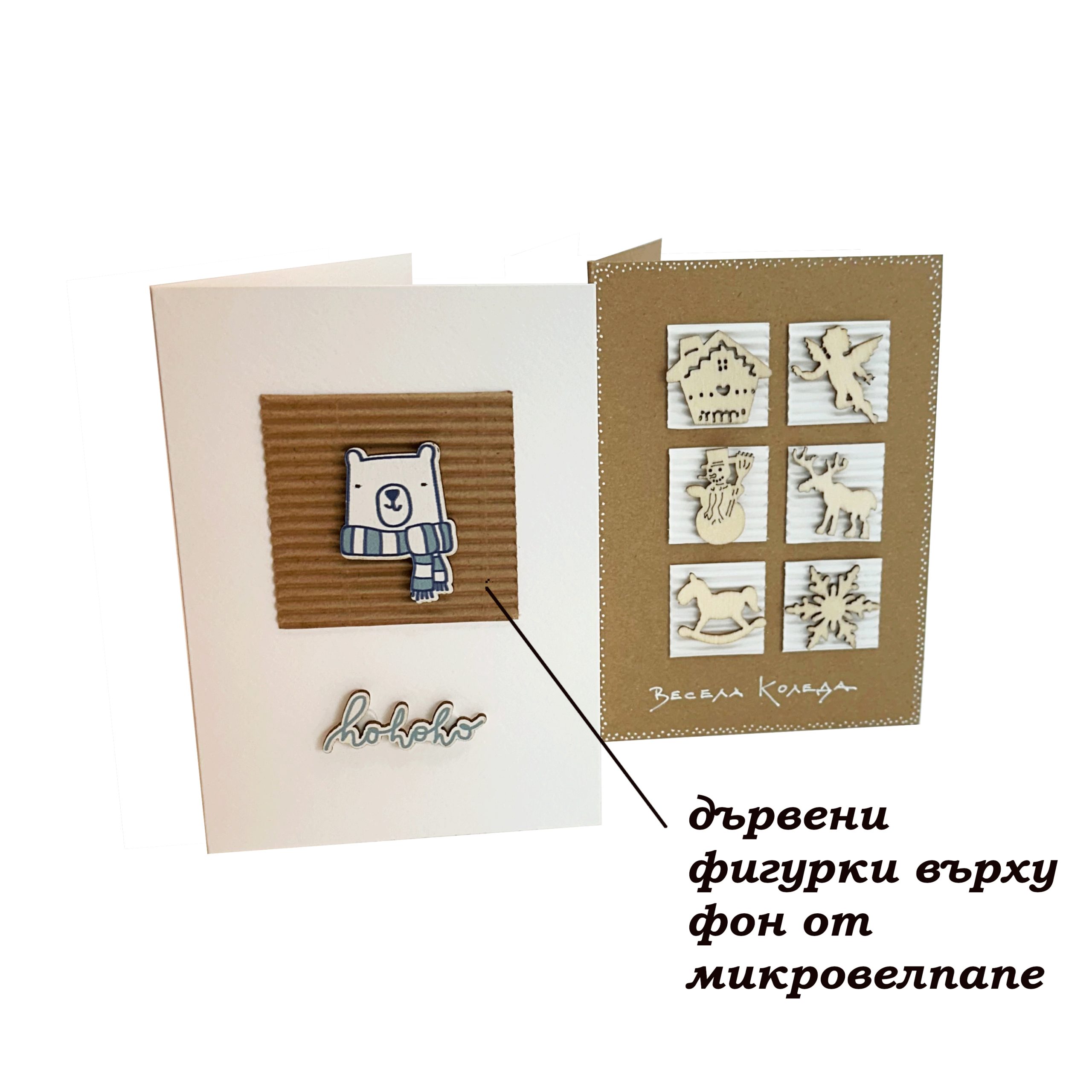
Materials used:
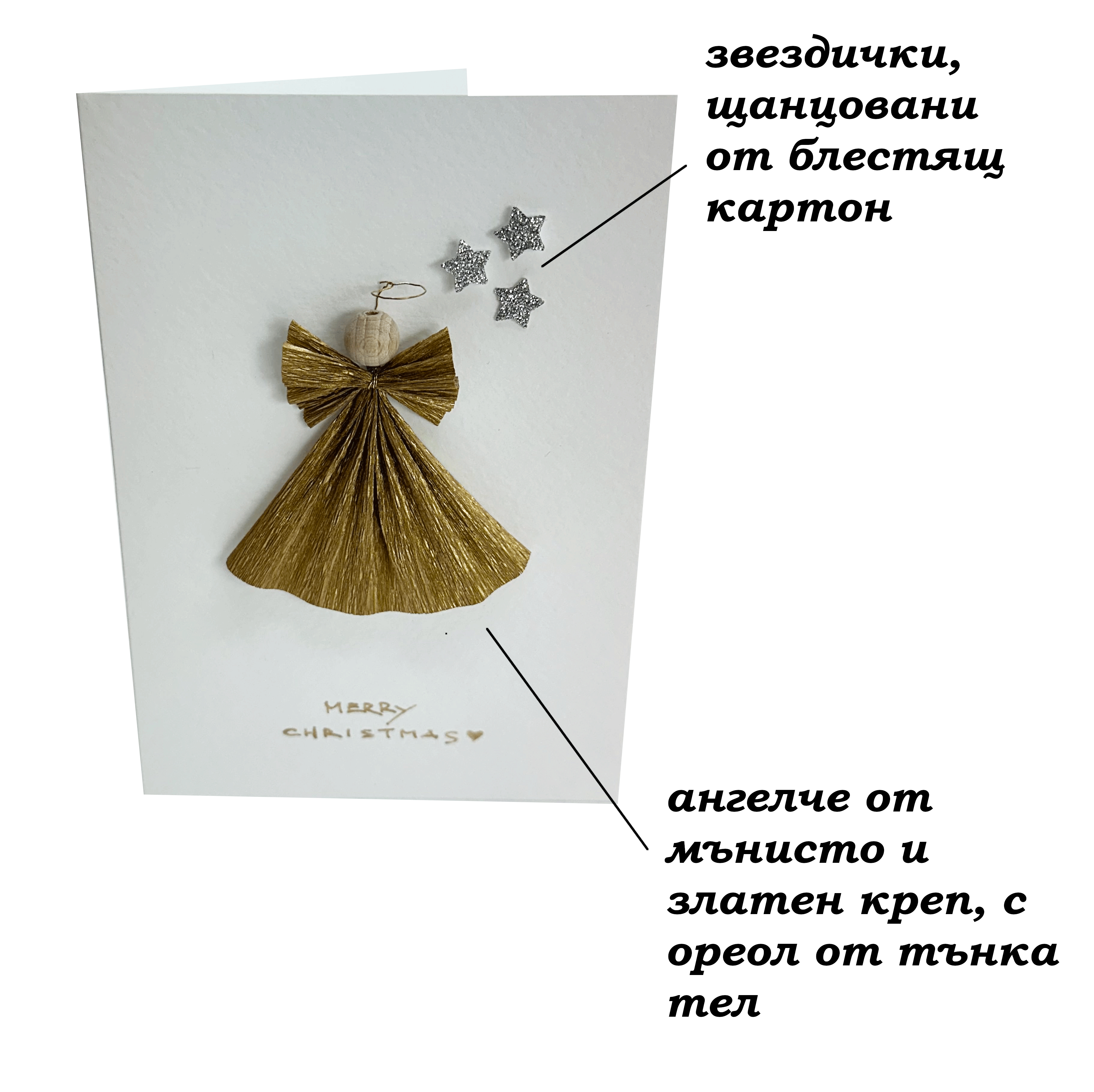
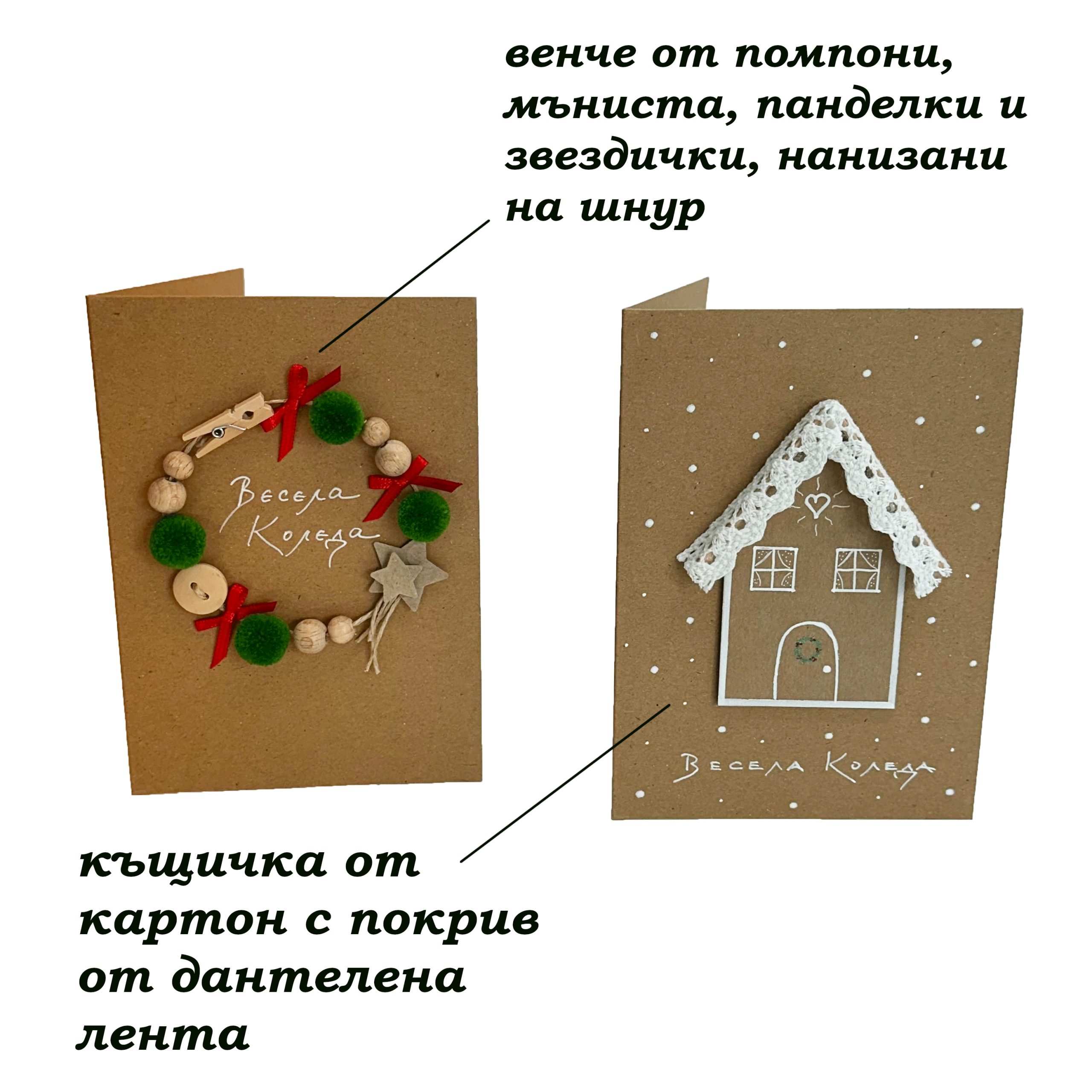
Materials used:
Author: Martina Petrova


