

No products in the cart.
Your order
Powder Pigment: Ultramarine Violet: PV15: 1 kg
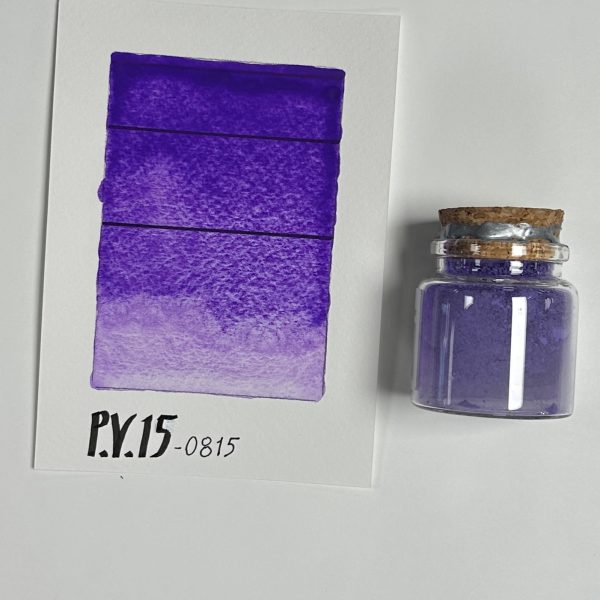
Powder Pigment: Ultramarine Violet: PV15: 1 kg
87.00 €
72.50 € (excl. VAT)
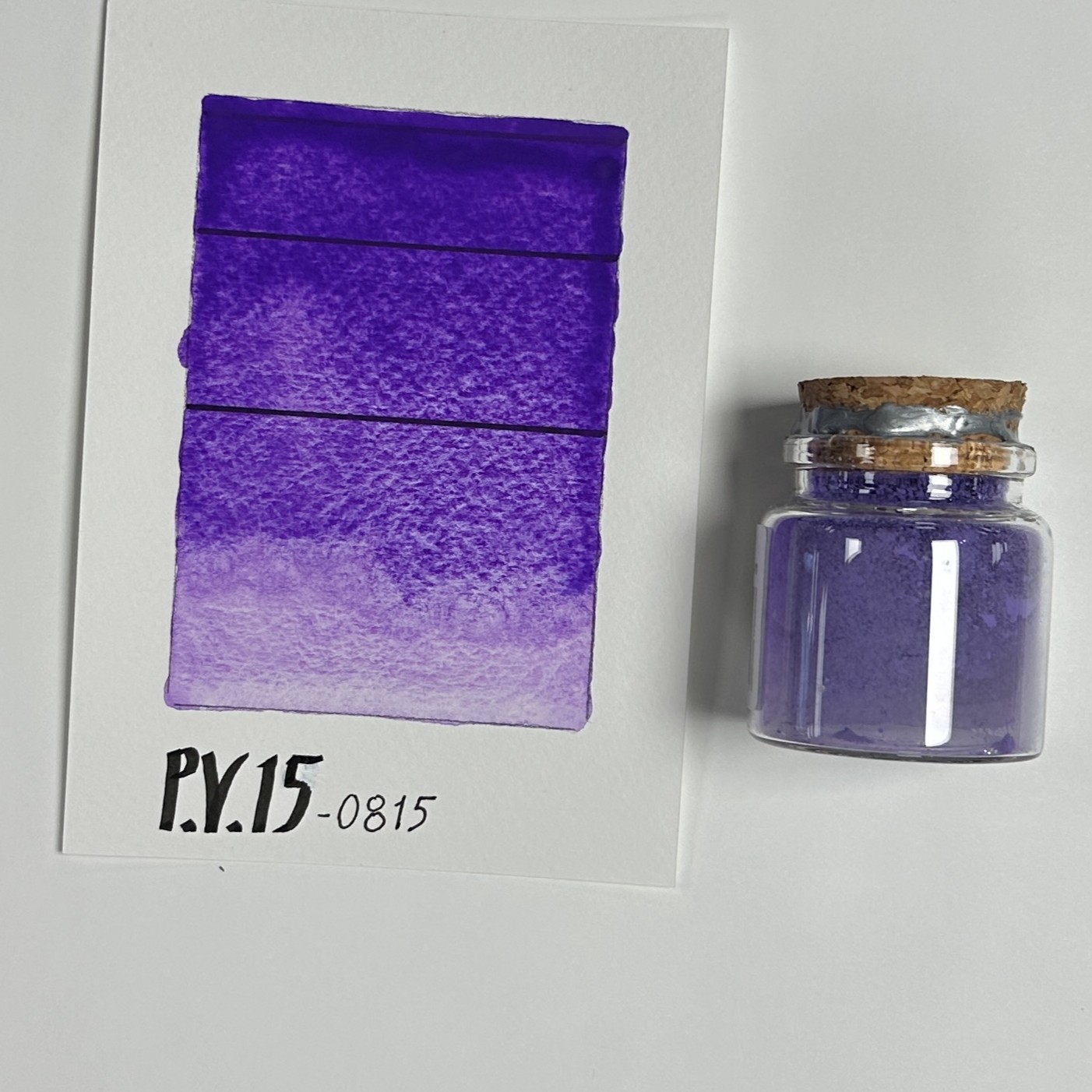
PV15 (Pigment Violet 15), with product code 0815, is a synthetic inorganic pigment with a modified sodium-aluminum silicate structure.
It has a distinctive, soft, and ethereal violet color with a cool, slightly pinkish undertone.
The pigment is translucent to transparent, with low opacity but an exceptionally pure hue that cannot be achieved by simply mixing blue and red pigments.
Packaging: 1-kilogram package.

Check Availability
Product is available in stores only. Check Availability
Product is out of stock.
Rate Product
Key Technical Specifications:
Color Index: PV15 (77007)
Chemical composition: Modified sodium-aluminum sulfosilicate (Na₆₋₈Al₆Si₆O₂₄S₂₋₄)
Lightfastness: Excellent (grade 8 out of 8 on the Blue Wool Standard scale*). Completely UV-resistant; does not fade or change when exposed to direct sunlight.
Alkali resistance: Very good. Fully compatible with acrylic emulsions, lime, and cement mixtures.
Acid Sensitivity: An Important Detail! Similar to ultramarine blue, PV15 breaks down and loses its color upon contact with acids. It is not recommended for use in exterior coatings in heavily polluted or industrial areas where there is a risk of acid rain.
Dispersibility: Hydrophilic pigment. It absorbs and mixes easily with water and water-soluble media without requiring aggressive mechanical agitation or large amounts of surfactants.
Due to its unique translucency and low tinting strength, this pigment is used for fine details and subtle shades:
Painting (Oil, Acrylic, Tempera, Watercolor): Indispensable in classical and portrait painting for rendering soft shadows, atmospheric perspective, fog, clouds, and delicate skin tones. Due to its natural transparency, it is popular for velaturas and glazes—applying it in thin layers adds optical depth and a cool nuance without the risk of the color becoming “overpowering.”
Neutralizing Yellow: In artistic practices and restoration, it is often used to optically neutralize unwanted yellow hues without darkening the overall tone of the painting.
Epoxy resins and plastics: Allows for the creation of beautiful, glass-like, delicate purple effects in transparent castings. Due to its fine structure, it settles very slowly in liquid resins.
Decorative Plasters and Frescoes: Suitable for interior decorative finishes, interior design, coloring plaster, and interior lime paints.
Specifics of the job:
Ultramarine violet has lower intensity and tinting strength compared to highly opaque organic violet pigments (such as dioxazine violet). This makes it exceptionally easy to control the color palette, as there is no risk of it “overpowering” and contaminating the other colors when mixed.
*Note regarding lightfastness: The Blue Wool Scale is the international laboratory standard for measuring the lightfastness of dyes. It consists of 8 grades, with Grade 1 indicating minimal resistance and Grade 8 indicating maximum resistance to UV rays and complete protection against fading over time.
Additional information
| Weight | 1.0000 kg |
|---|
We dispatch 98.5% of orders received by 1pm on a weekday (Monday to Friday) same day , for collection from a courier office or delivery to an address in major cities on the next working day.
Phone numbers for contacting our online order fulfillment center in the Industrial Zone of the City of Varna:
0898 608 004 and 0878 131 023on working days from 8.00 to 17.00hours.
Confirmation of receipt of the order and changes in its status arrives automatically to the e-mail specified in the order. We call only if additional clarifications are necessary or an imposed delay.
Shipping Rates
Orders for an amount over BGN 100 have free delivery to the address or office of the courier.
For orders worth less than BGN 100, the cost of the courier service is at the buyer’s expense and is determined depending on:
- The selected courier company Speedy AD or Econt Express
- Delivery method (To office or to address)
- The weight and volume of the shipment
The amount of the courier service is calculated automatically by the system upon completion of an order.
A minimal difference in the amount of the courier service upon receipt of the package is possible due to discrepancies in the total weight of the package calculated by the system and the weight measured by the courier company.
Customers of the Slanchogled online store enjoy a 30% discount from the basic tariff for courier services of Econt Express OOD and preferential prices upon delivery by Speedy AD courier.
Payment method
- Cash to the courier upon receipt of the delivery (cash on delivery)
- By bank transfer
- Pay by card
Delivery Method
- To the specified office or address by courier of Speedy AD
- To the indicated office or address with Econt Express courier
Return of goods
- Return of goods for a full refund is accepted within 14 days, subject to the conditions specified in the Consumer Protection Act
- If a defect is detected or an item sent incorrectly, Slanchogled bears the courier costs for returning the item
- In case you want to return the goods for another reason – courier costs are covered by the recipient
For inquiries and questions
You must be logged in to post a review.




Reviews
There are no reviews yet.